 Sumas Roofing
 Roofing in a Climate That Doesn't Cut Corners
Bellingham sits right where marine air off the Salish Sea meets the wet, mild weather that defines this corner of Whatcom County. That combination is easy on people and hard on roofs. Homes here deal with salt-tinged air drifting in off the bay, long stretches of driving rain, and a moss season that can run most of the year in shaded, north-facing sections of a roof. None of that is dramatic on its own, but stacked together over years, it's exactly the kind of slow, steady wear that shortens a roof's life if it isn't accounted for from the start.
We work on homes throughout the Bellingham area and see the same patterns over and over: roofs that were installed correctly for a drier climate but not for this one, or roofs that were fine for the first decade and then started failing fast once moss and moisture got a foothold. Good roofing here isn't about using exotic materials — it's about installation details, ventilation, and material choices that respect what this weather actually does over time.
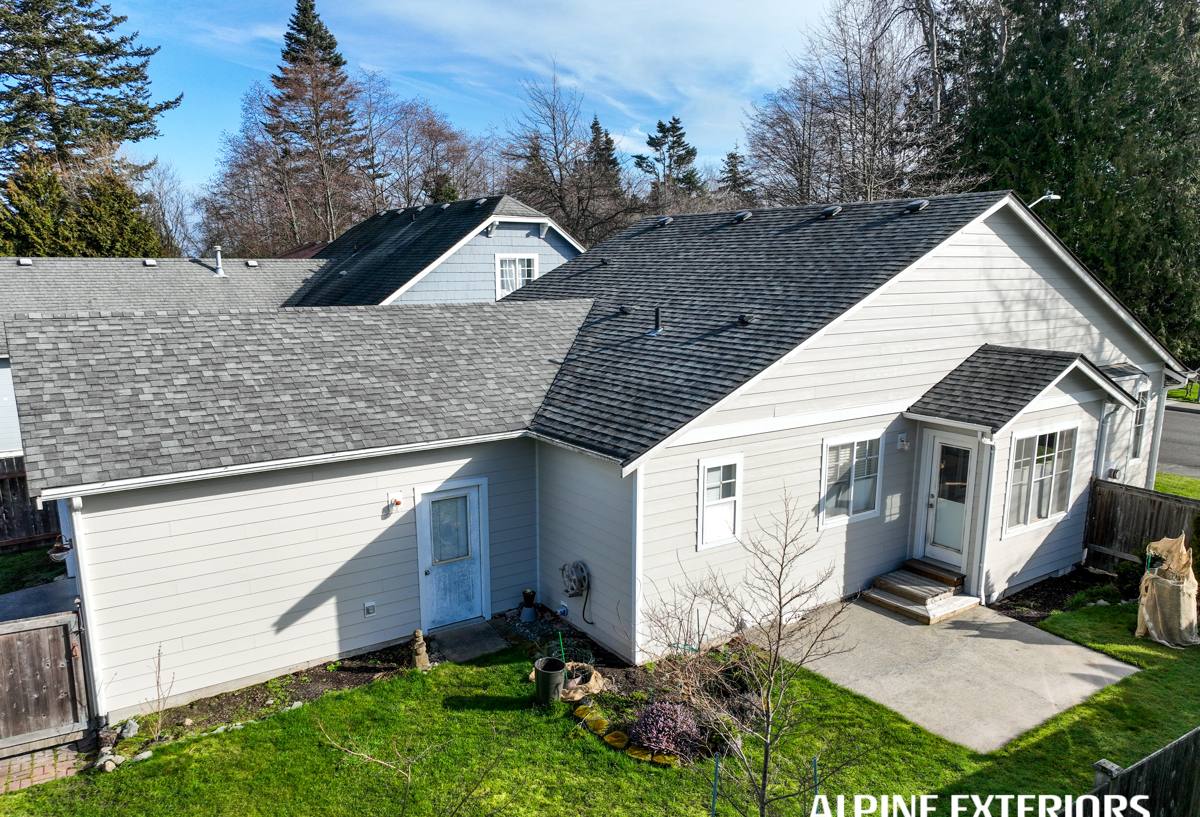
What Bellingham's Weather Does to a Roof
Salt Air and Metal Fasteners
Homes closer to Bellingham Bay and the shoreline see more airborne salt than homes further inland. Salt air speeds up corrosion on exposed metal — flashing, fasteners, gutter hangers, and any unprotected metal components. It's not usually dramatic damage, but it's the kind of thing that turns a 25-year roofing system into a 15-year one if the metal components weren't specified with that exposure in mind.
Driving Rain and Wind-Driven Moisture
This region doesn't just get rain — it gets rain pushed sideways by wind often enough that standard shingle overlap and basic flashing details aren't always enough. Driving rain finds its way under poorly lapped shingles, around undersized flashing, and through nail patterns that were installed a little too loose or a little too high. Once water gets under the roofing material, it doesn't take a storm to cause damage — it just takes time.
Moss, Algae, and Shade
Moss needs moisture and shade to establish itself, and Bellingham roofs offer plenty of both for a good portion of the year. Moss holds water against the roofing surface long after the rain has stopped, which keeps shingles damp, encourages granule loss, and can work its way under shingle edges as it grows. Left unchecked for a few seasons, moss can lift shingles enough to create leak points that have nothing to do with the age of the roof itself.
Common Roof Problems We See Around Bellingham
- Moss buildup on north-facing slopes and shaded valleys that traps moisture against the shingle surface
- Granule loss on older asphalt shingles from years of freeze-thaw cycling and constant dampness
- Corroded or failing flashing around chimneys, skylights, and roof-to-wall transitions
- Clogged gutters and downspouts from overhanging trees, leading to water backing up under the roof edge
- Soft or discolored roof decking in attics, usually found only after a leak has already been active for a while
- Ridge vents or soffit vents that were undersized or blocked, trapping humid attic air against the underside of the roof deck
Choosing a Roofing System That Fits This Climate
There's no single "best" roofing material for every home — the right choice depends on the roof's pitch, how much shade it gets, the home's structure, and the homeowner's budget and timeline. Here's how the common options compare for a Bellingham-area home:
| Material | Typical Lifespan Here | Moss/Moisture Behavior | Relative Cost |
|---|---|---|---|
| Architectural asphalt shingle | 20–30 years | Good with proper ventilation and periodic moss treatment | Lower to mid |
| Standing seam metal | 40–50+ years | Sheds moss and moisture well due to smooth, sloped surface | Higher upfront |
| Composite/synthetic shake | 30–40 years | Resists moisture absorption better than wood shake | Mid to higher |
| Cedar shake (natural wood) | 20–30 years with diligent maintenance | Requires the most upkeep in this climate; prone to moss and rot without regular treatment | Mid to higher, plus ongoing maintenance cost |
We're honest with homeowners about trade-offs. Natural cedar shake has real appeal, but in a climate with this much sustained moisture, it demands a maintenance commitment that not every homeowner wants to take on — and if that upkeep lapses, moisture problems show up faster than with other materials. Metal roofing costs more up front but sheds moss and standing water better than almost anything else, which matters on shaded, low-slope sections that struggle no matter what shingle is used. For most homes, a well-installed architectural asphalt shingle with correct ventilation and flashing remains the most practical balance of cost and performance.
It's Not Just the Roof — Siding, Windows, and Decks Face the Same Weather
The same moisture and salt-air conditions that wear down a roof affect the rest of a home's exterior. We handle siding, windows, and decks alongside roofing because these systems work together — a roof that sheds water properly still needs siding and flashing that direct that water away from the walls, and windows that are sealed correctly so wind-driven rain doesn't find its way behind the trim.
Decks take a particularly direct hit from this climate. Horizontal surfaces hold standing water longer than a pitched roof does, and shaded decks under trees develop the same moss and algae growth that roofs do. Composite decking and proper joist protection go a long way toward reducing the maintenance burden compared to untreated wood decking left to weather on its own.
Why a Local Crew Matters in Whatcom County
Roofing crews who work outside this region day to day don't always account for the specifics that matter here — the moss cycle, the salt exposure near the water, the way wind-driven rain behaves on this coastline, or how local permitting and inspection processes work in Whatcom County. A crew that works this area regularly knows which details actually matter for a roof that has to perform through a Bellingham winter, not just a generic Pacific Northwest one.
Local presence also matters after the job is done. If a question comes up two years into a roof's life, or a windstorm knocks a limb into a section of shingles, it's a real advantage to have a crew nearby who already knows the property and can respond without a long drive or a scheduling backlog.
Maintenance That Actually Extends Roof Life Here
Most roofing failures in this climate aren't sudden — they're the result of small maintenance gaps that add up. A simple annual routine catches most problems while they're still cheap to fix:
- Clear moss and debris from valleys and shaded slopes before it has a chance to establish and spread
- Clean gutters and downspouts at least twice a year, more often if the property has overhanging trees
- Check flashing around chimneys, skylights, and vent pipes for gaps or corrosion
- Trim back tree limbs that shade roof sections and drop debris onto the surface
- Look for daylight or water staining in the attic after a heavy rain, which often signals a leak before it shows up on the ceiling below
- Have a professional inspection every few years, especially once a roof passes the 10-year mark
Signs It's Time to Call for an Inspection
Some warning signs are easy to miss from the ground, but a few are worth acting on quickly: shingles that look curled, cracked, or patchy with granule loss; moss thick enough to see from the street; water stains on interior ceilings or walls; a musty smell in the attic; or gutters that seem to overflow even during moderate rain. None of these guarantee a major problem, but catching them early is almost always cheaper and less disruptive than waiting until a leak is actively damaging the interior of the home.
What to Expect When You Reach Out
We start with a straightforward inspection — no pressure, no scare tactics about problems that aren't there. If a roof is in good shape and just needs moss treatment or gutter cleaning, we'll say so. If repairs or a full replacement make more sense, we'll explain why, walk through the material options that fit the home and budget, and give a clear, honest estimate before any work begins.
If you're in the Bellingham area and want an honest read on your roof, siding, windows, or deck, reach out for a free, no-pressure estimate using the form below. We'll take a look, explain what we find in plain terms, and let you decide from there.