 Sumas Roofing
 Every few years, a homeowner in Sumas asks us the same question after a hard winter of moss scraping or a wind event that lifted a few shingles: "Should I just switch to metal?" It's a fair question. Whatcom County sits right up against the Cascade foothills and the Fraser Valley, which means our roofs deal with a specific combination of stresses — steady winter rain, damp air that never fully dries out, and a moss season that can run from October clear through April. Both metal and asphalt shingle roofs can hold up here, but they do it in different ways, at different price points, and with different maintenance expectations. This guide walks through the real tradeoffs so you can make a decision based on your house, your budget, and your tolerance for upkeep — not on marketing claims from either side.
Why This Question Comes Up So Often in Sumas
Sumas gets a lot more rain than the national average, and because we're tucked against higher terrain, that moisture lingers. Roofs here rarely get a long, dry stretch to fully shed moss spores, algae, and organic debris the way a roof in a drier climate might. That's the core reason the metal-versus-shingle conversation is more than academic in this area — the local climate genuinely changes how each material performs over its lifespan, not just how it looks on day one.
Add in driving rain that comes in at an angle during winter storms, occasional wind gusts funneling down from the foothills, and the humidity that keeps everything a little damp most of the year, and you've got a climate that tests flashing details, fastener quality, and underlayment just as much as it tests the roofing material itself.
How Asphalt Shingles Perform in Our Climate
Strengths
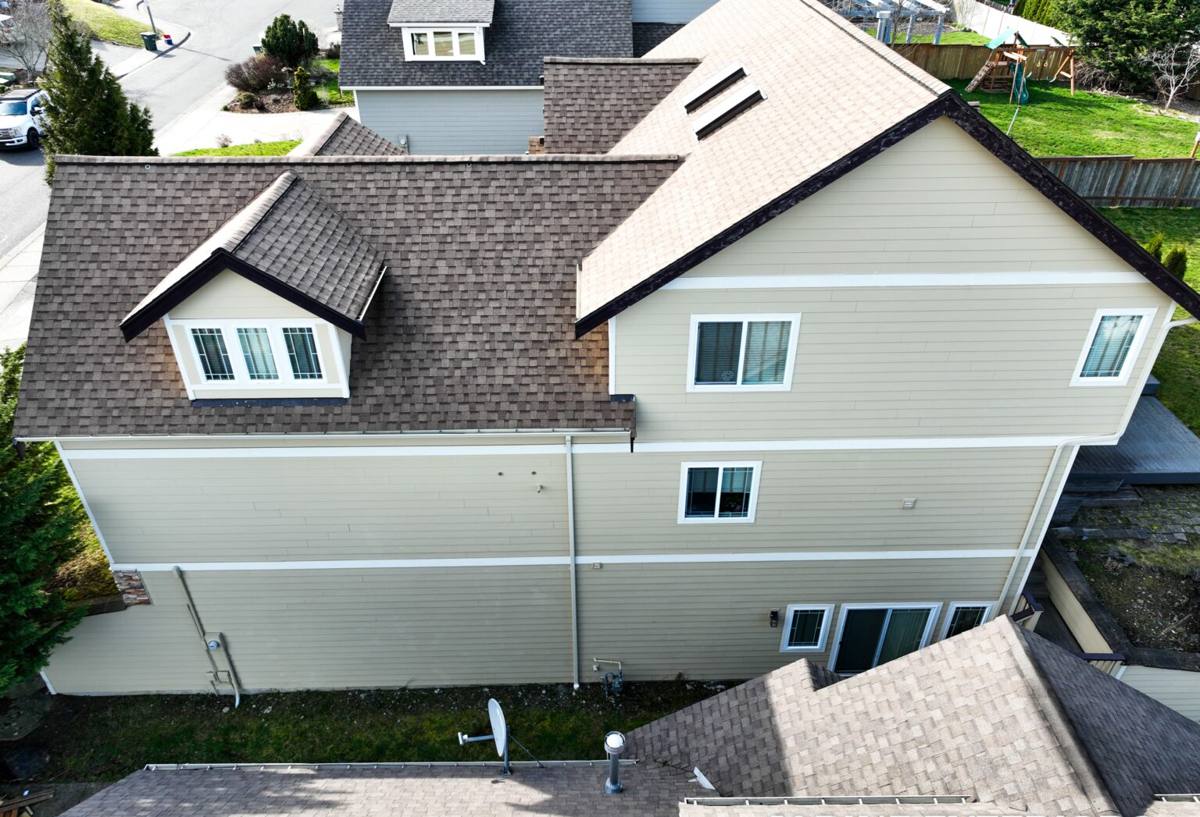
Asphalt shingles remain the most common roofing material in Whatcom County for good reason. They're affordable, widely available, easy to repair in sections, and most licensed roofers can install or patch them quickly. Modern architectural shingles are rated for wind speeds well above what we typically see in Sumas, and algae-resistant (AR) shingle lines have improved noticeably over the last decade.
Where They Struggle Locally
The tradeoff is moisture exposure. Shingles have a granulated surface with seams and laps that can hold onto damp organic debris — pine needles, leaf litter, moss spores — especially on north-facing slopes or roof sections shaded by trees. Over time, moss can work its way under tab edges and lift them slightly, which is what eventually leads to leaks if it's left unaddressed. This isn't a defect in the shingle; it's just what happens when a porous, textured material sits under a rainforest-adjacent climate for years without regular moss treatment or cleaning.
How Metal Roofing Performs in Our Climate
Strengths
Metal roofing sheds water fast and has a smooth, low-friction surface that gives moss and algae far less to grab onto. That's a real advantage in a moss-heavy climate like ours — homeowners who switch to metal often tell us they spend a lot less time and money on annual moss removal. Metal also handles wind-driven rain well when it's installed with proper panel overlap and correctly flashed penetrations, and it holds up to wind gusts better than shingles in most cases because of how the panels interlock or are fastened.
Where It Requires More Care
Metal isn't maintenance-free. Fastener seals on exposed-fastener panel systems (the more affordable style) can loosen or degrade over years of temperature swings and need periodic inspection. Standing-seam systems avoid exposed fasteners but cost more. Metal is also less forgiving of poor installation — a flashing detail done wrong on a metal roof is more likely to cause a real leak than the same mistake on a shingle roof, because there's less redundancy in the water-shedding system. This is one of the main reasons we're selective about installation crews and detailing on every metal job.
Lifespan: What to Realistically Expect
| Material | Typical Lifespan Here | Main Factor Affecting Longevity |
|---|---|---|
| Asphalt shingles (standard 3-tab) | 15-20 years | Moss/algae buildup, UV and moisture cycling |
| Asphalt shingles (architectural/AR) | 20-30 years | Regular moss maintenance extends life significantly |
| Metal (exposed-fastener panel) | 30-40 years | Fastener seal maintenance, coating quality |
| Metal (standing seam) | 40-50+ years | Installation quality, minimal ongoing maintenance needed |
These are general ranges, not guarantees — actual lifespan depends heavily on roof pitch, tree cover, ventilation, and how consistently the roof gets maintained. A shingle roof that gets moss treatment every year or two will often outlast a neglected one by a decade.
Cost Comparison: What Actually Drives the Price
Upfront cost is usually the deciding factor for homeowners, so it's worth breaking down what you're actually paying for rather than just comparing sticker price.
| Cost Factor | Asphalt Shingles | Metal Roofing |
|---|---|---|
| Material cost | Lower | Higher — often 2-3x the material cost of shingles |
| Labor/installation complexity | Standard, most crews experienced | Requires specialized skill, especially standing seam |
| Underlayment/ice-and-water needs | Standard coverage in valleys and eaves | Often more extensive due to condensation risk |
| Long-term maintenance cost | Regular moss treatment, periodic repairs | Lower ongoing cost, occasional fastener checks |
| Insurance/energy considerations | Standard | Some insurers offer discounts; better solar reflectivity |
The honest way to think about it: shingles cost less to install but more to maintain and replace sooner. Metal costs more upfront but spreads that cost over a much longer roof life and lower annual upkeep. Whether that math works in your favor depends on how long you plan to stay in the house.
The Moss Factor: Why It Matters More in Sumas Than Most Places
This deserves its own section because it's the single biggest climate-driven variable in this decision. Whatcom County's long, wet, mild winters are close to ideal conditions for moss growth on a roof — cool temperatures, consistent moisture, and shaded areas from mature trees common in this area. Moss doesn't just look bad; it holds water against the roofing material, which accelerates granule loss on shingles and can work into seams over time.
On a metal roof, moss struggles to establish because there's no textured surface for spores to root into, and water runs off before it has a chance to sit. That's the clearest, most climate-specific advantage metal has in our area. It's not that shingles "fail" because of moss — it's that they require more consistent maintenance to manage it, and that maintenance has a real annual cost in time or money.
Noise, Appearance, and Resale Considerations
Two things homeowners ask about that aren't strictly performance-related:
Noise during rain: With proper solid decking and underlayment (standard on any metal install we'd recommend), the noise difference between metal and shingles is much smaller than people expect. The "loud tin roof" reputation mostly comes from older, poorly insulated agricultural buildings, not residential systems installed over solid sheathing.
Resale value: Metal roofs are increasingly seen as a value-add in Pacific Northwest markets because buyers recognize the low-maintenance, long-lifespan appeal — especially buyers who've dealt with moss and moisture issues on a previous home. Shingle roofs remain the market norm and don't hurt resale, but a newer metal roof can be a genuine selling point when it's time to list.
Which One Fits Your Situation?
There's no universal right answer — it depends on your roof, your timeline, and your budget. Here's a practical checklist to help sort out which direction makes more sense for your house:
- Planning to stay in the home 20+ years — metal's higher upfront cost has more time to pay off in avoided maintenance and replacement
- Heavily shaded roof or history of stubborn moss — metal reduces that maintenance burden significantly
- Working with a tighter renovation budget right now — shingles get you a solid, code-compliant roof at a lower upfront cost
- Roof has a lot of complex valleys, dormers, or penetrations — factor in that metal requires more precise flashing work in these areas
- Selling within the next 5-10 years — either material is defensible; focus on condition and proper installation over material choice
- Want lower annual maintenance regardless of upfront cost — metal is the more hands-off long-term option
What Matters More Than the Material Itself
Whichever direction you lean, the installation quality matters more than the material choice. A well-installed shingle roof with proper ventilation, ice-and-water shield in the right spots, and correct nailing will outperform a poorly installed metal roof every time. Ventilation in particular gets overlooked — trapped attic moisture shortens the life of any roofing material, and it's a common issue we find on older Sumas homes during inspections regardless of what's on top. Ask any contractor you're considering how they handle ventilation, valley flashing, and underlayment coverage before you ask them about brand names.
Getting a Straight Answer for Your Roof
The right choice really comes down to your specific roof — its pitch, tree exposure, current condition, and how long you're planning to stay in the house. We're happy to walk your roof, point out what we actually see (not a sales pitch), and give you honest numbers for both options so you can decide with real information. If you'd like a free, no-pressure estimate, the form below gets you started.