 Sumas Roofing
 Roofing Built for What Everson Actually Deals With
Everson sits in the Nooksack River valley in Whatcom County, close enough to the coast that marine weather systems roll through all winter and close enough to the foothills that rain lingers instead of blowing through fast. That combination means local roofs spend more months of the year wet than dry. It's not dramatic weather most of the time — it's steady, low-grade moisture exposure that adds up over years and shows up as soft spots, moss colonies, and slow leaks that homeowners don't notice until there's a stain on a ceiling.
We work on homes throughout the Everson area as part of our regular service territory out of Sumas, and the roofs we see here have a lot in common: aging comp shingle roofs original to the house, cedar that's been re-coated a few times, and newer metal roofs installed by owners who got tired of the moss battle. Whatever's on the house now, the climate here doesn't change — driving rain off the coast, a long wet season, and enough shade and humidity in places to keep moss and moisture happy for months at a time.
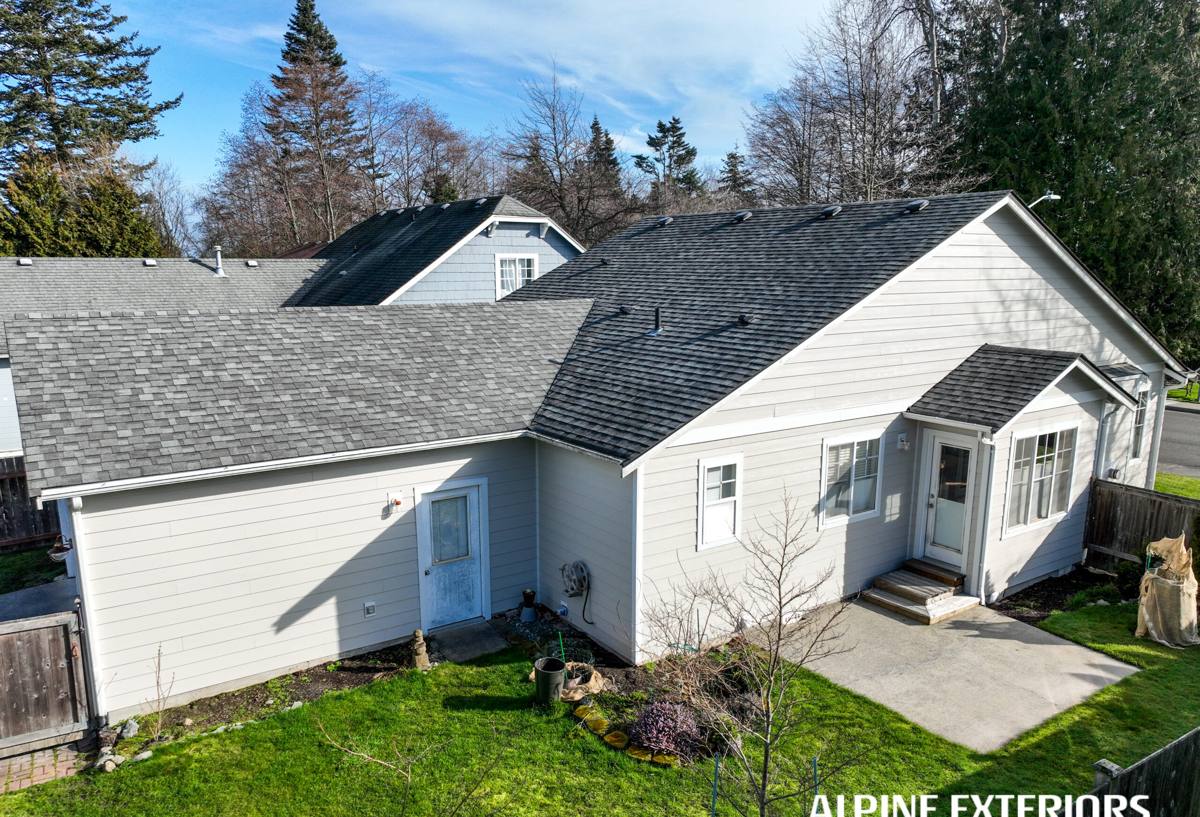
What Whatcom County Weather Does to a Roof Over Time
Driving Rain and Wind-Driven Moisture
Rain here rarely falls straight down. When storms move in off the water, wind pushes rain sideways under shingle laps, around flashing, and into any gap that wouldn't be a problem in a calmer climate. This is why flashing detail work — around chimneys, skylights, valleys, and where a roof meets a wall — matters as much as the shingles themselves. A roof can have good material on it and still leak if the flashing wasn't installed with wind-driven rain in mind.
The Long Moss Season
Moss needs shade, moisture, and time, and this region hands it all three for the better part of the year. Moss doesn't just look bad — it holds water against the roofing surface, lifts shingle edges as it grows, and works its way under laps where it keeps that section of roof damp long after the rest has dried out. Left alone for a few seasons, moss growth can shorten the effective life of an asphalt roof significantly, not because the shingles failed, but because they were kept wet far more often than they were designed to be.
Coastal Air and Slow Material Fatigue
Being close to Puget Sound and the Salish Sea means the air here carries more moisture and salt content than you'd get further inland. That doesn't corrode a roof overnight, but it does accelerate wear on exposed metal fasteners, flashing, and gutter hardware over the years. It's part of why we pay attention to fastener and flashing material choices on coastal-influenced jobs, not just the shingles or panels themselves.
Our Roofing Services in the Everson Area
Roof Inspections and Maintenance
A lot of roofing problems here are preventable if they're caught early. We check for lifted or cracked shingles, soft decking, moss buildup, clogged valleys, and flashing that's pulled away from a chimney or wall. Regular inspection, especially after a hard winter, catches small problems while they're still small.
Roof Repair
Not every roof problem means a full replacement. Localized leaks, storm damage, a section of moss-damaged shingles, or failed flashing can often be repaired without touching the rest of the roof. We'll tell you honestly when a repair makes sense and when it's just delaying a bigger job.
Full Roof Replacement
When a roof is past the point where repairs make financial sense, we handle full tear-off and replacement, including proper underlayment and flashing work — the parts of the job that don't show up in a photo but determine whether the roof actually performs in this climate.
Moss Treatment and Gutter Care
Since moss is such a persistent issue here, we offer moss removal and treatment as part of general roof maintenance, along with gutter cleaning and repair. Clogged gutters back water up under the roof edge, which is one of the more common causes of edge rot we see on older homes in this area.
Beyond the Roof: Siding, Windows, and Decks
Roofing is only part of how a house holds up against this climate. We also handle siding, windows, and decks, and on a lot of Everson homes these systems fail for the same underlying reason the roof does — sustained moisture exposure that the original materials or installation weren't quite ready for.
Siding
Siding takes the brunt of wind-driven rain on a house. We look at whether the existing siding is managing moisture correctly — proper flashing at windows and doors, adequate drainage behind the cladding, and no trapped moisture points — before recommending repair or replacement.
Windows
Older windows in this region often show their age through fogging between panes, drafts, or soft trim from years of moisture intrusion at the sill. Replacing windows is also a natural point to correct flashing details that may have been installed poorly the first time.
Decks
Outdoor living space in Whatcom County means building for rain, not around it. Deck framing, fasteners, and surface material all need to handle repeated wet-dry cycling without rot or corrosion, and proper drainage underneath a deck matters as much as what's on top.
Comparing Roofing Materials for This Climate
There's no single "best" roofing material — the right choice depends on budget, how long you plan to stay in the home, and how much maintenance you're willing to do. Here's how the common options compare for a wet, moss-prone climate like ours.
| Material | Typical Lifespan | Moss Resistance | Maintenance |
|---|---|---|---|
| Asphalt composition shingle | 20-30 years | Moderate; algae-resistant granules help | Periodic moss/debris removal recommended |
| Cedar shake/shingle | 25-30 years with upkeep | Lower without treatment | Regular treatment and cleaning needed |
| Metal (standing seam or panel) | 40-50+ years | High; sheds moisture, little surface for moss to grip | Low; occasional gutter/fastener check |
| Composite/synthetic shingle | 30-50 years | Moderate to high depending on product | Low to moderate |
Cost generally scales with lifespan and labor complexity — asphalt is the most budget-friendly upfront, metal costs more initially but spreads that cost over decades with less maintenance, and cedar sits in between but asks for the most ongoing attention. We'll walk through these trade-offs honestly based on your roof, your budget, and how long you're planning to stay in the house, rather than pushing whatever's easiest to sell.
What Drives the Cost of a Roofing Project
| Factor | Why It Matters |
|---|---|
| Roof size and pitch | Steeper, larger roofs take more material and more labor time/safety setup |
| Number of layers to remove | Tear-off of multiple old layers adds labor and disposal cost |
| Decking condition | Rotted or soft decking found during tear-off needs replacement before new roofing goes on |
| Flashing and penetrations | More chimneys, skylights, and valleys mean more detail work |
| Material choice | Asphalt, metal, and cedar carry different material and installation costs |
| Access and site conditions | Tree cover, steep lots, or limited access can add time |
We give straightforward, itemized estimates so you can see what's driving the number, not just a bottom-line total.
Why a Local Crew Makes a Difference
A roofer working across a dozen different climates doesn't build the same instincts as a crew that works Whatcom County year-round. We know what a wind-driven rainstorm off the coast does to a poorly flashed valley, how fast moss reestablishes on a north-facing slope with tree cover, and which older homes in this area are likely to have decking issues under the shingles before we even pull them up. That local pattern recognition shows up in the quality of the work — fewer surprises, fewer callbacks, and a roof that's actually built for the weather it's going to see.
Being close by also means we can respond quickly if a storm causes damage or a small leak needs attention before it becomes a bigger problem. That's harder to get from a company that's driving in from outside the region.
What to Expect When You Request an Estimate
- We schedule a time to walk the roof (or siding, windows, or deck) in person and take a real look at its condition.
- We identify what's causing any current problems, not just what's visible from the ground.
- We explain your options in plain terms, including repair versus replacement where that's a genuine choice.
- We provide a written estimate that breaks down materials and labor so you know what you're paying for.
- If you move forward, we schedule the work around weather windows to give new materials the best chance to perform.
Roof Maintenance Checklist for Everson Homeowners
- Clean gutters and downspouts at least twice a year, more often under trees
- Watch for moss starting on shaded or north-facing roof slopes and address it early
- Check attic spaces for signs of moisture, staining, or daylight where there shouldn't be any
- Look at flashing around chimneys, skylights, and vent pipes after major storms
- Trim back tree branches that keep roof sections shaded and slow to dry
- Have the roof inspected after any significant wind event
- Don't ignore a small, slow leak — trace it before it spreads to decking or framing
Let's Take a Look
If you're in Everson and dealing with moss buildup, a leak that won't quit, or a roof that's simply due for an honest assessment, we're happy to come take a look. Reach out for a free, no-pressure estimate using the form below — we'll give you a straight answer about what your roof, siding, windows, or deck actually need, not just an upsell.