 Sumas Roofing
 Exterior Work in Blaine: Built for the Coast, Not Just the Weather
Blaine sits right on the water at the northern edge of Whatcom County, which means homes here deal with a version of Pacific Northwest weather that inland neighborhoods don't see as much of. It's not just rain — it's rain riding on wind coming off the bay, salt-laden air working on metal and fasteners year-round, and shaded, damp lots where moss and algae get a foothold and never really let go. A roof or siding job that would hold up fine forty minutes inland can wear out faster right on the water if it isn't built with that in mind.
We're a local crew that works Sumas, Blaine, and the surrounding Whatcom County area, and we approach every exterior job — roofing, siding, windows, decks — with the coastal conditions factored in from the start, not as an afterthought.
What Salt Air Actually Does to a House
Salt air is corrosive in ways that aren't always obvious until years later. It's not that anything fails overnight — it's the slow, steady breakdown of metal fasteners, flashing, and hardware that weren't specified for a marine-influenced environment.
- Fasteners: standard galvanized nails and screws corrode faster near the water than they would inland, which can lead to streaking, loosening shingles, or siding panels that work themselves free over time.
- Flashing and metal trim: valleys, drip edges, and step flashing take the brunt of it, since they're exposed metal doing the most critical waterproofing work on the house.
- Window and door hardware: hinges, tracks, and locking mechanisms can stiffen up or corrode prematurely if they're not rated for a coastal environment.
None of this means a house near the water is doomed to constant repairs — it means the materials and fasteners need to be chosen with that exposure in mind, and that's a decision made at installation, not something you can easily fix after the fact.
Driving Rain and Wind-Driven Water
Rain that comes in sideways behaves differently than rain that falls straight down. It gets pushed up under laps in siding, behind poorly sealed trim, and into any gap in flashing that would otherwise stay dry in calmer weather. On a roof, that means valleys, chimney flashing, and any place two roof planes meet need to be detailed for wind-driven water, not just gravity drainage. On siding, it means paying close attention to how panels overlap and how trim is sealed at penetrations — vents, hose bibs, light fixtures, and anywhere something passes through the wall.
The Long Moss Season
Whatcom County's moss season isn't really a season — on shaded, north-facing roofs, moss and algae can be active most of the year. Moss holds moisture directly against roofing material, which shortens the life of asphalt shingles and can work its way under shingle edges and lift them. On siding, especially in shaded corners or under overhangs that don't get much sun or airflow, the same damp, green growth shows up and can hide moisture damage underneath if it's left unaddressed.
Moss isn't just cosmetic. A roof that stays green in the shaded sections year after year is a roof that's holding water longer than it should, and that adds up over the life of the material.
Simple Moss Prevention Habits
- Keep gutters clear so water isn't backing up and staying against the roof edge
- Trim back overhanging branches to let more sun and air reach shaded roof sections
- Have zinc or copper strips installed near the ridge on moss-prone roofs — rain washing over them helps inhibit regrowth
- Get moss physically removed rather than pressure-washed, since aggressive pressure washing can strip granules off asphalt shingles
- Have a roof looked at every year or two if it has persistent shaded areas, so small lifting or damage gets caught early
Roofing for Blaine Homes
We install and repair asphalt shingle, metal, and other common roofing systems, and for coastal properties we pay close attention to fastener choice, flashing material, and underlayment — the parts of a roofing system that do the most work in wind-driven rain and salt exposure. A roof replacement is also the right time to address ventilation, since a roof that isn't venting properly traps moisture from inside the house, which compounds whatever the weather is already doing from outside.
Roof repair work in this area tends to fall into a few common categories: flashing failures around chimneys and skylights, moss-related shingle damage in shaded sections, and wind damage to ridge caps or loose shingles after a storm. We diagnose the actual cause before quoting a fix — a leak that shows up in one spot isn't always caused by damage in that exact spot, especially with valleys and flashing, where water can travel before it shows itself inside.
Siding That Holds Up to Wind and Moisture
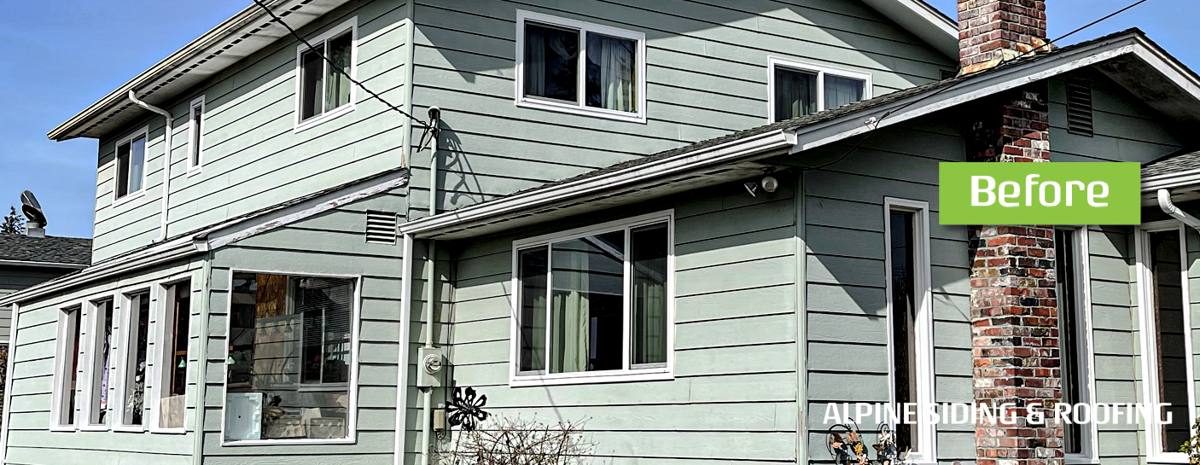
Siding on a coastal or near-coastal home has to manage two things at once: shedding wind-driven rain and standing up to salt air without the fasteners or trim degrading early. We install fiber cement, engineered wood, and vinyl siding depending on the home and the homeowner's priorities, and we're straightforward about the tradeoffs of each rather than pushing one product for every job.
| Siding Type | Moisture Behavior | Maintenance | Best Fit |
|---|---|---|---|
| Fiber Cement | Very stable, doesn't warp or rot, holds paint well | Repaint every 10-15 years, otherwise low | Homes wanting a wood look with less upkeep |
| Engineered Wood | Good if properly sealed and detailed at joints | Moderate — depends on installation quality | Budget-conscious jobs with careful detailing |
| Vinyl | Sheds water well but can flex or gap in high wind if under-fastened | Low — occasional cleaning | Straightforward re-siding on a budget |
Whatever material is chosen, the flashing and trim work at windows, corners, and penetrations matters as much as the panel itself. That's where most siding failures actually start — not in the field of the panels, but at the transitions.
Windows: Sealing Out Salt Air and Wind-Driven Rain
Older windows near the water often show their age through hardware that's stiff or corroded, seals that have failed and let condensation build between panes, and frames that have taken on moisture at the sill. When we replace windows, the flashing and sealing detail around the rough opening matters just as much as the window unit itself — a good window installed without proper flashing will still leak in driving rain. For homes closer to the water, we also talk through hardware and frame material options that hold up better to salt exposure over time.
Decks: Built to Handle Wet Wood Cycles
A deck in this climate goes through repeated wet-dry cycles for most of the year, and the structural framing underneath — ledger boards, joists, posts — is usually the first place problems show up, long before the visible decking looks bad. We check flashing at the ledger board connection (where the deck meets the house) as a standard part of any deck inspection or build, since that's one of the most common sources of hidden rot in this region. For decking material, composite options have become popular because they don't require the same repainting or sealing cycle that wood does, but we'll walk through the real maintenance differences rather than assume composite is automatically the right call for every budget.
Deck Material Cost and Maintenance Factors
- Pressure-treated wood: lowest upfront cost, needs periodic sealing/staining to hold up to repeated wet-dry cycles
- Cedar: naturally more rot-resistant than treated pine, still benefits from sealing to hold its color and shed water
- Composite: highest upfront cost, little to no sealing/staining required, but structural framing underneath still needs the same attention regardless of decking material
Why a Local Crew Matters Here
Exterior work in Blaine and the rest of Whatcom County isn't the same job as exterior work somewhere dry and inland. A crew that mostly works other conditions can still do competent work, but they may not default to the fastener upgrades, flashing details, or moss-prevention steps that make a real difference on the coast unless a homeowner specifically asks. We work this area regularly, so those choices are just part of how we build and repair, not an upsell.
Being local also means we're realistic about scheduling around the weather here — some repairs need a dry stretch to do properly, and we plan around that instead of rushing a fix that won't hold.
A Simple Homeowner Checklist for Coastal Exterior Maintenance
- Clean gutters at least twice a year, more often if there are overhanging trees
- Walk the roofline from the ground periodically and look for moss buildup in shaded areas
- Check caulking and sealant around windows and doors annually for cracking or gaps
- Look at deck ledger boards and support posts for soft spots or staining, especially near the house connection
- Have flashing around chimneys, skylights, and roof valleys inspected every couple of years
- Address small leaks or stains quickly — in this climate, moisture problems rarely stay small on their own
Getting an Honest Look at Your Home
Every home on this stretch of coastline deals with the weather a little differently depending on shade, exposure, and age of the existing materials, so we don't quote roofing, siding, window, or deck work off general assumptions. If you're noticing moss buildup, drafty windows, a deck that feels soft in spots, or siding that's showing wear faster than it should, we're happy to come take a straightforward look and walk you through what we're actually seeing — no pressure, no upsell. Use the form below to request a free estimate, and we'll go from there.