 Sumas Roofing
 Roofing for Deming Homes: Built for Whatcom County Weather
Deming sits in the shadow of the North Cascades, tucked along the Nooksack River corridor in Whatcom County. It's a beautiful place to own a home, but the same conditions that make it green year-round — heavy rainfall, dense tree cover, and long stretches of overcast, damp weather — are hard on a roof. Sumas Roofing Co works throughout this part of the county, and Deming's roofs have their own personality shaped by that river-valley climate: more moss, more shade, more standing moisture than you'd see on a roof twenty minutes away in open farmland.
A roof here isn't just protecting against rain. It's dealing with prolonged dampness that never fully dries out between storms, wind funneling down the valley, and organic debris — needles, leaves, seed pods — that collects in valleys and behind chimneys. Understanding those specific pressures is what separates a roof that lasts its full service life from one that needs premature repair.
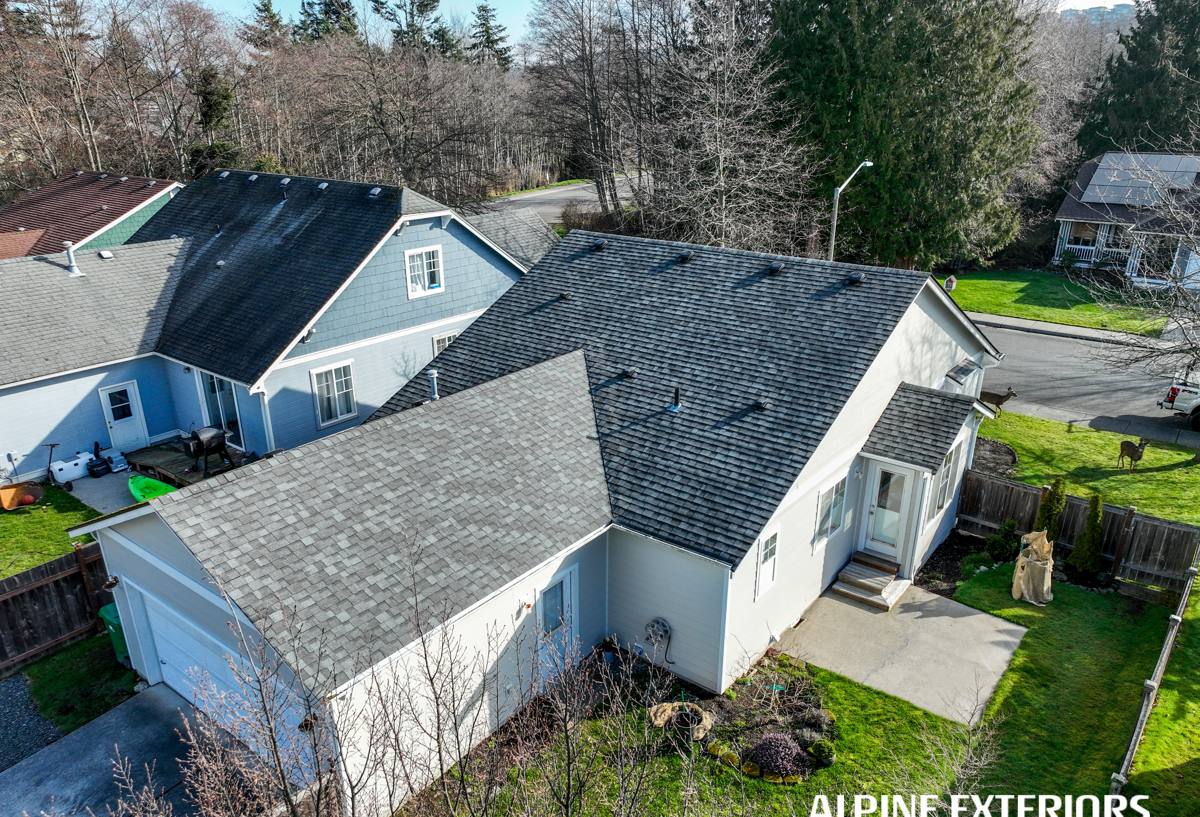
What Deming's Climate Does to a Roof
Moss and Organic Growth
Deming's tree cover and river-valley humidity create ideal conditions for moss, algae, and lichen. Shaded north-facing slopes and roofs under overhanging trees are the most vulnerable. Moss isn't just cosmetic — as it grows, it holds moisture against the roofing material and lifts shingle edges, which lets water work its way underneath. Left unchecked over several seasons, that moisture retention accelerates granule loss on composition shingles and can rot the sheathing underneath.
Sustained Rainfall and Slow Drying
Whatcom County gets a lot of rain, but what matters more for a roof is how long things stay wet. In a valley setting like Deming, with tree cover limiting sun and wind exposure on parts of the roof, surfaces that would dry out in a few hours elsewhere can stay damp for days. That extended moisture exposure is hard on flashing, underlayment, and any spot where two roof planes meet.
Wind and Debris
Valley wind patterns can be unpredictable, and combined with mature trees close to many homes, that means branches, needle litter, and occasional storm debris ending up on the roof. Debris that collects in valleys or against roof penetrations traps water and speeds up wear in those specific spots long before the rest of the roof shows its age.
Common Roofing Issues We See in This Area
- Moss and algae buildup on shaded or north-facing roof sections
- Granule loss on composition shingles from prolonged moisture exposure
- Soft or damaged sheathing beneath moss-covered areas
- Clogged gutters and valleys from needle and leaf debris
- Deteriorated flashing around chimneys, skylights, and roof-to-wall transitions
- Ice and freeze-thaw stress on roofs during the occasional hard cold snap
Roof Repair Services
Not every roofing issue calls for a full tear-off. Most homeowners in Deming come to us first with a specific problem: a leak in one spot, a section of moss-damaged shingles, or flashing that's pulled away. Our repair work is targeted — we diagnose the actual failure point rather than assuming the worst, and we're upfront if a repair is a reasonable fix versus a stopgap on a roof that's better off replaced.
What a Repair Visit Typically Covers
- Locating and sealing active leaks, including tracing water intrusion back to its real source (which is often not directly above the interior stain)
- Replacing damaged or missing shingles and matching them as closely as possible to existing material
- Re-flashing around chimneys, vents, and skylights where seals have failed
- Moss and debris removal, done carefully to avoid stripping granules or damaging the roofing surface
- Gutter and valley clearing so water has a clear path off the roof
Roof Replacement: What Homeowners Should Know
When a roof is past the point where repairs make sense — widespread granule loss, multiple leak points, sheathing damage, or simply age — a full replacement is the more honest recommendation. We walk through the roof with you, explain what we're seeing, and give a straightforward estimate before any work starts.
The Replacement Process
- Inspection and estimate. We assess the current roof, decking condition, ventilation, and any problem areas, and give you a clear written estimate.
- Material selection. We go over roofing options suited to this climate — composition shingle, metal, and other systems — along with their real-world tradeoffs for a moisture-heavy, moss-prone area.
- Tear-off and deck inspection. Old roofing comes off and we inspect the sheathing underneath, since damaged decking needs to be addressed before new roofing goes on — not covered up.
- Underlayment and flashing. A quality underlayment and properly detailed flashing at every penetration and transition matter more here than in drier climates, since they're your second line of defense against sustained rain.
- Roofing installation. Installed to manufacturer specification, with attention to proper nailing patterns, exposure, and ventilation.
- Final walkthrough. We review the finished roof with you and clean up the site.
Choosing Roofing Materials for a Damp, Shaded Area
| Material | Moss/Moisture Resistance | Typical Lifespan | Maintenance |
|---|---|---|---|
| Standard composition shingle | Moderate — needs periodic moss treatment in shaded areas | 20-30 years | Regular debris clearing, occasional moss treatment |
| Algae-resistant (impregnated) shingle | Better resistance to streaking and growth | 25-30 years | Lower moss maintenance than standard shingle |
| Metal roofing | High — sheds moisture quickly, doesn't hold organic growth the way shingles can | 40-60+ years | Low; periodic debris clearing and fastener checks |
| Cedar shake | Lower in this climate — retains moisture, higher moss/rot risk under heavy tree cover | 20-30 years with diligent upkeep | High; requires regular treatment and inspection |
We don't push one material on every home. The right choice depends on how much shade and tree cover the roof deals with, your budget, and how much ongoing maintenance you want to take on. For heavily shaded Deming properties, we're often steering homeowners toward algae-resistant shingles or metal specifically because they hold up better against the moss and moisture that standard materials struggle with here — not because any product is inherently bad, just because some handle sustained dampness better than others.
A Note on Cedar Shake
Cedar shake has real aesthetic appeal and a long history in the Pacific Northwest, but in a shaded, moisture-retentive setting like Deming, it demands more diligence than most homeowners want to commit to. If moisture sits against untreated cedar for extended periods, it accelerates decay and moss colonization. We'll still install it if that's what a homeowner wants and understands the upkeep involved, but we make sure that tradeoff is clear upfront rather than a surprise three years in.
Beyond the Roof: Siding, Windows, and Decks
Roofing problems in a climate like this rarely stay isolated to the roof. Water that gets past compromised flashing or moss-damaged shingles often finds its way into fascia boards, siding, and eventually window trim. Because Sumas Roofing Co handles siding, windows, and decks in addition to roofing, we can look at a home more completely — checking whether a roof leak has affected the wall assembly below it, or whether a deck built into a shaded, damp corner of the yard is dealing with the same moss and moisture issues as the roof above it.
This matters practically: if you're calling about a stained ceiling, it's worth having someone check the full path water could be taking, not just the spot directly above the stain.
Maintenance That Actually Extends Roof Life in Deming
- Clear gutters and valleys at least twice a year, more often if your property has heavy tree cover
- Have moss treated before it spreads — a light coating is far easier and cheaper to deal with than an established mat
- Trim back branches that overhang the roofline to reduce shade, debris, and physical abrasion
- Get flashing checked every few years, especially around chimneys and skylights, since these are the most common leak points
- Address small leaks early — a contained repair now is almost always cheaper than sheathing replacement later
Why a Local Crew Matters
Roofing crews based outside Whatcom County can install a roof, but they don't necessarily know how Deming's tree cover and valley moisture patterns behave differently from a roof on open ground closer to Bellingham or out toward Sumas. We work these roofs regularly, so we know which shaded corners tend to hold moss, which flashing details need extra attention in a damp valley setting, and what a realistic maintenance schedule looks like for a property like yours. That local familiarity shows up in fewer callbacks and a roof that's set up to handle the conditions it actually faces, not generic conditions from a manual.
Get a Free, No-Pressure Estimate
If you're dealing with a leak, visible moss buildup, or you're just not sure how much life is left in your roof, we're happy to take a look. There's no obligation and no pressure — just a straightforward assessment and an honest recommendation. Use the form below to request your free estimate.