 Sumas Roofing
 Serving Ferndale: Roofing Done Right
Ferndale homes sit in a part of Whatcom County that takes a specific kind of beating from the weather. There's marine influence off the water, rain that rarely falls straight down, and enough cloud cover and shade on the north side of most roofs to keep moss and algae going for the better part of the year. None of that is unusual for this corner of Washington, but it does mean a roof here has to hold up to more than a simple annual rainfall number would suggest. We do roofing work for Ferndale homeowners as part of our regular Whatcom County service area, and we treat it the same way we'd want a contractor to treat our own house — inspect honestly, recommend what the roof actually needs, and do the installation right the first time.
We're a full exterior contractor, not a roofing-only outfit. Alongside roofing, we handle siding, windows, and decks, which matters more than it might seem — a roof doesn't perform in isolation from the rest of the exterior. Flashing where a roofline meets a wall, gutter systems that tie into siding, and eaves that shelter windows all interact with each other. Having one crew that understands how those systems fit together, instead of coordinating between separate roofing, siding, and window contractors who've never seen each other's work, tends to produce a tighter, more durable result.
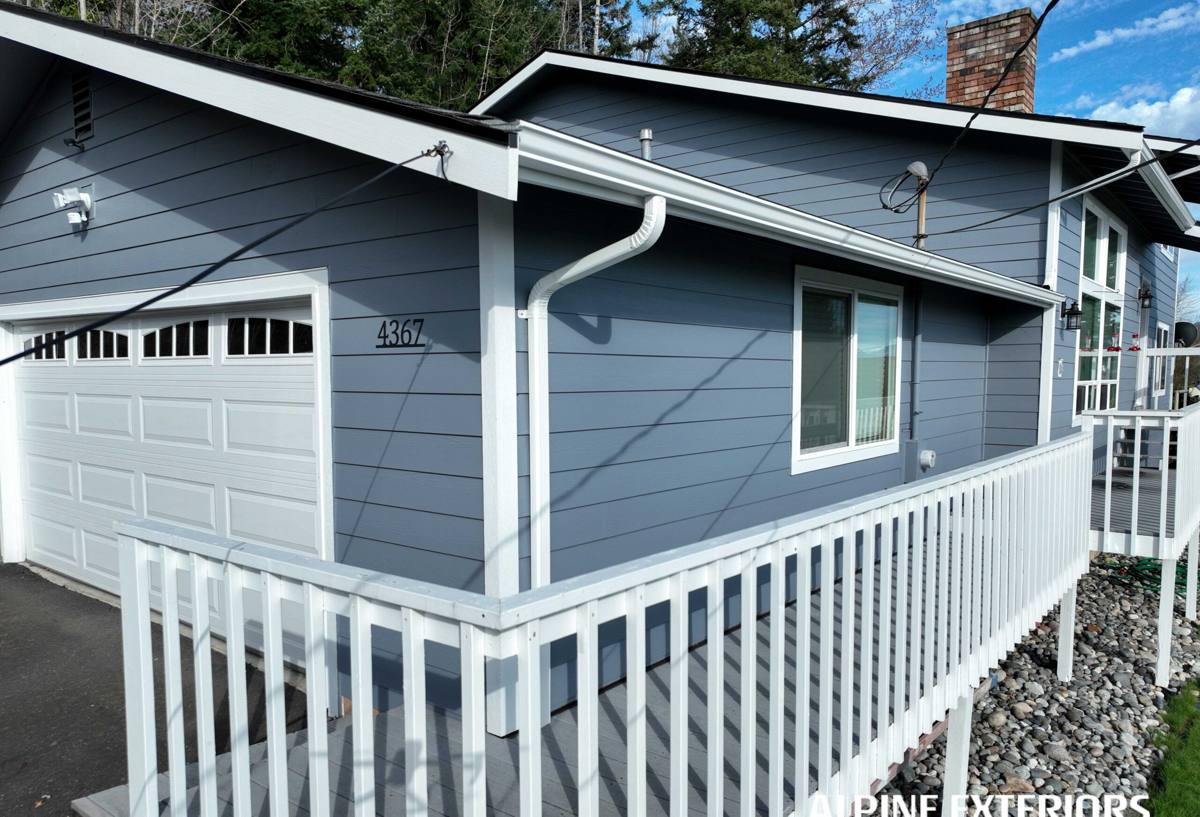
What Ferndale's Climate Does to a Roof
Salt Air and Coastal Exposure
Ferndale's proximity to the water means homes here get a steady dose of salt-tinged air, even at properties set back a fair distance from the shoreline. Salt accelerates corrosion in metal roofing components — flashing, drip edge, fasteners, and gutter hardware — faster than it would in a drier, more inland climate. A roof that skips corrosion-resistant hardware in favor of standard-grade fasteners can start showing rust streaks and failing seals years before it should.
Wind-Driven Rain
Rain in this region doesn't just fall down onto a roof surface, it gets pushed sideways and even upward under shingle edges and around flashing details by wind coming off the water. That's a different load than a calm, straight-down rain event, and it's a common reason roofs that would perform fine in a drier climate develop leaks here specifically at valleys, chimney flashing, and skylight curbs rather than out in the open field of the roof.
A Long Moss Season
Mild temperatures, consistent moisture, and plenty of shaded, tree-lined lots add up to a moss and algae season that can run most of the year on north-facing or heavily shaded slopes. Moss isn't just cosmetic — it holds moisture against the shingle surface, works its way under tabs and granules, and can shorten a roof's effective lifespan well before the material would otherwise have worn out.
Signs a Ferndale Roof Needs Attention
Most roof failures don't happen suddenly. They build slowly, and the early signs are easy to miss from the ground. Worth checking for periodically, especially after a rough winter:
- Granules collecting in gutters or at downspout outlets, a sign the shingle surface is wearing down
- Dark streaking or visible moss growth on shaded or north-facing slopes
- Curling, cupping, or lifted shingle edges, especially on slopes that get the most wind exposure
- Rust staining or visible gaps at flashing around chimneys, skylights, and roof-to-wall transitions
- Daylight visible through the roof deck when viewed from inside the attic
- Soft or spongy spots underfoot if you're ever up there for gutter cleaning or inspection
- Water stains on interior ceilings that seem to appear or worsen specifically during windy rainstorms
Any one of these on its own isn't necessarily an emergency, but they're worth a professional look before the next wet season rather than after.
Roofing Materials That Hold Up in This Climate
There's no single "correct" roofing material for every Ferndale home — the right choice depends on budget, roof pitch, tree cover, and how long you plan to stay in the house. What matters is understanding how each option actually performs under local conditions rather than choosing on price alone.
| Material | Typical Lifespan | How It Performs Locally |
|---|---|---|
| Standard asphalt shingle | 15–20 years | Cost-effective and reliable when installed with proper underlayment and flashing; more prone to moss and algae staining without algae-resistant granules |
| Algae-resistant asphalt shingle | 20–30 years | Copper- or zinc-infused granules slow moss and algae growth, a real advantage given the length of the local growing season |
| Metal roofing | 40–60 years | Sheds wind-driven rain effectively and resists moss better than shingles, though upfront cost is higher and installation detail is less forgiving of errors |
| Synthetic underlayment (any material) | N/A — component | Handles sustained moisture exposure and wind-driven rain intrusion far better than older felt underlayment products |
The Whole Exterior Works Together
A roof doesn't fail in isolation, and neither does the rest of a home's exterior. Poor attic ventilation can trap moisture that shortens both roof and siding lifespan. A gutter system that isn't properly integrated with the roofline and siding can dump water exactly where it does the most damage, at the foundation or behind a wall. Windows installed without correct flashing at the head and sill are one of the more common sources of hidden water intrusion, regardless of how good the roof above them is.
Because we handle roofing, siding, windows, and decks, we can look at a home's exterior as one connected system rather than a series of separate projects. That matters most at the transition points — where a roof edge meets siding, where a deck attaches to the house and needs proper flashing to keep water out of the ledger board connection, or where window trim needs to shed water correctly under an eave. Those transition details are where most real-world leaks actually start, far more often than in the middle of an open roof or wall surface.
Why a Local Crew Matters
A contractor who works Whatcom County roofs regularly has a practical sense of things that are hard to learn from a spec sheet: which roof orientations hold moss the longest through a wet winter, how far wind-driven rain can travel under an improperly lapped shingle course, and what a reasonable repair timeline looks like when weather doesn't cooperate. That knowledge shows up in the details — fastening patterns, flashing choices, and underlayment selection — more than in anything a homeowner would notice on install day.
There's also a practical side to being local. A nearby crew can respond faster for a storm-damage inspection, an emergency tarp, or a warranty callback a few years down the road, and they're going to be around to stand behind that work rather than having moved on to the next region.
What to Expect When You Work With Us
We keep the process straightforward:
- Inspection: We look at the roof deck, existing material condition, flashing details, and attic ventilation, not just the shingle surface from the ground.
- Honest recommendation: Repair, partial replacement, or full replacement — whichever actually fits the roof's condition, not whichever is the bigger job.
- Written estimate: A clear scope of work and price range before anything is scheduled, with no pressure to sign on the spot.
- Installation: Correct tear-off, underlayment, flashing, and ventilation work, done to manufacturer specification so material warranties stay valid.
- Cleanup and walkthrough: A finished site and a chance to walk the job with you before we consider it done.
Roofing Cost Factors in Ferndale
Two roofing bids for what looks like the "same" job can differ significantly, and the gap is usually about real differences in scope and material rather than one contractor simply charging more.
| Cost Factor | What It Affects | Why It Matters Here |
|---|---|---|
| Tear-off vs. layover | Labor scope and ability to inspect the deck | A full tear-off is often the only way to catch deck damage from long-term moisture common under older roofs |
| Underlayment type | Water resistance beneath the roof surface | Synthetic and self-adhered underlayments resist wind-driven rain intrusion far better than older felt products |
| Shingle or material grade | Wind rating, algae resistance, expected lifespan | Algae-resistant options are a meaningful upgrade given the length of the local moss season |
| Flashing scope | Valleys, chimneys, skylights, roof-to-wall transitions | Most leaks in this climate start at flashing details, not the open field of the roof |
| Ventilation upgrades | Attic moisture control and material lifespan | Trapped moisture accelerates deck rot and moss growth from underneath |
| Roof pitch and access | Labor time and safety equipment needed | Steeper roofs on older Ferndale homes add real time and staging requirements |
Let's Take a Look
If your roof is showing wear, if you're not sure whether a repair or replacement makes more sense, or if you'd just like a straightforward opinion from a crew that works this climate regularly, we're happy to come take a look. There's no cost and no pressure to a free estimate — just a written assessment of what your roof actually needs, using the form below.