 Sumas Roofing
 Two Shingle Types, One Big Decision
If you're re-roofing a home in Sumas or anywhere else in Whatcom County, you'll run into two main asphalt shingle categories almost immediately: 3-tab and architectural (also called dimensional or laminate) shingles. They look similar in a brochure photo, but they behave very differently once they're actually on a roof dealing with our climate — driving rain off the Nooksack Valley, damp marine air pulled in from the Sound, and the long gray stretch of moss season that runs from fall through spring. This page walks through what separates them, what each one costs to own over time, and how to think about which one actually fits your house.
What Makes Them Different
3-Tab Shingles
3-tab shingles are a single layer of asphalt-saturated material cut into three even tabs, all the same size and thickness. They lay flat, giving a uniform, low-profile look. They're the lightest shingle on the market and have historically been the entry-level option — thinner, less material per square, and a simpler manufacturing process.
Architectural Shingles
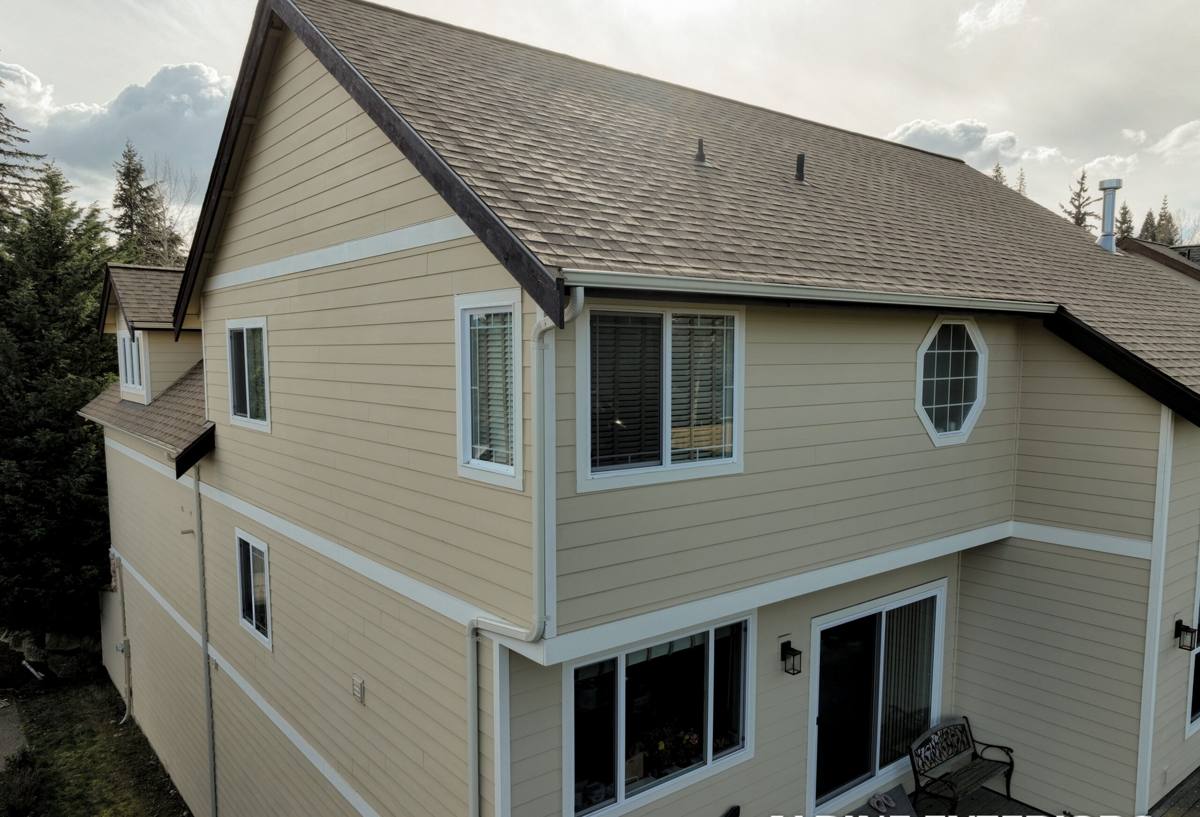
Architectural shingles are built by laminating two layers of material together, which creates the thicker, dimensional look you see on most newer roofs. That extra layer adds weight, rigidity, and a shadow-line effect that reads as more textured and higher-end. The lamination also changes how the shingle handles wind, water, and impact — not just how it looks.
Side-by-Side Comparison
| Factor | 3-Tab Shingles | Architectural Shingles |
|---|---|---|
| Typical lifespan | 15-20 years | 25-30+ years |
| Wind rating | Usually 60-70 mph | Commonly 110-130 mph |
| Weight per square | Lighter | 25-50% heavier |
| Profile | Flat, uniform | Dimensional, layered look |
| Upfront material cost | Lower | Moderate to higher |
| Manufacturer warranty length | Shorter, prorated sooner | Longer, often better non-prorated period |
| Moss/algae resistance options | Limited | Widely available (algae-resistant granules) |
These are general industry ranges, not promises tied to any specific product line — actual numbers vary by manufacturer and by the exact shingle series, so we always confirm current specs and warranty terms with you before you sign off on a material.
Why Wind Rating Matters More Here Than People Expect
Sumas sits close enough to the Fraser Valley that we get real wind events, especially in the fall and winter when weather systems push through the lowlands. A shingle's wind rating isn't a marketing number — it reflects how the shingle is designed to seal down and resist uplift at its edges. Architectural shingles generally test higher because the extra lamination layer adds stiffness and because most architectural lines use a wider, more aggressive adhesive strip pattern. On a 3-tab roof, the individual tabs are lighter and have less surface area holding each shingle down, so in a sustained gust event they're more prone to lifting, cracking at the tab cutouts, or blowing off outright. If your roof is exposed — an open field, a ridge line, or a spot without much windbreak from trees or neighboring structures — that difference is worth taking seriously.
Moss, Moisture, and the Long Whatcom County Wet Season
This region doesn't get the heaviest rainfall in the state, but we get consistent, prolonged dampness — the kind that keeps a roof surface wet for days at a time rather than a quick storm that dries out fast. Combine that with shade from mature trees, which a lot of Sumas properties have, and you get ideal conditions for moss and algae to take hold, especially on north-facing slopes that don't get much direct sun.
Moss isn't just cosmetic. As it grows, it lifts shingle edges, holds moisture against the shingle mat, and accelerates granule loss — which is the layer that protects the asphalt underneath from UV and weather breakdown. A few things matter here regardless of which shingle type you choose:
- Algae-resistant (AR) granules, which contain copper or zinc compounds that slow biological growth, are available on most architectural lines and on some 3-tab products — always ask specifically, since not every shingle in a manufacturer's catalog includes them
- Proper attic ventilation reduces the moisture and temperature swings that make moss and mold more likely to take hold from underneath
- Keeping gutters and valleys clear prevents standing water and organic debris from sitting directly on the shingle surface
- Zinc or copper strips near the ridge can help suppress regrowth on shaded slopes over time
Because architectural shingles have more surface texture and a thicker mat, they tend to shed water a bit more effectively and show granule loss more gradually than a thin 3-tab shingle exposed to the same conditions. Neither type is moss-proof — tree cover and roof orientation matter as much as the shingle itself — but the thicker product gives you more material to lose before it becomes a problem.
Salt Air and Coastal Influence
Sumas is inland, but Whatcom County as a whole sees marine air moving in off the Salish Sea, and that moisture-laden air reaches further inland than people expect, especially during onshore wind patterns. Salt-laden moisture doesn't corrode asphalt shingles the way it corrodes metal flashing, fasteners, and gutters, but it does accelerate the breakdown of exposed metal components on the roof system. This is one more reason we pay close attention to flashing material and fastener quality as part of any re-roof, not just the shingle itself — the shingle is only one piece of a roofing system that has to work together.
Cost Factors Beyond the Shingle Price Tag
The sticker price difference between 3-tab and architectural shingles is real, but it's not the whole cost picture. A few things that change the math over the life of the roof:
| Cost Factor | Consideration |
|---|---|
| Material cost per square | Architectural runs higher upfront due to extra material and lamination |
| Labor | Similar install time per square for most crews, though heavier bundles mean more trips up the ladder |
| Underlayment and flashing | Same either way — don't cut corners here regardless of shingle choice |
| Expected years of service | Architectural's longer lifespan often lowers cost-per-year even with a higher sticker price |
| Insurance and resale | Some insurers and appraisers view higher wind-rated, longer-warranty shingles favorably |
| Repair frequency | 3-tab roofs in exposed or shaded locations may need more frequent spot repairs over time |
We always walk homeowners through actual quotes for their specific roof rather than quoting national averages — roof pitch, layers being removed, decking condition, and access all move the number more than the shingle line itself does.
Where 3-Tab Still Makes Sense
3-tab shingles aren't obsolete, and we're not going to tell you they're a bad product across the board. There are real situations where they're a reasonable, honest choice:
- Detached garages, sheds, or outbuildings where long-term appearance and maximum lifespan matter less
- A rental property where the owner is optimizing for lowest upfront cost over a shorter hold period
- Matching an existing 3-tab roof section on an addition or partial re-roof, where a mismatched profile would look worse than the cost savings are worth
- Budget-constrained projects where the alternative is delaying a needed roof replacement
What we don't recommend is defaulting to 3-tab out of habit on a full re-roof of a primary residence, especially one with exposure to wind, shade-driven moss growth, or both. The pricing gap has narrowed over the years as architectural shingles have become the industry standard, and for most homeowners doing a full replacement, the extra cost buys enough extra service life and wind performance to be worth it.
Questions Worth Asking Before You Choose
Whichever direction you're leaning, these are worth nailing down with any contractor before a contract gets signed:
- What is the actual wind rating and warranty length of the specific shingle line being quoted — not the shingle category in general
- Does the product include algae-resistant granules, and is that an upgrade or standard on this line
- What underlayment and ice-and-water shield are included, especially at valleys and eaves
- Is the manufacturer warranty transferable if you sell the home
- What does the labor warranty cover separately from the manufacturer's material warranty
- How is ventilation being handled, since it affects both moss risk and warranty validity on many shingle lines
How We Approach the Decision With Homeowners
When we walk a roof in Sumas, we're looking at slope orientation, tree cover, existing ventilation, and how exposed the structure is to prevailing wind — not just picking a shingle off a sample board. A shaded, north-facing roof on a heavily treed lot gets a different conversation than a wide-open, sun-exposed roof on flat ground. Our job is to lay out the honest trade-offs for your specific roof and let you make the call with real numbers in front of you, not a sales pitch toward whatever has the best margin.
If you're planning a re-roof and want to see how architectural and 3-tab options stack up for your actual house, we're happy to walk the roof with you and put together a straightforward, no-pressure estimate — no obligation, just a clear look at what your options really are.