 Sumas Roofing
 Roofing and Exteriors for Lynden Homes
Lynden sits in the heart of Whatcom County's agricultural valley, close enough to the water that salt-laden air reaches it on a west wind, and close enough to the foothills that rain, fog, and shade are just part of daily life for most of the year. Homes here don't fail because of one dramatic storm. They fail slowly, from years of moisture sitting where it shouldn't, moss holding water against a roof deck, and siding that never quite gets a chance to dry out between rain events. Sumas Roofing Co works throughout this part of the county, and the approach we take in Lynden reflects what actually wears out homes in this climate, not a generic checklist.
We handle roofing, siding, windows, and decks, and we treat all four as one system. Water that gets past a roof edge shows up as siding rot two years later. A window that's flashed wrong feeds moisture into a wall cavity that never dries. Thinking about the whole exterior, rather than one component at a time, is how you actually get ahead of Whatcom County weather instead of chasing it.
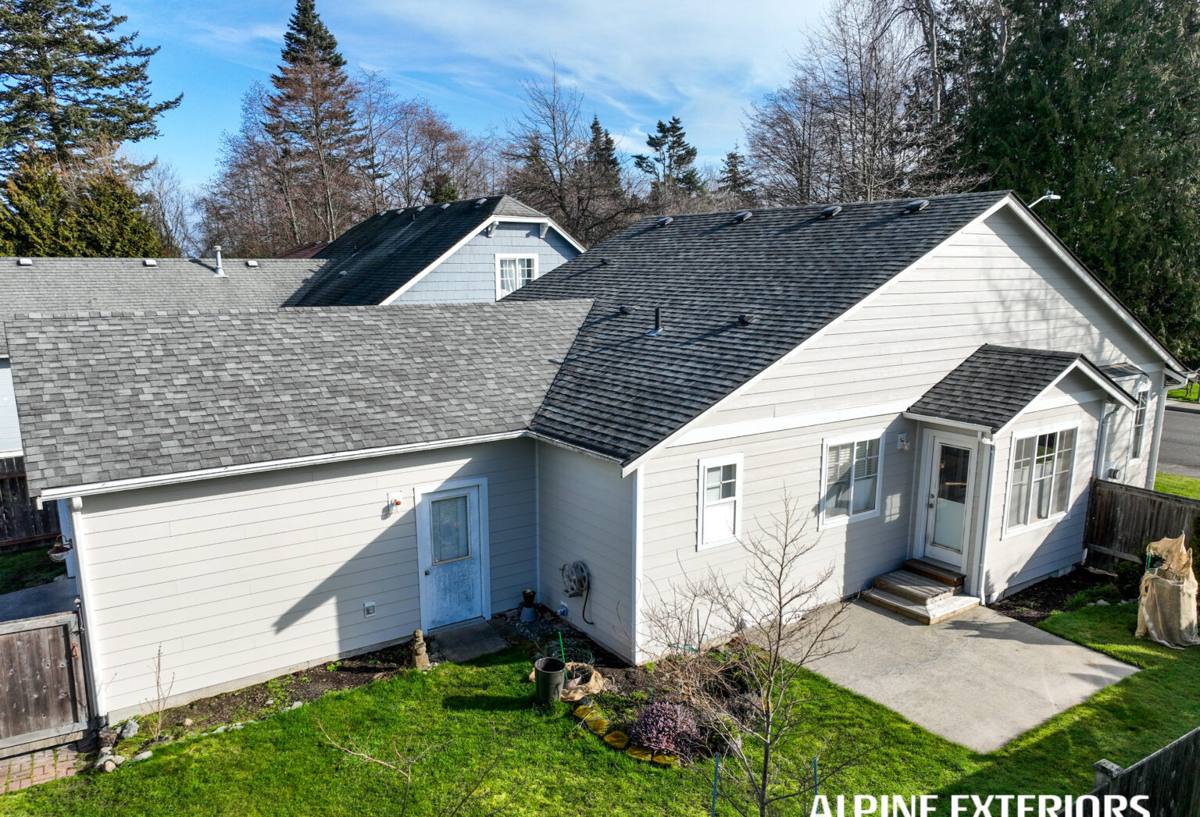
What Whatcom County Weather Does to a Roof
Driving Rain and Wind-Driven Moisture
Rain in this region rarely falls straight down. Wind off the Salish Sea and through the valley pushes it sideways, which means it finds its way under poorly lapped shingles, around loose flashing, and into any gap that a calmer climate would never expose. Roofs here need underlayment and flashing details sized for sideways water, not just a downpour. This is one of the most common corners we see cut on older installs: flashing that would be adequate in a drier state but isn't enough here.
A Long Moss Season
Shade, moisture, and mild temperatures are exactly what moss wants, and Lynden gets all three for a good part of the year. Moss doesn't just look bad. It holds water against the roofing material, works its way under shingle tabs, and lifts them slightly over time, which is when leaks start. North-facing slopes and roofs under tree cover are the first to show it, but it will spread if it's not addressed.
Salt Air and Metal Fatigue
Parts of Whatcom County are close enough to open water that airborne salt affects exposed metal over the years, from flashing to fasteners to gutter systems. It's a slower process than the rain and moss issues, but it matters for material choice, especially on metal roofing and any exposed hardware. We factor this into what we spec on a given job rather than treating every roof the same regardless of exposure.
Freeze-Thaw Swings
Whatcom County doesn't get deep, sustained freezes most winters, but it does get enough freeze-thaw cycling, especially at elevation near Sumas and the foothills, to stress roofing materials that are already holding moisture. A dry roof handles a cold snap fine. A roof with trapped moisture under moss or debris is the one that develops cracked shingles or ice damage at the eaves.
Roofing Materials: What Actually Holds Up Here
There's no single "best" roofing material for every home. The right choice depends on the roof's slope, shade exposure, budget, and how long the homeowner plans to stay in the house. Here's how the common options compare for this climate specifically.
| Material | Moss Resistance | Typical Lifespan Here | Best For |
|---|---|---|---|
| Asphalt composition | Moderate; needs regular cleaning on shaded roofs | 20-30 years | Most homes; best value, wide color range |
| Metal (standing seam) | High; sheds moss more easily than shingles | 40-60+ years | Homes with heavy shade or long-term owners wanting low maintenance |
| Impact-resistant/architectural shingle | Moderate to high depending on product | 25-35 years | Homes wanting a heavier, dimensional look with better wind rating |
| Cedar shake | Low without diligent upkeep | Varies widely with maintenance | Homeowners committed to regular treatment and cleaning |
We're straightforward with clients about cedar shake in this climate: it can look excellent, but it demands consistent moss and moisture management to reach a reasonable lifespan here, and that's an ongoing commitment more than a one-time install decision. We'll install it if that's what a homeowner wants, but we make sure the maintenance expectation is clear up front rather than a surprise five years in.
Ventilation and Underlayment: The Parts You Don't See
A roof's visible surface gets most of the attention, but ventilation and underlayment quality determine how well that surface actually performs over time. In a climate this wet, poor attic ventilation traps warm, moist air against the underside of the roof deck, which accelerates deterioration from the inside out, independent of anything happening on the surface. We check ridge and soffit ventilation balance on every roofing job, not just on request, because it directly affects how long the rest of the work lasts.
Underlayment matters just as much. A synthetic, self-adhering underlayment at eaves and valleys, where wind-driven rain concentrates, gives a roof a real second line of defense instead of relying on the shingles alone to keep water out.
Siding for Wet, Wind-Exposed Walls
Siding in Lynden takes a different kind of punishment than roofing. It's the constant target of driving rain, splash-back from grade, and, on north and west-facing walls, prolonged dampness that never fully dries between storms. We look closely at a few things on every siding project:
- Proper water-resistive barrier and flashing behind the siding, not just a good-looking finish on top of it
- Adequate clearance between siding and grade or hardscaping to avoid constant splash-back moisture
- Correct lap and caulk details at windows, doors, and corners, where most siding leaks actually originate
- Material choice that matches how much upkeep the homeowner actually wants to do
Fiber cement holds up well against the rain and moisture cycling common here and takes paint well over the long term. Engineered wood products have improved, but we're careful about installation details, especially at butt joints and lower edges, since moisture intrusion at those points is where problems start in this climate. Vinyl remains a reasonable lower-maintenance option for many budgets, provided it's installed with enough room to expand and contract through the region's temperature swings.
Windows: Where Leaks and Drafts Really Start
Most window problems we see in this area aren't failures of the window itself, they're failures of the flashing and sealing around it. A window installed without proper head flashing or sill pan will eventually let water into the wall assembly no matter how good the window's own rating is. We flash every window opening to shed water outward and down, integrated with the surrounding siding's drainage plane, so the window and the wall are working together instead of fighting each other.
For homeowners weighing a window replacement, the honest advice is usually this: if a home's windows are original single-pane units, the efficiency and comfort gain from replacement is significant, especially through Whatcom County's damp winters. If windows are already dual-pane and reasonably recent, the case for replacement is more about specific problems, like failed seals, fogging between panes, or drafts, than a blanket upgrade.
Decks: Built for Shade and Standing Water
Decks in this region fight the same moisture and shade battle as roofs, with the added issue of horizontal surfaces where water can pool instead of shedding off. Composite decking has become popular here because it doesn't absorb moisture the way wood does, which matters directly under prolonged damp conditions, but proper substructure ventilation and drainage still matter regardless of decking material. A deck built tight to the ground or without gaps for airflow underneath will trap moisture no matter what surface material sits on top. We build in drainage slope, ledger flashing, and joist protection as standard practice, not upgrades.
A Practical Seasonal Maintenance Checklist
Most of what shortens a roof or siding system's life in this climate is preventable with basic seasonal attention. This is what we recommend to homeowners regardless of who does the work:
- Clean gutters and downspouts at least twice a year, more often under conifers
- Remove moss buildup before it spreads across a full slope, rather than after
- Trim back tree limbs that keep roof sections shaded and slow to dry
- Check attic ventilation isn't blocked by insulation or debris
- Inspect caulk and sealant at window and door trim annually
- Walk the deck each spring checking for soft spots, loose fasteners, or standing water
- Look at flashing around chimneys, skylights, and roof-wall intersections after major storms
Cost Factors Homeowners Should Understand
Pricing on any exterior project depends on more than square footage. These are the variables that move the number most:
| Factor | Why It Matters |
|---|---|
| Roof pitch and access | Steeper or harder-to-access roofs take longer and require more safety setup |
| Existing moisture damage | Rotted decking or sheathing found during tear-off adds material and labor |
| Material tier | Standard versus architectural or metal roofing shifts material cost significantly |
| Number of penetrations | Chimneys, skylights, and vents each need individual flashing work |
| Layers to remove | Tear-off of multiple existing layers adds disposal and labor time |
We give homeowners a real number after seeing the roof or exterior in person, not a phone estimate, because so much of the actual cost depends on what's found once we're up there or the siding is opened up.
Why a Local Crew Matters in This Climate
A crew that works across many different climates tends to apply the same standard details everywhere. A crew based in Whatcom County builds around what this specific region does to a roof: the moss cycle, the wind direction rain typically comes from, the freeze-thaw pattern near the foothills, and the salt exposure closer to the water. That local knowledge shows up in small decisions, like where we add extra underlayment, how we flash a valley on a shaded north slope, or which siding details we tighten up because we've seen what fails here specifically. It also means we're reachable if a question comes up after the work is done, not a name from an out-of-area sales visit.
If you're dealing with moss buildup, a slow leak, siding that's starting to show moisture damage, or you're just planning ahead before a problem shows up, we're happy to take a look. Reach out for a free, no-pressure estimate, and we'll walk the property with you and tell you honestly what it needs.