 Sumas Roofing
 Exterior Work Built for Laurel's Weather
Laurel sits in the rural stretch of Whatcom County between Sumas and the larger Bellingham-Lynden corridor, where open farmland, tree cover, and marine-influenced weather off the Salish Sea all combine to put steady wear on a home's exterior. It's not a dramatic climate — no hurricanes, no wildfire smoke season like other parts of the state — but it is a relentless one. Long stretches of drizzle, driving rain that comes in sideways off open fields, and a moss season that can run eight or nine months out of the year all add up. Homes here don't usually fail catastrophically; they wear down slowly, in the places nobody checks.
We work throughout Whatcom County, and Laurel is part of our regular service area alongside Sumas itself. That matters more than it sounds like it should — a crew that's worked a dozen roofs and siding jobs in the same few square miles knows which slopes hold moisture longest, which tree lines dump the most debris into gutters, and which older homes in the area were built with materials or details that need a specific eye today.
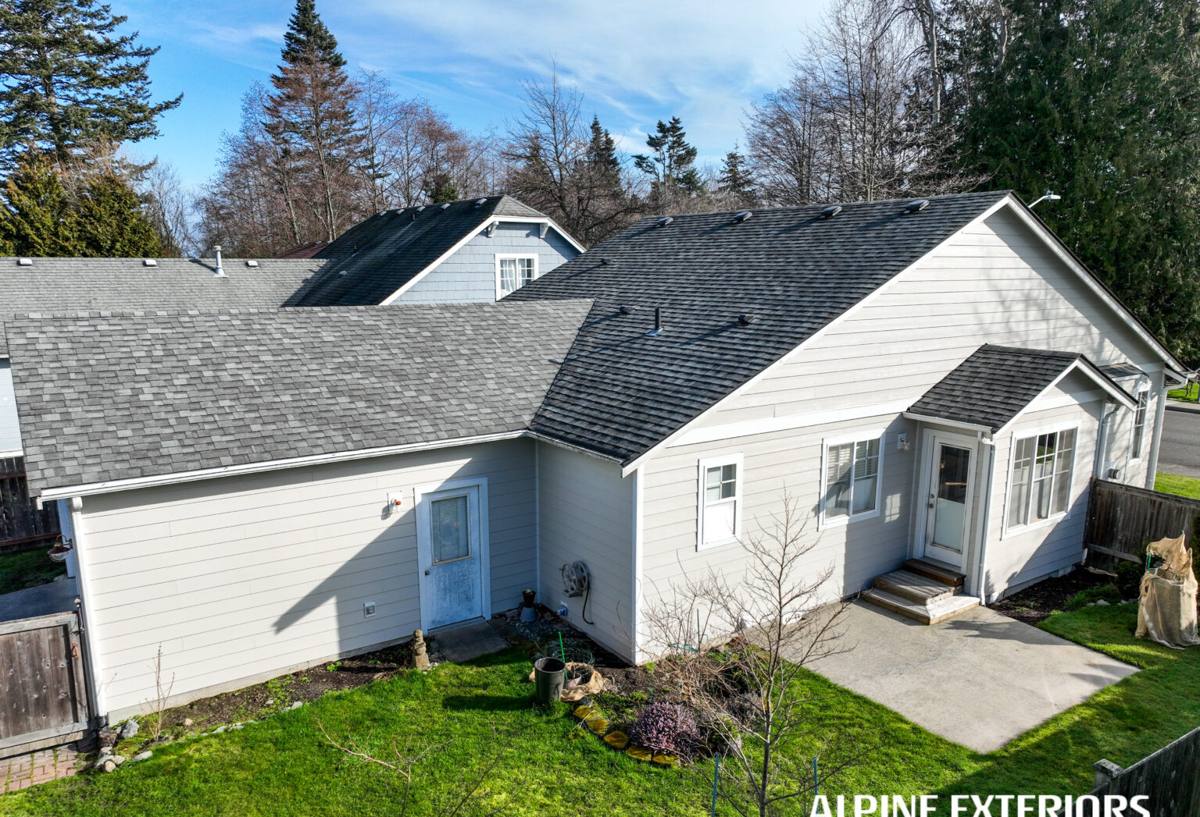
What the Climate Actually Does to a Laurel Home
Moss and Organic Growth
North-facing and shaded roof slopes in this area rarely get enough direct sun to dry out between rain events. That's the exact condition moss needs. Left alone, moss doesn't just look bad — it holds moisture against shingles or wood, lifts roofing material at the edges, and works its way into seams over a few seasons. It's the single most common early-aging issue we see on roofs out this way.
Driving Rain and Wind-Driven Moisture
With less tree cover to break wind in the open farmland around Laurel, rain often hits siding and roof edges at an angle instead of falling straight down. That kind of exposure finds weak points — gaps at flashing, undersized J-channel, poorly lapped siding — that a calmer climate would never expose. Water intrusion here tends to show up at trim, window returns, and roof-to-wall transitions before it ever shows up mid-field.
Marine Air and Slow Material Fatigue
Whatcom County's proximity to the Salish Sea means the air carries more moisture and salt content than homeowners moving from drier inland regions typically expect. It doesn't corrode things overnight, but it accelerates the slow breakdown of unprotected fasteners, unsealed cut edges on metal trim, and older caulking. Over ten or fifteen years, that difference is noticeable.
Roofing in Laurel
Most of the roofing calls we get in this area fall into a few categories: moss-damaged shingles nearing the end of their life, storm-related repairs after a windy front comes through, and full replacements on homes where the original roof simply outlived its material's rated lifespan in this climate. We inspect for the things that matter here specifically — soft decking under moss patches, flashing that's separated from years of freeze-thaw and wind flex, and ventilation that isn't pulling enough moist attic air out before it condenses under the roof deck.
Asphalt shingles remain the most common and cost-effective choice for homes in the area, and a properly installed architectural shingle roof holds up well here when ventilation and underlayment are done right. Metal roofing is also a strong option for homeowners planning to stay long-term — it sheds moss more easily and handles driving rain well, though it comes at a higher upfront cost and requires attention to fastener quality given the marine air.
Siding for Wind-Driven Rain
Siding in Laurel takes a different kind of beating than roofing — it's more about lateral water intrusion than standing moisture. We pay close attention to flashing details around windows and doors, proper lap and overlap on horizontal siding, and rainscreen or drainage gaps that let incidental moisture escape instead of getting trapped behind the cladding. Fiber cement and quality vinyl both perform well here when installed with the right underlying moisture management — the material matters less than the installation discipline behind it.
We also see a fair number of homes where siding looks fine from the ground but has trapped moisture damage at the bottom courses or around old, poorly flashed additions. That's a maintenance-timing issue as much as a material one — catching it early is a repair; catching it late is a full re-side.
Windows: Condensation and Seal Failure
In a climate with this much sustained humidity, window performance is as much about moisture management as it is about energy efficiency. Older single-pane or early double-pane windows in the area commonly show fogging between panes — a sign the seal has failed and the insulating gas or air gap is compromised. That's not usually an emergency, but it does mean the window has lost most of its insulating value and will only get worse. We also check window flashing whenever we're doing siding or roofing work nearby, since a poorly flashed window is one of the more common hidden sources of wall moisture in older homes out this way.
Decks: The Most Neglected Exterior Surface
Decks take the most direct, unbroken exposure to rain and moss growth of any part of a home's exterior, and they're usually the last thing to get attention. Horizontal wood surfaces hold water longer than a pitched roof ever will, and ledger board connections — where the deck attaches to the house — are a common spot for hidden rot if flashing wasn't done correctly at construction. We look at board spacing, fastener corrosion, and ledger flashing on every deck inspection, since those three things account for most of the structural issues we find.
Comparing Common Exterior Materials for This Climate
| Material | Moss/Moisture Resistance | Typical Lifespan Here | Maintenance Burden |
|---|---|---|---|
| Architectural asphalt shingle roofing | Good with proper ventilation; needs periodic moss treatment | 20–30 years | Moderate — periodic cleaning, gutter maintenance |
| Standing seam metal roofing | Excellent — moss struggles to hold on smooth metal | 40+ years | Low, but fastener/sealant checks matter in marine air |
| Fiber cement siding | Very good when properly flashed and gapped | 30–50 years | Low to moderate — repaint/recaulk cycles |
| Vinyl siding | Good, doesn't absorb moisture but can trap it behind panel if installed poorly | 20–40 years | Low |
| Wood decking | Fair — needs sealing and airflow underneath | 10–25 years depending on care | High — regular sealing, cleaning, ledger checks |
Why a Local Crew Makes a Difference
A crew based in this part of Whatcom County isn't guessing at what your home is dealing with — we've seen the same moss patterns, the same wind exposure on open lots, and the same slow water-intrusion issues on enough homes in and around Laurel and Sumas that we can usually spot a developing problem before it becomes an expensive one. We also know the practical side: what permitting looks like for unincorporated Whatcom County work, how weather windows for roofing and siding installs actually play out here versus what a generic install schedule assumes, and which details on older area homes tend to need extra attention.
That local knowledge doesn't replace a proper inspection — every home is different — but it does mean fewer surprises and a more accurate first look at what your home actually needs.
A Practical Seasonal Checklist for Laurel Homeowners
- Check north- and shade-facing roof slopes for moss growth at least once a year, ideally before the wet season builds up
- Clear gutters and downspouts before fall storms — clogged gutters are one of the most common causes of fascia and siding rot in this area
- Look at window seals for fogging or visible gaps; a failed seal is a maintenance item now and a bigger one later
- Walk the deck and check for soft spots, especially near the ledger board where it meets the house
- Inspect siding at the bottom courses and around window trim for discoloration or soft material, both signs of trapped moisture
- After any significant wind event, do a visual check for lifted shingles, loose trim, or debris damage
What This Means for Your Home
None of these issues are unusual or alarming on their own — they're just what this climate does over time. The homes that hold up best in Laurel and the surrounding area are the ones where small issues get caught during a routine look rather than discovered after a leak shows up inside. Whether it's a roof nearing the end of its life, siding that's starting to trap moisture, windows fogging between panes, or a deck that needs a real look at its structure, the right time to address it is almost always before it becomes urgent.
If you're in Laurel or anywhere else in the Sumas area and want an honest, no-pressure look at your roof, siding, windows, or deck, we're happy to come take a look and tell you straight what we see — no obligation. Use the form below to request a free estimate.