 Sumas Roofing
 The Part of the Roof Nobody Looks At
When homeowners in Sumas think about their roof, they think about shingles, flashing, and maybe the gutters. Ventilation rarely makes the list, but it's one of the biggest factors in how long a roof actually lasts here in Whatcom County. A roof can be installed perfectly and still fail early if the attic underneath it can't breathe. In a climate defined by driving rain, long stretches of overcast humidity, and a moss season that can run most of the year, a poorly ventilated attic is one of the quietest ways to lose a roof ahead of schedule.
This guide covers what roof ventilation actually does, why it matters more here than in drier climates, and what to look for whether you're maintaining an existing roof or planning a replacement.
What Roof Ventilation Actually Does
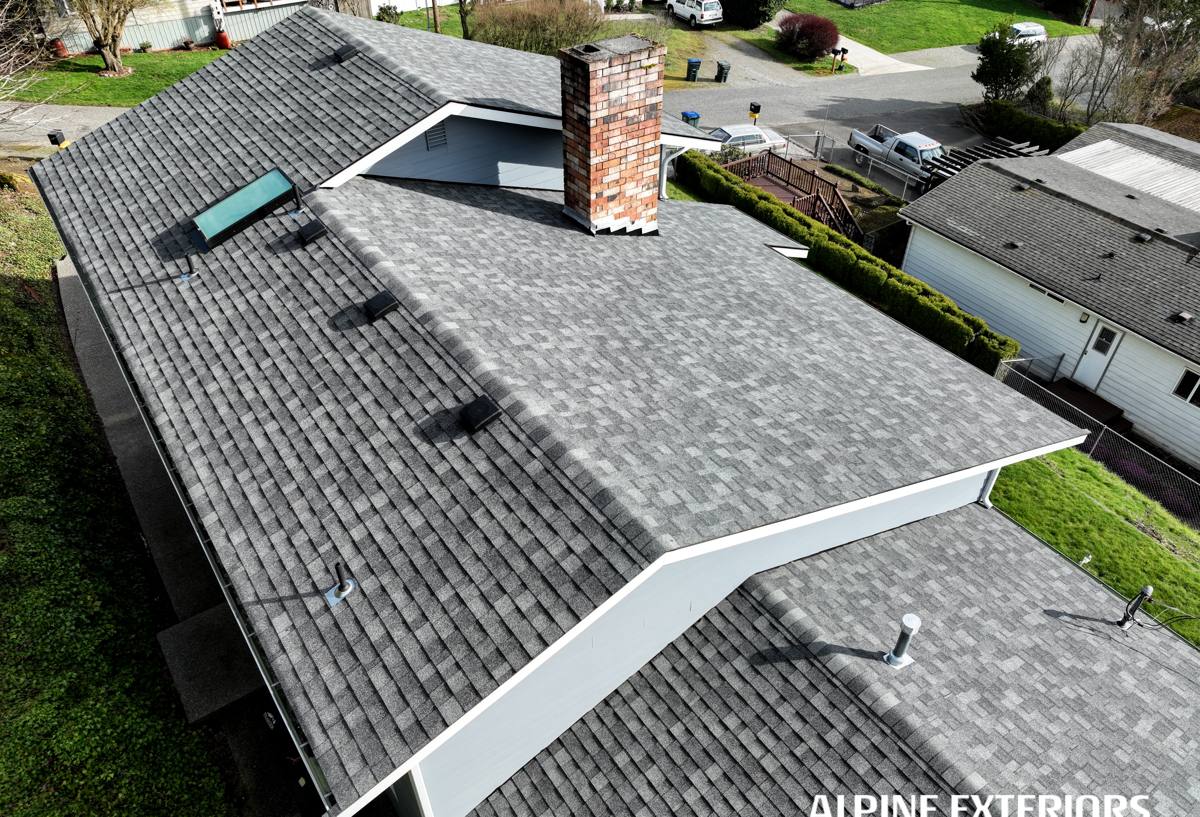
A ventilation system is built around two things working together: intake and exhaust. Intake vents, usually located along the soffits or eaves, pull cooler outside air into the attic. Exhaust vents, near or at the ridge, let warmer, moisture-laden air escape. When both are sized and balanced correctly, air moves continuously through the attic space, carrying heat and moisture out before they can do damage.
Without that airflow, an attic becomes a stagnant pocket. In summer, trapped heat bakes the underside of the roof deck and can shorten shingle life. In our climate, though, the bigger issue year-round is moisture — not heat.
Why Moisture Is the Real Enemy
Every home generates warm, humid air from cooking, showers, laundry, and simple daily living. That air rises. If it isn't properly vented from living spaces and the attic isn't set up to move it back out, moisture condenses on the cold underside of the roof sheathing. Over months and years, that condensation cycle leads to:
- Rotting roof decking and rafters, sometimes hidden until a leak or soft spot appears
- Rusted roofing nails and fasteners losing their grip
- Mold and mildew growth in the attic, which can affect indoor air quality
- Reduced insulation performance when insulation gets damp and compresses
- Premature shingle failure from the inside out
Why This Matters More in Sumas Than Elsewhere
Whatcom County sits in one of the wetter corners of Washington. Sumas gets long stretches of low cloud, steady drizzle, and periods of genuinely driving rain, especially in fall and winter. That moisture doesn't just fall on the roof from above — it also raises ambient humidity that works its way into attics from below, through bath fans, can lights, and small gaps in the ceiling plane. A roof deck that's already fighting outside dampness has very little margin for trapped indoor moisture on top of it.
The region's mild, moisture-heavy conditions also support an extended moss season. Moss doesn't just grow on cold, shaded roof slopes — it thrives where a roof surface stays damp longer than it should, which is often a sign that heat and moisture aren't escaping the attic efficiently. A well-ventilated roof deck sheds heat and moisture at a more even rate, which helps roofing material dry out between storms rather than staying saturated. Ventilation alone won't stop moss on a north-facing, tree-shaded roof, but it removes one contributing factor.
Ice and Cold-Weather Concerns
Sumas sits close enough to the foothills and the Canadian border that winter cold snaps and occasional snow are part of the picture. Uneven attic temperatures — warm near the ridge, cold near the eaves — can contribute to ice damming, where melting snow refreezes at the roof edge and backs water up under the shingles. Balanced ventilation helps keep the roof deck at a more even temperature, which reduces (though doesn't eliminate) that risk during cold snaps.
Common Ventilation Problems We See
Most ventilation issues aren't dramatic — they're quiet mismatches that build up over years. The most common ones:
| Problem | Why It Happens | What It Leads To |
|---|---|---|
| Blocked soffit vents | Insulation pushed too far into the eaves during a past attic upgrade | No intake air, so exhaust vents can't pull anything through |
| Mismatched intake and exhaust | Ridge vent added without enough soffit intake to match it | Exhaust vents pull air from the wrong places, sometimes back through gable vents |
| Bath and dryer vents dumping into the attic | Ductwork disconnected or never properly routed outside | Direct moisture injection into the attic space |
| Painted-over or debris-clogged vents | Normal wear, exterior painting, or roof moss and debris buildup | Reduced airflow even though the vents are technically present |
| Too few total vents for the attic size | Original construction under-built for the home's square footage | Chronic humidity and heat buildup regardless of vent condition |
How to Tell If Your Attic Isn't Breathing
You don't need to climb into the attic every season, but a few warning signs are worth checking for, especially before or after our wetter months:
- Musty or damp smell when you open the attic hatch
- Visible frost or condensation on the underside of the roof deck on cold mornings
- Dark staining or streaking on rafters or sheathing
- Insulation that looks matted, discolored, or compressed
- Ice buildup along the roof edge in winter that seems disproportionate to neighboring homes
- Shingles that seem to be aging faster than their expected lifespan, particularly curling or granule loss
- Persistent moss regrowth shortly after cleaning, even on gentler slopes
Any one of these alone isn't necessarily a ventilation problem — some can point to roofing material age, tree cover, or bathroom exhaust routing. But a homeowner noticing more than one of these is a good reason to have the attic looked at.
Getting the Balance Right
Ventilation isn't about adding as many vents as possible. It's about balance. Manufacturers and building codes generally reference a ratio of net free ventilating area to attic floor space, split roughly evenly between intake and exhaust. Too much exhaust without matching intake can actually pull conditioned air out of the living space below, or draw air backward through whatever opening is easiest to reach — including gaps that were never meant to be vents.
Types of Ventilation Components
Most Sumas homes use some combination of the following, and the right mix depends on roof shape, attic layout, and how the home was originally built:
- Soffit vents — continuous or individual intake vents along the eaves
- Ridge vents — low-profile exhaust running along the roof peak, generally the most even option when intake is sufficient
- Box or static vents — individual exhaust points, useful on roofs without enough ridge length
- Gable vents — end-wall vents, common on older homes but can work against ridge/soffit systems if not managed carefully
- Powered or solar attic fans — mechanical assistance for attics that can't achieve enough passive flow, though these should supplement, not replace, proper intake
We evaluate the existing setup before recommending changes rather than assuming more hardware is always the answer. Sometimes the fix is clearing blocked soffits rather than adding new roof penetrations.
Ventilation and Roof Replacement
If you're planning a roof replacement, it's the ideal time to correct ventilation problems, since the roof deck is already exposed. Re-roofing over an unbalanced or blocked system just locks the same problem under a new layer of shingles. During a tear-off, we can inspect the deck for existing moisture damage, check soffit and ridge conditions, and recommend a system sized to the actual attic — not just whatever was there before.
It's also worth noting that ventilation is tied to shingle warranties. Most manufacturers require adequate attic ventilation for their full warranty terms to apply, since trapped heat and moisture are known contributors to premature shingle failure. Skipping this step can affect coverage even if the shingles themselves were installed correctly.
What Homeowners Can Do Between Inspections
- Keep soffit vents clear of insulation, paint, and exterior debris
- Make sure bathroom and dryer exhaust fans vent outside the attic, not into it
- Clear moss and debris from the roof surface so it can dry properly between rain events
- Check the attic once or twice a year, particularly after a wet winter, for staining or musty odor
- Avoid blocking gable or ridge vents with stored items, insulation, or added construction
A Long-Term View, Not a Quick Fix
Ventilation problems rarely announce themselves the way a leak does. They show up as a roof that ages faster than it should, moss that keeps coming back, or insulation that underperforms year after year. In a climate like ours — with steady coastal moisture, driving rain through the fall and winter, and a moss season that tests every roof in the region — airflow is one of the few things a homeowner can address that pays off for the entire life of the roof, not just one season of it.
If you're noticing any of the warning signs above, or simply want a straightforward look at how your attic is venting, we're happy to take a look. We offer free, no-pressure estimates and can walk you through exactly what we find, with no obligation attached.