 Sumas Roofing
 Roofing in the Goshen Area
Goshen sits in the stretch of Whatcom County that runs between Sumas and the rest of the Nooksack valley, close enough to the Canadian border and the Salish Sea that homes here deal with a very particular mix of weather. It's not just rain — it's damp, salt-tinged marine air pushing inland, long stretches of overcast days that never quite dry a roof out, and a moss season that can run most of the year if a roof isn't shedding water and light the way it should. We've worked on enough roofs in this corner of the county to know that what works in a drier climate often fails here in half the time.
A roof in Goshen isn't just protecting against occasional storms. It's managing near-constant low-grade moisture exposure for months at a stretch, freeze-thaw cycles in the colder snaps, and wind that funnels through the valley with more force than people expect from a "quiet" rural area. That combination is what shapes how we spec, install, and maintain roofs out here.
What Driving Rain Does Over Time
Wind-driven rain doesn't just hit a roof from above — it gets pushed sideways under shingle edges, around flashing, and into any gap that a fair-weather installation might get away with elsewhere. Over years, that's how you get slow leaks that show up as a stain on a ceiling long after the actual entry point started letting water in. Proper underlayment, ice-and-water shield at vulnerable points, and flashing detail work matter more here than in places with gentler weather.
Common Roof Types We Work With
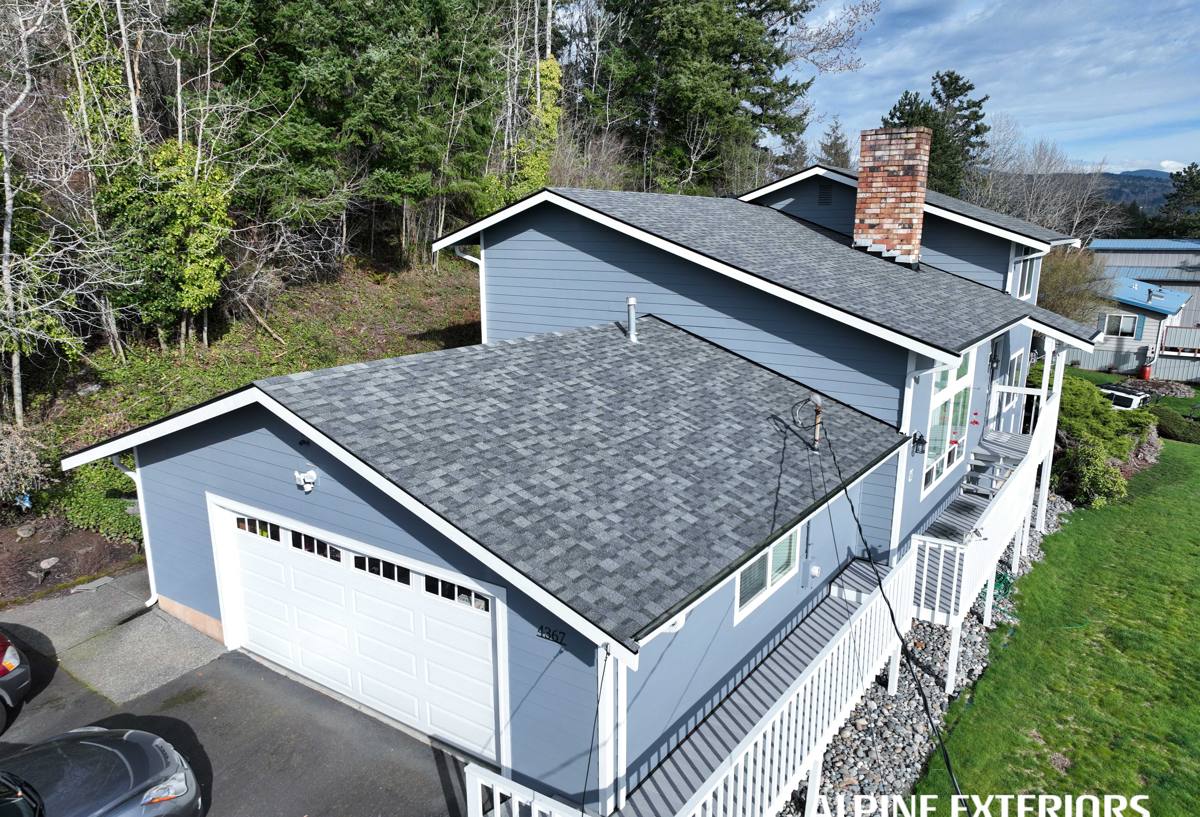
Most homes in the Goshen and Sumas area are roofed in asphalt composition shingle, with a growing number of metal roofs going in on newer builds and re-roofs where homeowners want a longer service life and less maintenance. Cedar shake shows up on older farmhouses and some custom homes, but it's a material we're candid with homeowners about — it requires diligent upkeep in a climate this wet, and the maintenance burden is real.
| Roofing Material | Typical Lifespan (This Climate) | Moss/Moisture Resistance | Relative Cost |
|---|---|---|---|
| Asphalt composition shingle | 20-30 years | Good with proper ventilation; needs periodic moss treatment | Lower to mid |
| Standing seam metal | 40-50+ years | Excellent — sheds moss and debris well | Mid to higher |
| Cedar shake | 20-25 years with upkeep | Fair — absorbs moisture, needs regular treatment | Higher |
| Synthetic/composite shingle | 30-50 years | Good — low water absorption | Mid to higher |
None of these materials is a bad choice on its own — the right one depends on the home's roof pitch, how much shade the property gets, the budget, and how much maintenance a homeowner wants to take on. We'll walk through the honest trade-offs for your specific roof rather than pushing whatever's easiest to sell.
Moss, Moisture, and Roof Maintenance in Whatcom County
Moss is probably the single most common complaint we hear from homeowners in this part of the county, and it's not just cosmetic. Moss holds moisture against the roofing material, works its way under shingle tabs as it grows, and can lift edges enough to let water in during the next hard rain. Shaded, north-facing roof planes and roofs under overhanging trees are the most at risk, and in Goshen's tree cover, that describes a lot of roofs.
What Actually Helps
- Keeping tree limbs trimmed back so more sun and airflow reach the roof surface
- Zinc or copper flashing strips near the ridge, which discourage new moss growth as rain washes trace metal down the roof
- Gentle, low-pressure moss removal rather than aggressive pressure washing, which can strip granules and shorten a shingle's life
- Clearing gutters and valleys regularly so water actually drains instead of sitting
- Confirming attic ventilation is adequate — a poorly ventilated attic traps moisture that works against the roof from underneath
We treat moss control as an ongoing maintenance conversation, not a one-time fix. In this climate, a roof that gets attention once a year holds up noticeably longer than one that doesn't.
Signs Your Roof Needs Attention
Most roof failures we see didn't happen overnight — they were visible for months before anyone acted on them. A few things worth checking from the ground or during a routine walk around the property:
- Shingles that look dark, streaked, or "furry" with moss growth, especially on shaded slopes
- Granules collecting in gutters or at the base of downspouts
- Curling, cracked, or missing shingle tabs, particularly after a windstorm
- Soft spots or sagging when walked on (best assessed by a professional, not a homeowner on a ladder)
- Water stains on interior ceilings or in the attic, even faint ones
- Daylight visible through the roof deck from inside the attic
- Flashing that's rusted, lifted, or separated around chimneys, skylights, and vents
Any one of these is worth a call. Caught early, most of these are manageable repairs. Left alone through another wet season, they tend to turn into deck damage or interior repairs that cost a lot more than the roof work would have.
Beyond the Roof: Siding, Windows, and Decks Working Together
A roof doesn't fail in isolation from the rest of the exterior. Water that gets past a compromised roof edge often shows up as siding damage below it, and a home with worn siding or aging window flashing is dealing with the same driving-rain exposure the roof is fighting. Because we handle roofing, siding, windows, and decks, we look at the whole envelope rather than treating each system as a separate problem.
Where These Systems Overlap
Roof-to-wall flashing, for example, sits right at the boundary between roofing and siding work — get it wrong and water finds its way behind the siding regardless of how good either individual material is. Deck ledger boards attached to the house need the same careful flashing and moisture management as a roof valley. And windows near roof lines or under short eaves take more weather exposure than windows elsewhere on the house, which affects how they're flashed and sealed. Having one crew that understands all of these systems means fewer gaps between trades and fewer chances for water to find a way in.
Our Process for Goshen Homeowners
- Inspection and honest assessment. We look at the roof, attic ventilation, and any related siding or trim issues, and tell you plainly what needs to happen now versus what can wait.
- Written estimate. Clear scope, materials, and pricing — no vague allowances that turn into surprise costs mid-project.
- Scheduling around the weather. In this climate, timing matters. We plan roofing work for stretches of drier weather where possible and take extra precautions on jobs that can't wait for a dry window.
- Installation with attention to the details that matter here — proper underlayment, flashing, ventilation, and moss-resistant details built in from the start rather than added as an afterthought.
- Final walkthrough. We show you the completed work and answer questions before we consider the job done.
Why a Local Whatcom County Crew Matters
Roofing crews from outside the region sometimes spec roofs the way they would for a drier climate, because that's what they know. A crew that works this valley regularly understands how much moss pressure a north-facing roof plane will see, how wind moves through the area during a winter storm, and which details actually matter for a roof that has to perform through a Whatcom County winter, not just look good on installation day. That local knowledge shows up in smaller decisions — flashing choices, ventilation details, where ice-and-water shield actually needs to go — that add up to a roof that lasts.
It also means we're reachable if something comes up after the job is done. A roof or exterior problem doesn't wait for a convenient time, and having a local company that knows your property's history makes that conversation a lot easier.
Planning a Roofing Project in Goshen and Sumas
Whatcom County's wet season makes certain times of year better than others for roofing work, but roof emergencies don't follow a calendar. If you're planning ahead — replacing an aging roof before it fails, or bundling roofing with siding or window work while scaffolding or access equipment is already in place — that kind of coordination can save both time and money compared to tackling each project separately later.
If you're weighing repair against replacement, age and overall condition usually settle it: a roof with isolated damage and otherwise sound decking is often a good repair candidate, while a roof nearing the end of its expected life with widespread wear is usually better replaced before a repair becomes the first of several.
If you're dealing with a roof that's showing its age, a leak you can't pin down, or you're just planning ahead for the next few years, we're happy to take a look. Reach out for a free, no-pressure estimate using the form below.