 Sumas Roofing
 Storm Damage Roofing in a Fraser Valley Climate
Abbotsford sits inland from the Strait of Georgia, but the weather that moves through the Fraser Valley still carries a lot of the coast with it. Pacific storm systems track up the valley corridor and bring salt-tinged marine air, long stretches of driving rain, and wind that doesn't always come straight down on a roof — it comes in sideways, which is a different and often more damaging load than a simple rainfall total suggests. Layer on a moss and mildew season that runs most of the year on shaded and north-facing roof planes, and you get a climate that's hard on shingles, flashing, and underlayment even in a normal year. A real storm — high wind, hail, or a heavy rain event that overwhelms a roof's weak points — just speeds up damage that this climate was already working toward.
We're based in Sumas, Washington, right at the border crossing into Abbotsford, and we've worked roofs on both sides of that line for years. Storm damage repair is one of the calls we get most often after a hard weather event, and it's a job where getting the details right the first time matters — a rushed or partial repair tends to fail again at the next storm, not years down the road.
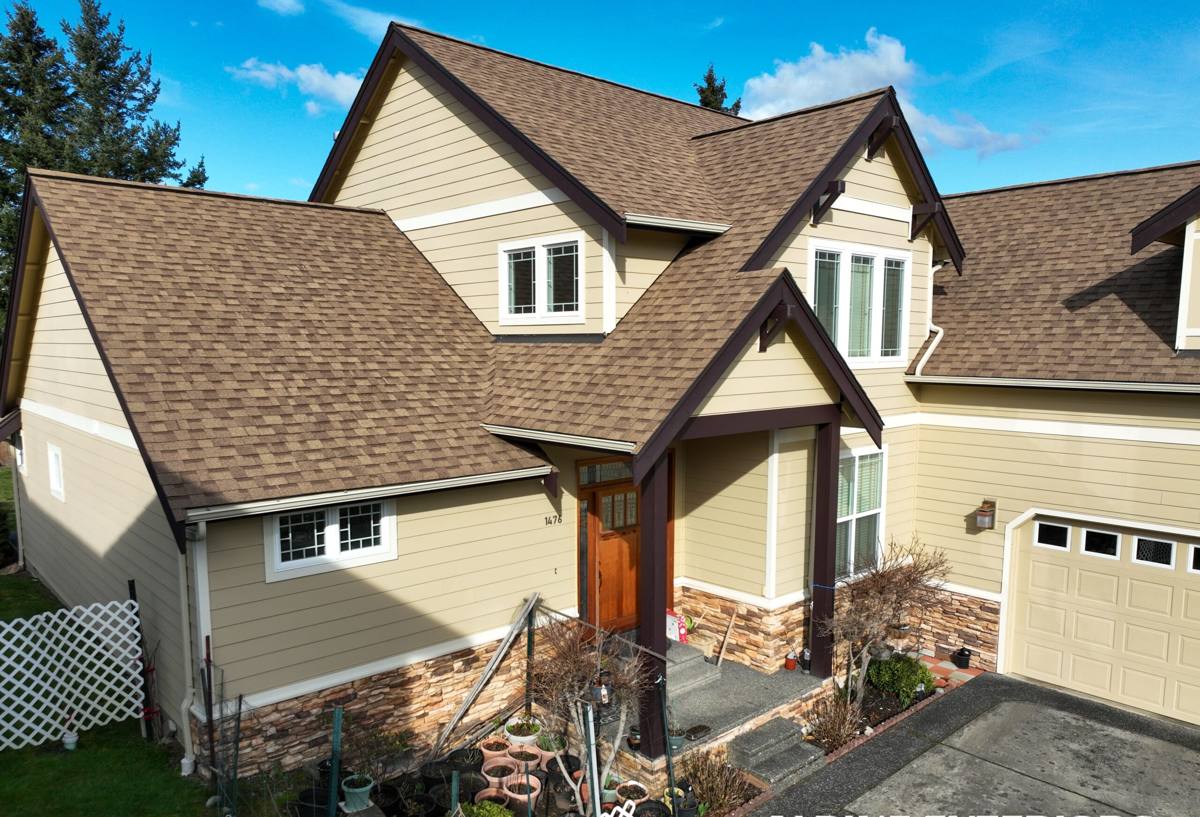
Recognizing Storm Damage: What to Look For
Signs Visible From the Ground
Missing, cracked, or curled shingles are the most obvious sign, but they're not the only one. Granules collecting in gutters or at downspout outlets mean shingles are losing their protective surface, even if they still look intact from a distance. Lifted or bent flashing around chimneys, vents, and roof-to-wall transitions is another sign that's often visible with binoculars from the ground, and it's frequently where leaks actually start.
Damage That Doesn't Show Until It's a Bigger Problem
Wind can lift shingles just enough to break the seal without fully detaching them, which leaves a roof vulnerable to the next storm even though nothing looks obviously wrong. Hail impact can bruise a shingle's mat without tearing it, damage that's hard to spot from the ground but that shortens the shingle's remaining life significantly. Inside the house, water stains on ceilings, damp attic insulation, or a musty smell in an upstairs closet are often the first real evidence that storm damage has been letting moisture in for longer than anyone realized.
What a Correct Storm Damage Repair Actually Involves
Storm damage repair isn't just swapping out the shingles that are obviously gone. A repair that actually holds up in this climate addresses the whole assembly, not just the visible surface layer.
- Matching the existing material: New shingles need to match the existing roof in style, profile, and as close to color as the product line allows, so the repair doesn't stand out as an obvious patch and doesn't create a weak seam at the transition.
- Flashing repair or replacement: Flashing around chimneys, skylights, vents, and wall transitions is where most storm-related leaks actually originate, even when the damage looks like it's centered somewhere else on the roof plane.
- Underlayment inspection: If wind or hail has compromised shingles in an area, the underlayment beneath needs to be checked and replaced if it's torn or saturated — shingles are the first line of defense, not the only one.
- Decking assessment: Any area that's been leaking for a while needs the roof deck checked for soft spots or rot before new shingles go down over it. Covering damaged decking with new material just hides the problem.
- Proper fastening for wind exposure: Given the wind this valley sees during storm events, we fasten to the shingle manufacturer's high-wind specification rather than the minimum standard nailing pattern.
Our Storm Damage Repair Process
Inspection and Documentation
We start with a full roof inspection, not just a look at the area you noticed damage on. Storms rarely damage a roof in one isolated spot — wind and hail tend to hit an entire slope or the whole roof unevenly, and it's common to find secondary damage the homeowner hasn't spotted yet. We document everything with photos, which matters if you're filing an insurance claim.
Temporary Protection
If a roof has active leaking or exposed decking, we tarp or otherwise weatherproof the damaged area as a temporary measure before the full repair happens. In a climate where the next rain is rarely more than a few days out, that step isn't optional — it's what keeps a repairable problem from turning into a much bigger one.
Repair Plan and Insurance Coordination
We put together a clear scope of what needs to happen and why, in plain language, and we can work directly with your insurance adjuster if you're filing a claim. Our job is to give you an honest assessment of what storm damage actually requires — not to inflate a scope to maximize a claim, and not to talk you out of work that's genuinely needed.
The Repair
Once the scope is agreed on, we carry out the repair to the standard above — matched materials, proper flashing, sound decking, correct fastening. If damage is limited to a section of roof, we repair that section properly rather than pushing an unnecessary full replacement. If the damage is extensive enough, or the roof was already near the end of its service life, we'll tell you that directly and lay out what a replacement would involve instead.
Final Walkthrough
Before we consider the job done, we walk the repair with you, explain what was done, and point out anything worth keeping an eye on going forward — a valley climate like this one rewards homeowners who catch small problems early.
Repair or Replace? Factors We Weigh
| Factor | Leans Toward Repair | Leans Toward Replacement |
|---|---|---|
| Extent of damage | Isolated to one section or slope | Widespread across most of the roof |
| Roof age | Well within expected service life | Already near or past typical lifespan |
| Decking condition | Sound, no rot or soft spots found | Rot or saturation found in multiple areas |
| Shingle availability | Matching product still available | Discontinued line, poor match possible |
| Storm history | First significant event in years | Repeated storm damage over recent seasons |
Most storm calls we run in this area fall on the repair side of that table. Full replacement makes sense when the roof was already close to needing it, or when the damage is spread widely enough that patch repairs would leave the roof looking and performing inconsistently.
Why a Crew That Already Works Abbotsford Matters
Storm damage repair is a job where response time and follow-through matter as much as workmanship. A crew based in Sumas is minutes from the border crossing, which means a faster look at active damage and less delay getting a tarp up before the next rain moves in. We've handled the logistics of working across the border enough times that it's routine for us — it doesn't add friction or extra days to your timeline the way it might for a crew that only crosses over occasionally.
There's also a familiarity factor that's easy to underestimate. Roofing on Fraser Valley homes has its own common patterns — roof pitches, material choices, and the age range of housing stock in the area — and a crew that works here regularly recognizes those patterns instead of treating every roof as a first-time guess. That translates into a more accurate inspection, a repair plan that fits what's actually up there, and fewer surprises once work starts.
Cost Factors for Storm Damage Roof Repair
| Factor | How It Affects Cost |
|---|---|
| Size of damaged area | A few shingles costs far less than an entire slope |
| Flashing work required | Chimney, skylight, and wall-transition flashing add labor and material |
| Decking replacement | Rotted or soft decking adds material and time beyond shingle work |
| Roof pitch and access | Steep or hard-to-access roofs take longer and require more safety setup |
| Material match | Discontinued or specialty shingles can cost more to source |
Broad ranges are all we'll give without seeing the roof — a straightforward shingle and flashing repair on an accessible roof is a modest job, while damage involving decking replacement or a large area climbs from there. We'll always give you a clear number before work starts, not an estimate that grows once we're on the roof.
Homeowner Checklist: After a Storm
- Check gutters and the ground around your home for granules or shingle pieces after any significant wind or hail event.
- Look at ceilings and attic spaces for new water stains, damp insulation, or a musty smell.
- Note the date and general conditions of the storm — wind speed, hail, duration — for insurance purposes if needed.
- Avoid walking on the roof yourself to inspect damage; storm-damaged roofing can be unstable underfoot.
- Get a professional inspection promptly rather than waiting to see if a small issue gets worse on its own.
- Keep photos and any paperwork from the inspection together in case you need to file a claim later.
What to Expect When You Call Us
We'll ask a few questions about what you're seeing and when the storm happened, then get out to inspect the roof — sooner if there's active leaking or exposed decking. You'll get a straight answer about what actually needs repair, what it involves, and roughly what it costs, without pressure to sign anything on the spot. If your roof is sound and the damage is minor, we'll tell you that too.
If a recent storm has left your roof damaged, or you're just not sure whether what you're seeing needs attention, we're glad to take a look. Reach out for a free, no-pressure estimate using the form below.