 Sumas Roofing
 Roofing Built for Huntingdon's Border-Valley Climate
Huntingdon sits right at the Sumas border crossing, which means homes here get the same weather we deal with on the Washington side — just with a different flag over the customs booth. That's a long, wet fall-through-spring stretch, moist marine air that rides in off the Salish Sea and up the Fraser Valley, and short bursts of hard, driving rain that come sideways more often than straight down. None of that is dramatic on its own. What it does is wear roofs down slowly, in ways that are easy to miss until a small problem becomes a repair bill.
We're a few minutes away in Sumas, Washington, and we work this exact climate on both sides of the border. That matters more than people think — a roofing crew used to drier inland conditions tends to under-build for moss, wind-driven rain, and the slow moisture creep that shows up here. We don't have to guess at it.
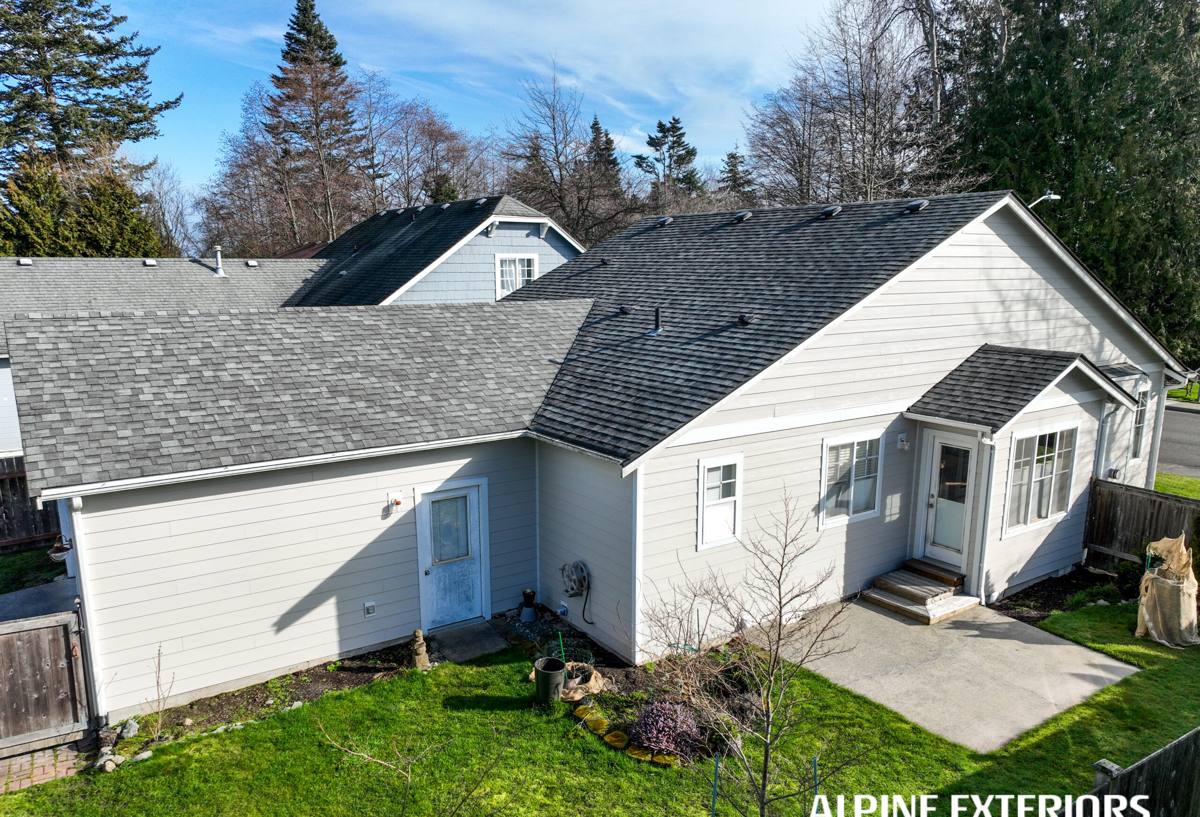
What We See Most on Huntingdon Roofs
Moss and Organic Growth
The Fraser Valley's long damp season is close to ideal growing conditions for moss, algae, and lichen. On roofs with any amount of shade — trees, north-facing slopes, valleys between roof planes — moss doesn't just sit on the surface. It roots into the texture of the shingle, lifts tabs at the edges, and holds water against the roof deck long after the rest of the roof has dried out. Left alone for a few seasons, that trapped moisture is one of the more common causes of premature shingle failure and deck rot we find on inspections.
Wind-Driven Rain and Flashing Failures
Storms here don't always come straight down. When rain is pushed sideways by wind, it finds every gap in flashing around chimneys, vents, skylights, and roof-to-wall transitions — spots that would stay dry in a calmer climate. Flashing problems are rarely visible from the ground, which is why they're often the cause of a "mystery leak" that shows up somewhere far from the actual entry point.
Gutter and Drainage Overload
A roof only works as a system if water actually gets off it and away from the house. Undersized gutters, clogged downspouts, or drainage that dumps water too close to the foundation are common on older homes in this area, and they turn a normal rainy season into a source of fascia rot, ice buildup on cold snaps, and soggy ground against the foundation.
Occasional Freeze-Thaw Stress
The Fraser Valley doesn't see extreme cold often, but it does get cold snaps, and a roof that's saturated when temperatures drop is more vulnerable to cracking and granule loss than a dry one. It's a smaller factor here than in true winter climates, but it adds up over the life of a roof that's already dealing with constant moisture.
Repair or Replace? How We Help You Decide
Not every roof problem needs a full replacement, and we don't push one when a repair will genuinely hold. The decision usually comes down to the roof's age, how widespread the damage is, and whether the underlying deck is still sound. Here's roughly how we think about it:
| Factor | Repair Usually Makes Sense | Replacement Usually Makes Sense |
|---|---|---|
| Roof age | Under 12-15 years, isolated issue | Nearing or past the shingle's rated lifespan |
| Leak pattern | Single, traceable source (flashing, vent boot) | Multiple leaks or recurring leaks in different spots |
| Moss/algae | Light growth, deck still dry underneath | Heavy, long-term growth with softened or stained decking |
| Shingle condition | Localized cracking or granule loss | Widespread curling, brittleness, or bald patches |
| Deck condition | Solid, no soft spots | Soft, spongy, or visibly sagging sections |
An honest inspection is the only way to know which column a given roof falls into. We'll tell you straight if a repair is the right call — a replacement isn't automatically the "safer" recommendation just because it's the bigger job.
Materials That Actually Hold Up in This Climate
Asphalt Composition Shingles
Still the most common choice for good reason: reasonable cost, wide range of colors and styles, and solid performance when installed with the right underlayment and ventilation details for a wet climate. We lean toward architectural (dimensional) shingles over basic 3-tab for most homes here — the heavier profile and stronger wind rating are worth the modest difference in cost given how much wind-driven rain this area sees.
Metal Roofing
Metal sheds moss and water far more effectively than shingles because there's no textured surface for organic growth to grab onto, and it handles wind-driven rain well when properly seamed and flashed. It costs more upfront but tends to outlast shingle roofs by decades with less moss-related maintenance in between.
What We're More Cautious About
Certain roofing systems — cedar shake without diligent maintenance, or any product with complex, moisture-sensitive detailing — carry a higher maintenance burden in a climate this wet. We'll still install what a homeowner wants after an honest conversation about the trade-offs, but we're not going to oversell a product that needs more upkeep than most people are prepared to give it, especially with the moss and moisture load this area sees year-round.
How We Approach a Huntingdon Job
- Inspection and honest assessment — we look at the whole system: shingles, flashing, ventilation, gutters, and the deck underneath, not just the spot where the leak showed up.
- Straight answers on repair vs. replace — with the reasoning explained, not just a recommendation.
- Written estimate — clear scope, materials, and timeline before any work starts.
- Proper tear-off and prep when replacement is the right call, including deck repair if moisture has done damage underneath.
- Cleanup — nails, debris, and old material hauled off, not left for the homeowner to deal with.
For work on the Canadian side of the border, we coordinate the logistics that come with a cross-border job — scheduling, material transport, and any documentation the crossing requires — so it isn't something the homeowner has to sort out themselves. If your project has specific permitting requirements on the BC side, we'll talk through that with you directly before work begins.
Beyond the Roof: Siding, Windows, and Decks
Roofs don't fail in isolation — the same rain and moss pressure that wears on shingles also affects siding, window seals, and any deck exposed to the weather. We handle all four, which matters for a couple of practical reasons. First, problems often overlap: a failing roof edge can drive water behind siding, and a poorly flashed deck ledger can rot into the house framing. Second, it's simpler for a homeowner to deal with one crew that understands how these systems interact than to coordinate separate contractors who each only see their piece of the house.
If you're planning a larger exterior project — new siding alongside a roof replacement, or window replacement timed with other work — we can look at the whole exterior at once and give you a realistic picture of what needs attention now versus what can wait.
Maintenance Homeowners in Huntingdon Can Do Between Visits
- Keep gutters and downspouts clear, especially heading into fall when leaves and debris build up fast
- Trim back tree branches that overhang the roof — less shade means slower moss growth
- Look at the roof from the ground a few times a year for obvious dark streaking, missing shingles, or sagging
- Check inside the attic occasionally for damp insulation, staining, or daylight coming through the deck
- Don't pressure-wash the roof yourself — it can strip granules and force water under shingles; moss removal should be done carefully, by hand or with the right low-pressure method
- Have a professional inspection every couple of years, or after any major windstorm
Why a Local, Cross-Border Crew Matters
Huntingdon is a small, tight-knit community, and homeowners here are usually more comfortable working with someone nearby than a company that has to drive in from across the metro area. Being based just across the line in Sumas means we already understand the climate, we're not learning the area on your dime, and we can get back out quickly if something needs a follow-up look after a storm. Whatcom County and the Fraser Valley share the same weather patterns even though they're in two different countries, and a roof built for one holds up in the other.
If you've got a roof that's showing its age, a leak you can't pin down, or you just want an honest read on how much life is left in what's up there, we're happy to come take a look. Estimates are free, there's no pressure attached, and you'll get a straight answer either way — use the form below to get in touch.