 Sumas Roofing
 Roofing and Exterior Work for Clearbrook, BC
Clearbrook sits just across the line from Sumas, Washington, in the Fraser Valley — close enough that our crews are on your street almost as often as we're on our own. We built this business around Whatcom County and the border communities that share its weather, its housing stock, and its particular set of maintenance headaches. Clearbrook homes get the same wet-season punishment as anywhere else in this corner of the Pacific Northwest: long stretches of driving rain, damp air that never fully clears, and moss that treats a roof like a garden bed if nobody's up there stopping it.
We handle roofing, siding, windows, and decks — the systems that actually keep water, wind, and rot out of a house. Most of our Clearbrook calls start with one of those systems failing quietly for a while before anyone notices, which is why we spend as much time explaining what we're seeing as we do fixing it.
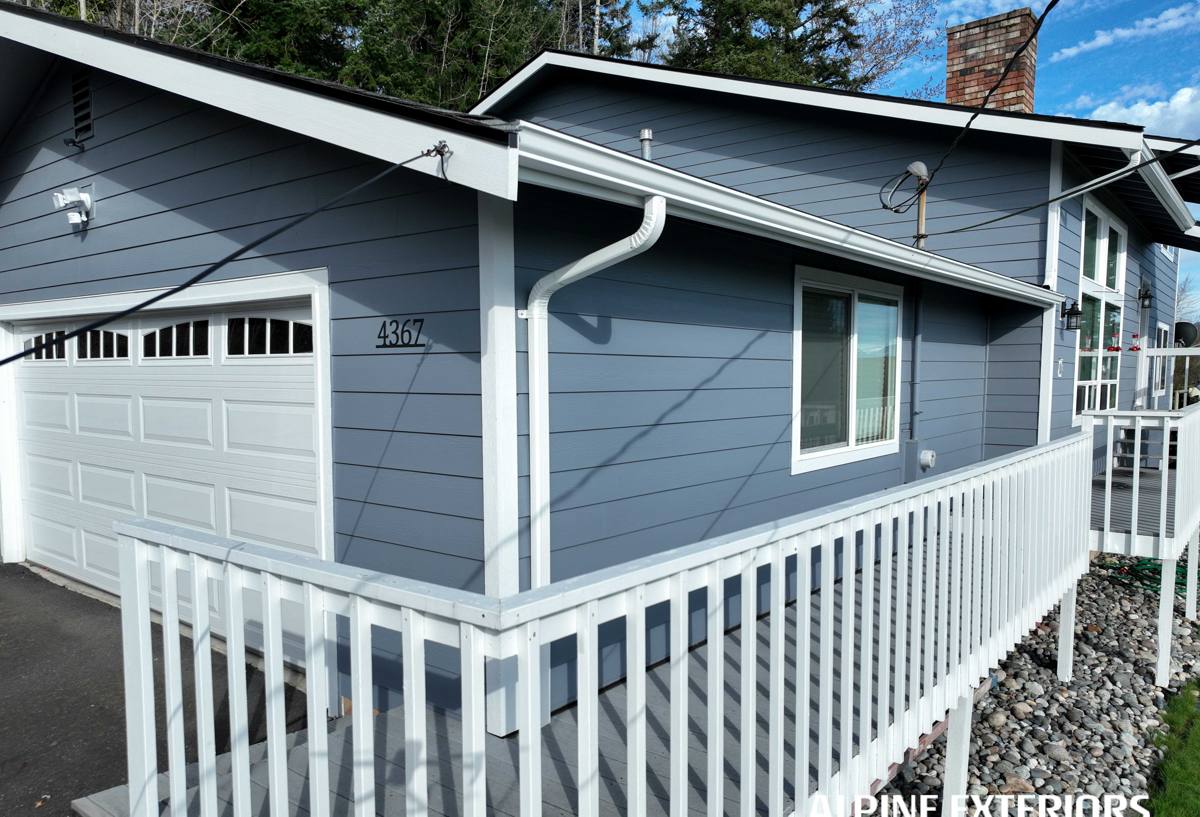
What This Climate Does to a House
The Fraser Valley and Whatcom County sit under the same weather patterns — wet air moving in off the Salish Sea and stalling against the foothills, dumping rain for days at a time and leaving surfaces damp even between storms. That combination of near-constant moisture and mild temperatures is exactly what moss, algae, and wood rot need to thrive. It's not a dramatic climate — no hurricanes, no hail the size of golf balls — it's a slow, patient one, and slow patient damage is the kind homeowners miss until it's expensive.
Moss and Algae
Moss doesn't just sit on a roof looking mossy. It holds moisture against shingles and shakes, works its way under tabs and flashing, and lifts material as it grows — which is how a small patch becomes a leak two winters later. North-facing slopes and roofs shaded by mature trees are the worst offenders because they never get enough sun to dry out between rain events.
Driving Rain and Wind-Driven Moisture
Storms here rarely come straight down. Wind pushes rain sideways into siding seams, window frames, and roof edges — places that are fine in a light shower but get tested hard when the wind picks up. Flashing details, kick-out flashing at roof-to-wall intersections, and proper siding overlap matter more here than in drier climates, because the margin for a sloppy detail is much smaller.
Salt-Tinged Air
Weather systems moving through this part of the valley carry moisture off the nearby coastal waters, and that air brings a mild salt content with it. It's not the same exposure as a beachfront property, but it's enough to accelerate corrosion on cheap fasteners, exposed metal flashing, and lower-grade hardware over the years. It's one more reason we don't cut corners on the metal components of a roofing or siding job.
Roofing in Clearbrook
Roof replacements and repairs here are almost always driven by one of a few things: moss damage that's gone on too long, aging asphalt shingles losing their granules, or flashing that was never installed right the first time. We inspect the whole system — decking, underlayment, flashing, ventilation — not just the shingles on top, because a roof that leaks is usually failing at a seam or a penetration, not in the middle of a flat run of shingles.
Roofing Materials We Work With
- Asphalt composition shingles — the standard choice for most homes; good value, wide style range, straightforward maintenance
- Metal roofing — sheds moss and water fast, holds up well to wind, longer lifespan for homeowners planning to stay put
- Cedar shake — traditional look that fits a lot of Fraser Valley and Whatcom County homes, but needs more disciplined moss and moisture management than asphalt or metal
- Flat and low-slope roofing — common on additions, garages, and porch roofs; drainage and membrane detailing matter more here than material choice
We'll tell you honestly which option fits your roof's slope, sun exposure, and budget rather than upselling the most expensive system on every job.
Siding That Handles Wet Winters
Siding takes a beating from the same wind-driven rain that stresses roofs, just at a different angle. The failure points we see most in this area are butt joints that weren't sealed properly, house wrap that was torn or gapped during the original install, and wood siding that's been painted over one too many times without addressing moisture already trapped underneath.
Common Siding Options
| Material | Moisture Behavior | Maintenance |
|---|---|---|
| Fiber cement | Very stable, resists swelling and rot | Repaint every 10-15 years, otherwise low |
| Vinyl | Sheds water well, won't rot | Occasional wash; watch for cracking in cold snaps |
| Wood (cedar, etc.) | Attractive but absorbs moisture if not sealed | Regular staining/sealing, more frequent inspection |
| Engineered wood | Good stability if installed and sealed correctly | Moderate; edge sealing is critical |
For most Clearbrook homes we lean toward fiber cement or a well-installed engineered product because they tolerate this area's damp cycles without the upkeep burden of solid wood — but we'll work with whatever material fits the home's style and your maintenance appetite, as long as it's installed with the moisture barrier and flashing details this climate actually demands.
Windows: Where Leaks Actually Start
A surprising number of "roof leaks" and "siding leaks" we get called out for turn out to be window flashing failures instead. Water finds the path of least resistance, and an improperly flashed window opening gives it one. When we replace windows, we're paying as much attention to the flashing tape, sill pan, and head flashing as we are to the window unit itself — the window is only as good as the opening it's set into.
Older single-pane or early dual-pane windows in this area also tend to fog between panes once seals fail, which is a good early sign it's time to replace rather than patch.
Decks Built for a Wet Season
A deck in Clearbrook spends a good portion of the year wet, which makes drainage, gap spacing, and ledger flashing the details that actually determine how long it lasts. We see plenty of decks that look fine on the surface but have soft or rotting ledger boards and joists underneath because water was never given anywhere to go.
What We Check on Every Deck Job
- Ledger board flashing where the deck meets the house — a top failure point for hidden rot
- Proper gapping between boards for drainage and airflow
- Post base connections and whether they're keeping wood off standing water
- Railing and stair hardware condition, especially on older decks with exposed fasteners
- Whether the current footprint and grading are actually shedding water away from the house
Why a Local Crew Matters Here
Clearbrook and Sumas share a climate, but they don't always share code requirements, permitting processes, or supplier lead times — crossing the border changes some of the practical logistics even though the weather stays the same. A crew that works this specific area regularly knows which roof and siding details actually hold up locally versus which ones look fine on paper but fail here in year three. We're not driving in from a metro area for a one-off job; this border region is where we work every week, and we're the ones who'll answer the phone if something needs a follow-up look after a hard winter.
Maintenance That Actually Extends the Life of Your Exterior
Most of the expensive repairs we see could have been caught earlier and handled cheaply. A short annual routine goes a long way in this climate:
- Clear moss off roofing surfaces before it spreads, especially on shaded or north-facing slopes
- Keep gutters and downspouts clear so water isn't backing up under roof edges
- Walk the siding line each fall looking for cracked caulking, gaps, or soft spots
- Check window sills and frames for soft wood or peeling paint, both early rot indicators
- Inspect deck ledger boards and post bases where wood sits closest to standing water
Getting an Honest Estimate
Every home in Clearbrook faces this climate a little differently depending on tree cover, roof slope, sun exposure, and how the original construction handled moisture. We'd rather look at your specific situation than guess over the phone. If you're noticing moss buildup, a soft spot on the deck, drafts around a window, or just want a second opinion before winter, reach out for a free, no-pressure estimate — we'll walk the property, tell you what we actually see, and let you decide from there.