 Sumas Roofing
 Why Acme Homes Put Extra Demands on Windows
Acme sits back in the wooded foothills of Whatcom County, with heavier tree cover and a longer damp season than you get closer to town. That combination means windows here work harder, longer, than windows on a sunnier lot. Shade keeps moisture sitting on glass and frames instead of drying off between storms, and the driving, wind-blown rain that rolls through this part of the county doesn't just hit windows head-on — it gets pushed sideways, up under trim, and into any gap that isn't properly sealed.
Across Whatcom County, homes closer to the water also deal with salt-laden air that corrodes hardware and finishes faster than manufacturers' spec sheets assume. Acme is more inland, but the same weather systems that carry that air also bring the same relentless, wet winters — which means the same rules apply: water management at the window opening matters as much as the glass itself. Add in a moss season that can run half the year, and you've got an environment that will expose a poorly installed window within a couple of winters, no matter how good the brand name on the sticker is.
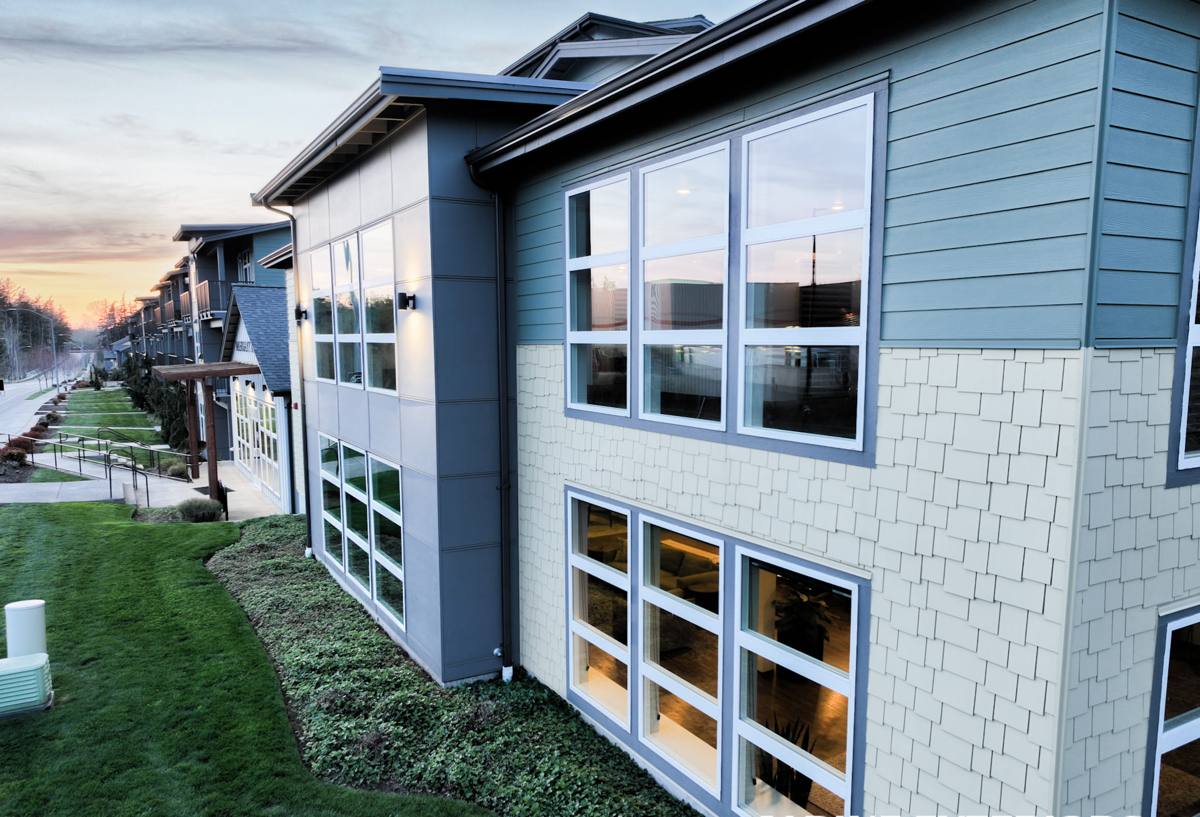
What "Energy-Efficient" Actually Means for a Window
Every window sold in the U.S. carries an NFRC label with a handful of numbers on it. In western Washington, two of them matter more than the rest:
- U-factor — how much heat the window loses. Lower is better. This is the number that matters most here, because our climate is dominated by heat loss during long, cool, overcast stretches, not by heat gain.
- SHGC (Solar Heat Gain Coefficient) — how much solar heat passes through. It matters less on a mostly-shaded, mostly-overcast property, but still counts on south- or west-facing glass that does catch direct sun in summer.
Washington's state energy code sets minimum performance requirements for replacement windows, and any legitimate installer should be able to tell you, product by product, where a given window lands against that baseline — not just quote you a brand name and move on. "Energy-efficient" isn't a marketing label; it's a specific U-factor and SHGC combination matched to how your home is oriented and shaded.
Double-Pane vs. Triple-Pane
Modern double-pane windows with a low-E coating and an argon-filled gap perform well in this climate and are the right call for most Acme homes. Triple-pane glass pushes U-factor even lower, but it adds weight, cost, and thickness that isn't always worth it unless you're dealing with an unusually exposed wall or a specific noise or comfort complaint. We'll tell you honestly when triple-pane is worth the upgrade and when it's just extra cost for a marginal gain.
Frame Material: What Holds Up in This Climate
The frame matters as much as the glass. In a climate with this much sustained moisture, some materials are simply lower-maintenance choices than others.
| Frame Material | Moisture Resistance | Insulation Value | Maintenance |
|---|---|---|---|
| Vinyl | Very good — won't rot or corrode | Good, especially multi-chambered profiles | Low — occasional cleaning |
| Fiberglass | Excellent — very stable in wet/dry cycling | Very good | Low |
| Wood / Wood-Clad | Depends heavily on the cladding and finish upkeep | Very good | Higher — periodic sealing/painting |
| Aluminum | Poor without a thermal break; prone to condensation | Weakest unless thermally broken | Moderate; watch for corrosion near coastal air |
We don't push wood-clad frames on exposed, shaded elevations in this area unless a homeowner specifically wants the look and is prepared to keep up with the finish. It's not that wood is a bad product — it's that a shaded, damp wall is an unforgiving spot for any material that depends on a maintained finish to stay watertight. That's a maintenance-burden conversation we have honestly, not a knock on any manufacturer.
The Installation Details That Actually Determine Performance
Most window failures we get called out to fix aren't glass failures — they're installation failures. A premium window installed with sloppy flashing will leak and rot the framing around it faster than a mid-grade window installed correctly. In a climate with this much driving rain, the details below aren't optional extras; they're the job.
Flashing and Sill Pan Drainage
Water that gets past the exterior trim needs somewhere to go besides your wall sheathing. A proper sill pan and correctly lapped flashing — integrated with the house wrap, not just caulked over it — gives that water a path back outside instead of into the framing.
Air Sealing Around the Frame
A window can have a great U-factor rating and still perform poorly if the gap between the frame and the rough opening isn't insulated and air-sealed correctly. Gaps left open, or overfilled with the wrong foam, both cause problems — one lets air and moisture through, the other can bow the frame and affect how the window operates.
Fastening and Squaring
A window that isn't shimmed square will bind, won't seal against its own weatherstripping evenly, and will wear out its own hardware faster. This is a slow process done right — there's no shortcut that doesn't show up as a problem in a year or two.
Signs Your Current Windows Are Working Against You
- Fog or moisture trapped between panes (a failed seal — the insulating gas is gone)
- Noticeable drafts near the frame even when the window is latched
- Moss, algae, or dark staining building up on sills and lower frame edges
- Soft or spongy wood at the corners of the frame or the trim around it
- Windows that stick, won't stay open, or take real effort to latch
- Higher heating bills without any other explanation
- Condensation forming on the inside of the glass regularly through winter
How We Approach a Window Project in Acme
- On-site assessment — we look at exposure, shading, existing frame condition, and how water has historically moved around each opening.
- Product selection — we walk through frame material and glass package options against your budget and how exposed that particular wall actually is.
- Careful removal — old windows come out without tearing more of the surrounding wall than necessary, and we check the framing underneath for rot before anything new goes in.
- Flashing and sill pan installation — this is the step that gets rushed on cut-rate jobs and the step we won't skip.
- Setting, shimming, and insulating — square, level, and properly air-sealed, not just screwed into whatever opening is there.
- Exterior trim and sealant — finished to shed water, not just look finished.
- Walkthrough — we operate every window with you before we consider the job done.
What Drives the Cost
| Factor | Why It Moves the Price |
|---|---|
| Frame material | Vinyl is typically the most affordable; fiberglass and wood-clad cost more upfront |
| Glass package | Low-E coatings, gas fills, and triple-pane glass each add cost for lower U-factor |
| Number and size of openings | Straightforward — more glass, more labor and material |
| Access and wall condition | Rot repair, difficult access, or second-story work adds labor time |
| Trim and finish work | Matching existing exterior trim profiles can add time versus a standard finish |
Whole-house replacement runs a wide range depending on all of the above — we'll give you real numbers for your specific windows and openings during the estimate rather than a ballpark that doesn't mean much until we've actually looked at the house.
Why Local Experience in This Area Matters
A crew that mostly works elsewhere doesn't automatically know how much shade a given Acme lot gets through the winter, how long moss has to build up on north-facing sills before it needs attention, or how the driving rain in this part of Whatcom County tends to find its way in around older, less-flashed openings. That's not a knock on outside contractors — it's just that this kind of judgment comes from having stood in front of enough local houses in enough weather to know where problems actually start. We size up each opening based on what actually happens to windows in this area over a full wet season, not a generic install checklist.
Keeping Moss and Moisture From Undoing the Work
A correctly installed, energy-efficient window still needs a little upkeep in a climate like ours.
- Clear moss and debris off sills and tracks a couple of times a year, especially on shaded sides of the house
- Keep gutters clear so overflow doesn't run down onto window heads
- Check exterior caulking annually and re-seal any cracked or shrunk beads before winter
- Trim back vegetation that keeps a window in constant shade and damp
- Operate windows periodically through the year so weatherstripping and hardware don't seize up
If you're dealing with drafty, foggy, or rotting windows in Acme, or you're just ready to stop losing heat through glass that's earned its retirement, we'd be glad to take a look. Estimates are free, there's no pressure, and you'll get straight answers about what your home actually needs — fill out the form below to get started.