 Sumas Roofing
 Deck Building Built for Laurel's Weather, Not Against It
A deck in Laurel doesn't fail because the homeowner picked the wrong stain color. It fails because the structure underneath was never built to handle what Whatcom County weather does to wood, fasteners, and connections year after year. Salt-laden air moving in off the water, long stretches of driving rain, and a moss season that can run from fall through spring put more stress on an outdoor structure here than in drier parts of the state. A deck that would hold up fine in eastern Washington can start showing real problems within a few years in Laurel if it wasn't designed with this specific climate in mind.
We build and rebuild decks for homes in and around Laurel, and the patterns are consistent: moisture finds its way into ledger connections, moss builds up in shaded or north-facing sections, and hardware that isn't rated for coastal exposure starts corroding faster than most homeowners expect. None of that is unusual for the area — it's just what a deck here is up against, and it's exactly what a correctly built deck accounts for from day one.
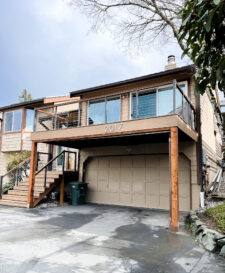
What Laurel Homes Specifically Need From a Deck
Every deck has to handle load and weather, but a few things come up again and again on Laurel properties specifically:
- Ledger board attachments that seal properly against a home's existing siding and sheathing, since driving rain finds gaps that lighter weather never would
- Fasteners and hardware rated for corrosion resistance, given the salt content in the air near the water
- Decking material and gap spacing that lets moisture drain and dry quickly instead of sitting and feeding moss growth
- Footings sized and set below frost depth, accounting for the wetter, heavier soil common in this part of Whatcom County
- Airflow underneath the deck so the structure has a chance to dry out between rain events instead of staying damp for weeks at a time
These aren't upgrades — they're the baseline for a deck that's going to hold up in this climate. A lot of deck problems we get called out to inspect trace back to one of these being skipped or done to a minimum-code standard rather than a standard that actually fits the site.
Choosing the Right Decking Material for Laurel's Conditions
There's no single "best" decking material — there's a best material for a given budget, sun exposure, and how much upkeep a homeowner actually wants to do. Here's how the common options hold up against moss, moisture, and salt air specifically:
| Material | Moss/Moisture Resistance | Maintenance | Typical Lifespan |
|---|---|---|---|
| Pressure-treated pine | Good if sealed regularly; moss gains a foothold if neglected | Annual cleaning and resealing recommended | 15-20 years with upkeep |
| Cedar | Naturally moisture and insect resistant, still needs periodic sealing | Moderate — cleaning, occasional oil or sealant | 20-25 years with upkeep |
| Composite decking | Very good — doesn't absorb moisture the way wood does, but still needs cleaning where moss can grow on the surface | Low — occasional washing, no staining/sealing | 25-30+ years |
| PVC/vinyl decking | Excellent moisture resistance | Low — surface cleaning only | 25-30+ years |
In Laurel, we lean toward recommending composite or PVC decking for homeowners who want to minimize the yearly fight against moss and moisture, especially on shaded or lower decks that don't get much direct sun to dry out. That's not a knock on wood — a well-maintained cedar or pressure-treated deck can look great and last decades here too. It's a maintenance-burden conversation more than a "one is better" conversation, and we'll walk through the honest trade-offs based on your specific site.
Substructure Material Matters More Than People Think
Whatever decking surface you choose, the framing underneath should be pressure-treated lumber rated for ground contact where applicable, with corrosion-resistant structural hardware throughout. This is where we see the most corner-cutting on older or budget builds — a nice composite deck surface sitting on framing and fasteners that were never upgraded for this climate, which just moves the failure point out of sight instead of solving it.
What a Correctly Built Deck Actually Involves
A deck that's going to last in this climate comes down to a handful of details done right, every time, not just on the parts that show:
- Ledger board flashing: Properly flashed and sealed against the house so water is directed away from the structure, not trapped behind the ledger where rot starts unseen
- Footing depth and sizing: Set below frost line and sized for the actual load of the deck, not the minimum the permit will technically allow
- Joist spacing and hangers: Correct spacing for the decking material chosen, with galvanized or stainless hangers rated for exterior and coastal exposure
- Fastener selection: Corrosion-resistant screws and bolts throughout — this is a small cost difference that has an outsized effect on how long connections hold up
- Drainage and airflow: Grading and gap spacing that let water move off and away from the structure instead of pooling underneath
- Railing and stair code compliance: Built to current Whatcom County building code for height, spacing, and load, not just "close enough"
None of this is exotic. It's just discipline — the kind that shows up ten years later as a deck that's still solid instead of one that needs structural repair.
Our Deck Building Process
Whether it's a new deck or a full rebuild, our process for Laurel homes runs the same way:
- On-site assessment: We look at the home's siding and structure where the deck will attach, the sun/shade exposure, drainage on the lot, and existing conditions if we're replacing an older deck
- Design and material conversation: We talk through decking material, layout, railing style, and budget honestly — including maintenance trade-offs specific to this climate
- Permitting: We handle the permit process through Whatcom County so the build meets current code for footings, railings, and structural requirements
- Framing and structural work: Footings, ledger attachment, joists, and hardware go in first, built to hold up to the moisture load this area sees
- Decking, railing, and finish work: Surface material and railings installed to spec, with attention to gap spacing and drainage
- Final walkthrough: We go over the finished deck with you, including what upkeep it does and doesn't need going forward
Moss, Mildew, and Keeping a Laurel Deck Looking Good Long-Term
Even a well-built deck needs some seasonal attention in this part of Whatcom County — the difference is that a correctly built deck needs a lot less of it. A few habits go a long way:
- Sweep leaves and debris off the deck surface regularly in fall, especially in shaded corners where moisture sits longest
- Clean the deck surface at least once a year to knock back early moss and mildew growth before it takes hold
- Check that gaps between boards stay clear of debris so water and air can move through as designed
- Inspect railings and stair connections annually for any looseness or corrosion at the hardware
- Reseal wood decking on the manufacturer's recommended schedule — don't wait until it's visibly weathered
- Keep gutters and downspouts near the deck clear so runoff isn't being directed onto or under the structure
None of this is heavy work, but skipping it is how a fine deck turns into a deck with a moss problem two winters in a row.
Problems We Commonly See on Older Laurel Decks
When we're called out to inspect or rebuild an existing deck in the area, a few issues come up repeatedly:
- Rot at the ledger board connection from flashing that was never installed or has failed over time
- Undersized or shallow footings that have shifted with frost and wet soil conditions
- Standard (non-coated) fasteners that have corroded and weakened structural connections
- Heavy moss buildup on shaded sections that's retaining moisture against the decking surface
- Railings that no longer meet current code spacing, often from older construction predating current standards
Most of these are fixable, and we'll always tell you honestly whether a repair makes sense or whether the structure's condition means a rebuild is the better long-term investment.
Why a Crew That Already Works in Laurel Makes a Difference
Deck building isn't identical everywhere. A crew that builds decks in a dry climate isn't necessarily thinking about ledger flashing, fastener corrosion, or moss-prone shade patterns the same way a crew working Whatcom County day in and day out does. We've seen how homes in and around Laurel age with this climate — where moss tends to build up first, which fastener choices actually hold up, and what the county's permitting process requires for footings and railings.
That local familiarity isn't a marketing line — it's the difference between a deck that's designed for the weather it will actually face and one that's designed for weather somewhere else. It also means fewer surprises during permitting and inspection, because we already know what the county is looking for.
Get a Straightforward Estimate
If you're planning a new deck or dealing with an older one that's showing its age, we're happy to come take a look and give you an honest read on what it needs. Reach out for a free, no-pressure estimate — there's a form below to get started.