 Sumas Roofing
 Why Acme Homes Need Window Installation Done Right
Homes in and around Acme sit in one of the wetter corners of Whatcom County, and windows are usually the first thing on a house to show it. A window that's installed a quarter-inch out of level, or flashed with the wrong lap order, might look fine for a year or two. Then a wet winter finds the gap, water tracks behind the trim, and by the time it shows up as a stain on the interior sill, the sheathing underneath has usually been wet for months. Window installation isn't really about the window itself — it's about everything happening around the opening: the flashing, the sealant, the framing, and how all of it sheds water the way this climate demands.
We install windows for homes throughout the Acme area and the rest of Whatcom County, and we see the same failure patterns again and again on older installs: reused flashing tape that's lost its adhesion, caulk used as the primary water barrier instead of a backup, and window units set into openings that were never properly prepped. Getting it right the first time costs about the same as getting it wrong — the difference is in the sequence and the details, not the price of the window itself.
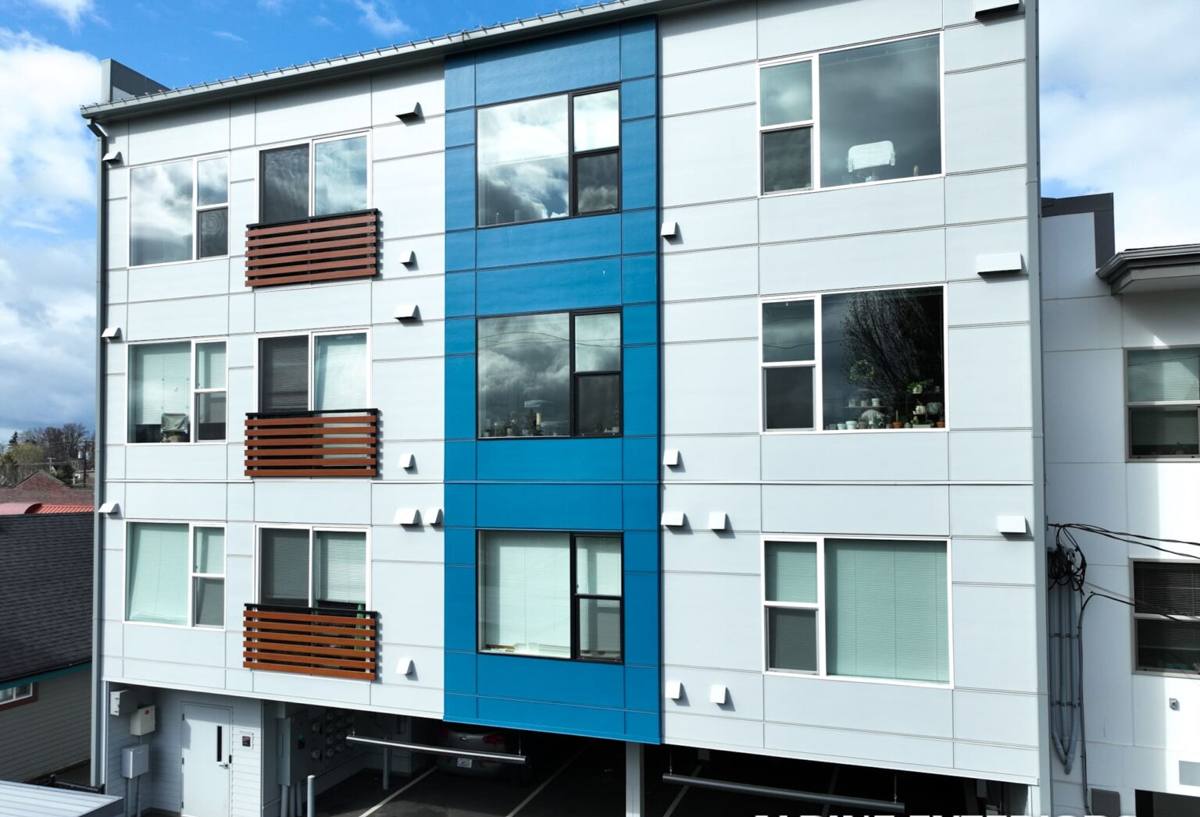
How Whatcom County's Wet Climate Wears Down Windows
Sumas and the surrounding Acme area get a long, damp season that runs from fall through spring, with driving rain that comes in sideways during winter storms rather than falling straight down. That matters for windows because sideways-driven rain tests the flashing and sealant details at the head and sides of the opening — the parts of an installation that are easy to shortcut and hard to inspect once the trim is back on.
The moisture-laden, salt-tinged air that moves through this part of Whatcom County also feeds a moss and algae season that runs longer here than in drier parts of the state. Moss doesn't just grow on roofs — it takes hold in window sill channels, weep holes, and anywhere water sits instead of draining. Clogged weep holes on an older window turn the frame into a small reservoir, and that constant moisture is what rots wood sills and corrodes hardware years before it should fail.
Add in the seasonal temperature swings this area gets — cold, damp winters and warm, dry summers — and you have a lot of expansion and contraction working on every seal in a window assembly. Sealants and gaskets that aren't rated for this range, or that were installed under the wrong temperature and humidity conditions, tend to fail early. None of this means Acme homes need anything exotic. It means the installation has to respect what the climate actually does, year after year.
Signs It's Time to Replace Your Windows
Most homeowners don't think about their windows until something is visibly wrong, but there are earlier signs worth acting on:
- Condensation forming between the panes of a double-pane window — a sign the seal has failed and the insulating gas has escaped
- Soft or discolored wood at the sill or bottom corners of the frame, inside or out
- Visible daylight or a draft you can feel around the sash when the window is closed and locked
- Paint that's bubbling or peeling on the interior trim near the window, which usually points to trapped moisture
- Windows that are difficult to open, close, or lock — often a sign the frame has shifted or swollen
- A noticeable jump in heating costs without any other explanation
Any one of these can be a minor fix. Several at once, especially on a home more than 20 years old, usually means the original installation is reaching the end of what caulk and touch-ups can manage.
What Correct Window Installation Actually Involves
A window installation is really a sequence of water-management steps, and the window itself is just one part of that sequence.
Flashing and Moisture Management
Before a new window ever goes into the opening, the rough opening needs a sloped sill pan so any water that gets past the window has somewhere to go besides the framing. Flashing tape gets applied in a shingle-lap order — sill first, then sides, then head — so water is always directed outward and down, never into a seam. This is the step that gets rushed or skipped on the installs we end up repairing.
Air Sealing and Insulation
The gap between the window frame and the rough opening needs to be sealed with a low-expansion foam or backer rod and sealant, not stuffed with fiberglass insulation alone. Fiberglass slows air movement, but it doesn't stop it, and it holds moisture if any gets in. A properly air-sealed gap is what keeps a warm interior sill from turning into a cold, drafty one during a hard freeze.
Proper Fastening and Shimming
Windows need to be shimmed level, plumb, and square before they're fastened, checking the reveal around the sash to confirm the unit isn't racked. A window that's slightly out of square will bind, won't seal evenly, and will wear its weatherstripping unevenly over the years — a slow failure that's hard to trace back to installation day.
Choosing Window Materials for Acme's Climate
There's no single "best" window material — the right choice depends on the home, the exposure, and how much upkeep an owner wants to take on. Here's how the common options hold up in this climate:
| Material | How It Handles This Climate | Maintenance |
|---|---|---|
| Vinyl | Won't rot or corrode; performs well in damp conditions; can expand and contract more across temperature swings | Low — occasional cleaning |
| Fiberglass | Very stable in wet, variable climates; minimal expansion and contraction; strong moisture resistance | Low |
| Wood-clad | Good insulator and classic look, but the wood interior is vulnerable if moisture ever reaches it through a seal failure | Moderate to high |
| Aluminum | Durable but conducts cold and can corrode over time in damp, salt-influenced air without a quality finish | Moderate |
For most Acme homes, we lean toward vinyl or fiberglass because they tolerate the wet-dry, freeze-thaw cycle here without the ongoing upkeep that wood-clad windows demand. That's a maintenance and moisture-behavior judgment, not a knock on wood-clad windows generally — they're a fine product for owners willing to stay ahead of the finish and caulk lines every few years.
Our Window Installation Process
Assessment and Measurement
We start by looking at each opening individually — checking the condition of the existing sheathing and framing, noting any signs of past water intrusion, and taking precise measurements. This is also when we talk through material and style options based on the home's exposure and the owner's priorities.
Removal and Prep
The old window comes out carefully so we can inspect the rough opening underneath. Any soft or water-damaged framing gets flagged and repaired before a new window ever goes in — installing a new window into a compromised opening just hides a problem instead of fixing it.
Installation and Sealing
The opening gets prepped with a sloped sill pan and properly lapped flashing, the window is set, shimmed, and fastened, and the gap between frame and opening is air-sealed. Exterior trim and caulking go back on last, using a sealant rated for this climate's temperature range.
Final Inspection
Every window gets operated, checked for square and level, and inspected for consistent reveals and a solid seal before we consider the job finished.
What Window Installation Costs in Acme
Costs vary by window size, material, and how much of the surrounding structure needs repair, but the main factors are worth understanding before comparing quotes:
| Factor | Why It Affects Cost |
|---|---|
| Window material | Vinyl is typically the most affordable; fiberglass and wood-clad cost more up front |
| Retrofit vs. full-frame replacement | Full-frame replacement costs more but is often necessary when framing or flashing needs repair |
| Number and size of openings | Larger or custom-sized windows cost more than standard sizes |
| Framing repair | Any rot or water damage found during removal adds labor and material cost |
| Access and site conditions | Second-story or hard-to-access windows take more time to install safely |
We'd rather walk a homeowner through these factors on-site than quote a number sight unseen — it's the only way to give a price that holds up once the old window comes out and we can see what's actually behind it.
Why It Matters to Hire a Crew That Already Works in Acme
A crew that installs windows regularly in this part of Whatcom County has already seen how local homes are built, what the older housing stock in the area tends to have behind the trim, and which flashing and sealing details actually hold up through a full wet season here rather than just looking good on installation day. That local pattern recognition is worth more than it sounds — it's the difference between a crew guessing at what might work and a crew that's already watched a given detail succeed or fail through several winters of driving rain.
Working locally also means we're not learning the permitting and inspection process for the first time on your project, and we're not driving in from outside the area to handle a callback months later if something needs a second look.
Keeping Your New Windows Performing
A correct installation is most of the battle, but a little upkeep keeps it that way:
- Clear moss and debris from weep holes and sill tracks each fall before the rainy season sets in
- Inspect exterior caulk lines annually and re-seal any that have cracked or pulled away
- Wipe down and lubricate hardware and tracks once or twice a year so locks and rollers keep working smoothly
- Watch for condensation between panes, which signals a seal failure worth addressing early
- Keep gutters and downspouts clear so roof runoff isn't washing directly down over window heads
If you're weighing whether it's time to replace windows on an Acme-area home, or you just want a straight answer on what a correct installation involves for your house, we're happy to take a look. Reach out for a free, no-pressure estimate using the form below.