 Sumas Roofing
 Why Bellingham Decks Wear Out Faster Than You'd Expect
A deck in Bellingham lives a harder life than the same deck would in a drier climate. Whatcom County sits close enough to the water that homes pick up salt-laden air, and that air works on fasteners, hardware, and any exposed metal year-round. Layer on top of that the long stretch of driving rain that runs from fall through spring, and a moss season that can start early and hang on late in shaded yards, and you've got a structure that's almost never fully dry. Wood and even engineered decking need real drying time between soakings to hold up. In this area, that drying window is short, which is why deck problems here tend to show up as rot, soft spots, and slick, moss-covered boards well before a deck would show its age somewhere with a drier climate.
None of this means a deck in Bellingham is doomed — it means the repair has to account for moisture the whole way through, not just patch what's visible on the surface.
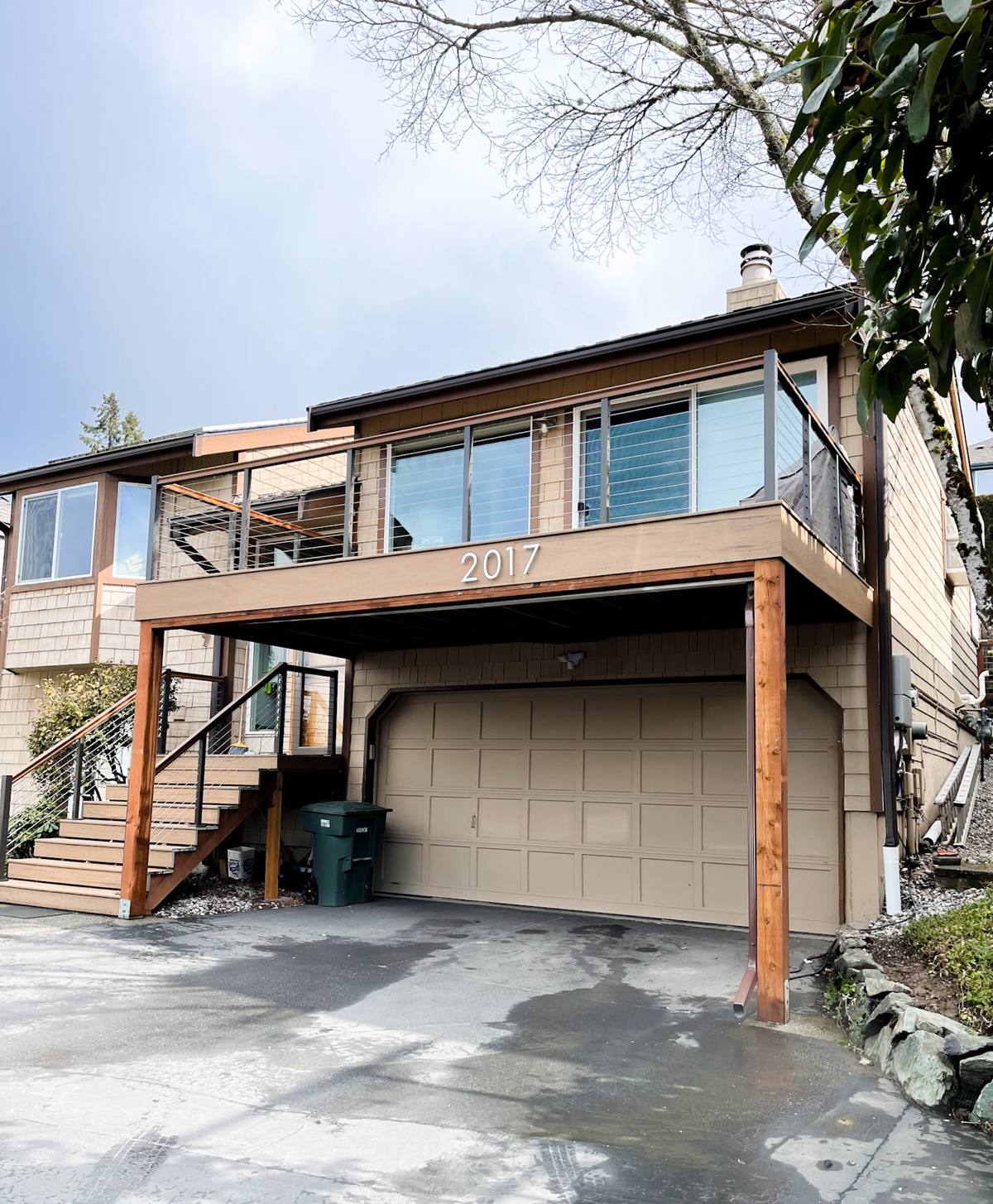
Signs a Bellingham Deck Needs Repair
Most decks don't fail all at once. They give warning signs first, and catching them early is almost always cheaper than waiting.
- Boards that feel spongy, springy, or noticeably softer underfoot than the rest of the deck
- Green or black staining that keeps coming back within weeks of cleaning it off
- Visible gaps, cupping, or splitting in individual boards
- Rust streaks bleeding out from screws or nail heads
- A railing or post that wobbles or flexes when you lean on it
- Water that pools instead of draining off the surface after rain
- Any separation where the deck meets the house (the ledger board area)
- A musty smell coming from underneath the deck
If you're seeing more than one or two of these, it's worth having someone look underneath the deck, not just at the walking surface. Surface staining is often the least of the problem — what's happening to the framing below is what actually determines whether a repair will hold.
What a Correct Deck Repair Actually Involves
It starts underneath, not on top
A repair that only replaces the boards you can see is a cosmetic fix, not a structural one. A correct job means getting under the deck (or pulling boards where needed) to check the ledger board, joists, beams, and posts for rot, checking that flashing at the house connection is doing its job, and confirming the fasteners holding the frame together haven't corroded to the point of losing grip strength. In a climate like this one, we've seen plenty of decks where the surface boards looked fine but the framing underneath had been quietly absorbing moisture for years.
Flashing and drainage matter more here than almost anywhere else
Where a deck attaches to the house is the single most common failure point in this climate, because that joint is where water gets trapped against wood if it isn't flashed correctly. Part of a proper repair is making sure that connection sheds water away from the house rather than channeling it straight into the ledger board. Drainage matters just as much on the open deck surface — boards need enough gap and slope to let water run off instead of sitting and soaking in.
Fastener choice isn't a small detail
Standard zinc-coated screws and nails corrode faster near the coast than they do further inland. We use fasteners rated for the moisture and salt exposure this area sees, because a repair held together with the wrong hardware just fails again in a few years.
Repair or Replace? What Actually Drives the Decision
Homeowners often assume any deck with a problem needs to be torn out and rebuilt. That's frequently not true — but it depends on what's actually failing underneath, not just what's visible.
| Factor | Usually Repairable | Usually Needs Replacement |
|---|---|---|
| Surface boards | Isolated cupping, splitting, or staining on a handful of boards | Widespread softness or rot across most of the deck surface |
| Framing (joists, beams, posts) | Solid wood with a few spots of surface rot or minor damage | Soft or crumbling wood throughout, or structural members that flex under weight |
| Ledger board connection | Flashing failure caught before it's spread into the framing | Rot has traveled into the house rim joist or wall framing |
| Railings and posts | Loose hardware or a single damaged post | Multiple posts with base rot or a railing system that's out of code |
| Age of the deck | Under 15–20 years with good original construction | Original construction was undersized, poorly flashed, or well past its service life |
The honest answer for most decks we look at is somewhere in between — repair the framing and hardware, replace only the boards that are actually damaged. We'll tell you plainly if a full rebuild is the better value; there's no reason to sink repair money into a frame that's already compromised.
Our Process
- Inspection from below and above. We check the walking surface, but also crawl underneath (or remove boards as needed) to look at the framing, ledger connection, and fasteners directly.
- Straight assessment. We tell you what's structural, what's cosmetic, and what can wait — with repair and, where relevant, replacement pricing so you can decide with real information.
- Repair the frame first. Any rotted framing, failed flashing, or corroded hardware gets addressed before any new decking goes down. A new surface on a bad frame is a short-term fix, and we don't sell those.
- Replace only what's damaged. Sound boards stay. Damaged ones get replaced with materials matched to what holds up in this climate.
- Seal, finish, and walk you through upkeep. We finish the repair properly and explain what maintenance will actually extend its life, so you're not guessing.
Materials: What Holds Up Here and What Doesn't
Pressure-treated lumber, cedar, and composite decking are all viable in this climate — but each comes with real trade-offs, not a single "best" answer.
- Pressure-treated lumber is affordable and easy to repair in sections, but it needs regular sealing to keep moisture out, and skipping that maintenance is what leads to the rot problems we see most often.
- Cedar resists rot naturally better than most softwoods and weathers well, but it's a premium material and still needs periodic finishing to look and perform its best.
- Composite decking resists moss growth and moisture damage better than wood and needs less upkeep, but it costs more upfront, and poor installation (wrong spacing, wrong fasteners) causes more problems with composite than with wood because it doesn't forgive shortcuts the way lumber sometimes does.
Whichever material a homeowner chooses, we match the fasteners and flashing to it — that consistency matters more to long-term performance than the brand name on the boards.
Maintenance That Actually Extends a Repair's Life
A repair is only as good as the upkeep that follows it. In a climate with this much rain and moss pressure, a few habits make a real difference:
- Clean moss and algae off the surface at least once a year, before it has a chance to hold moisture against the boards
- Keep gutters and downspouts clear so runoff isn't draining directly onto or under the deck
- Reseal wood decking on the schedule appropriate to the finish used — waiting too long is the single biggest cause of repeat repairs
- Trim back vegetation that's shading the deck and keeping it damp longer than it needs to be
- Check the ledger board area yearly for any sign of water intrusion at the house connection
Why a Crew That Already Works Bellingham Matters
Deck repair looks different depending on where it's done. A crew that works Bellingham and the surrounding Whatcom County area regularly already knows how the local moisture and moss season behave on decks, what flashing details actually hold up here, and which fastener and material choices are worth the extra cost versus which ones are marketing. That local familiarity means less guesswork on your project and fewer surprises once boards come up. As a Sumas-based crew, we're close enough to be responsive for inspections, follow-up, and warranty work — not a company that shows up once from out of the area and is hard to reach if something needs a second look.
If you're seeing soft spots, staining that won't quit, or just want an honest read on what your deck actually needs, we're glad to take a look. Fill out the form below for a free, no-pressure estimate — we'll tell you straight what's repairable and what isn't.