 Sumas Roofing
 Building Decks That Actually Hold Up in Blaine
Blaine sits close enough to the water that salt air is part of daily life, and that changes what a deck needs to survive here compared to a deck built twenty miles inland. Add in Whatcom County's long wet season, driving rain that comes in sideways off the Strait, and months where moss and algae have nothing to do but grow on every shaded, damp surface, and you've got a climate that is genuinely hard on outdoor structures. A deck built with generic, one-size-fits-all specs will show its age fast here — soft spots in the decking, corroded fasteners, slick green boards by February, and framing that stays wet long after the rain stops.
We build decks for homes in this area with those conditions in mind from the first design conversation, not as an afterthought. That means thinking about drainage, fastener choice, ventilation under the deck, and material selection differently than a contractor working a dry-side climate would.
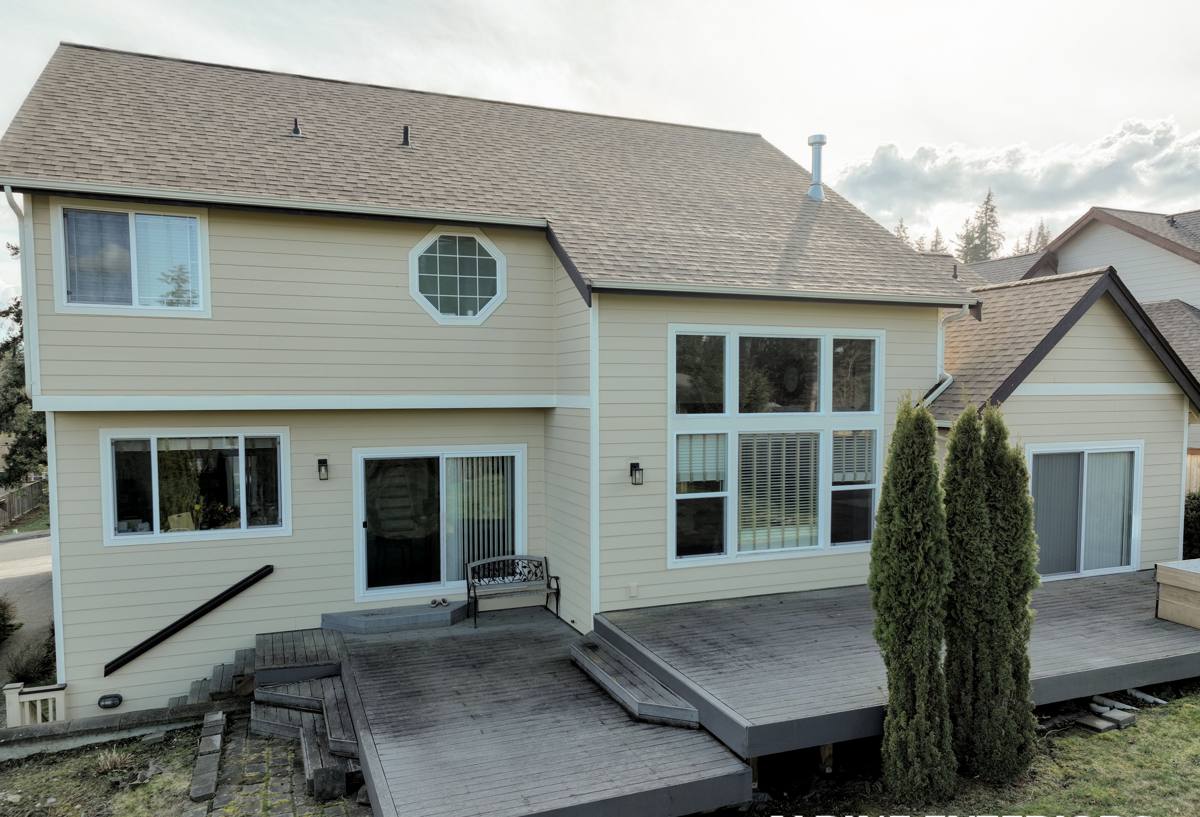
What Blaine's Climate Actually Does to a Deck
Salt Air and Metal Fatigue
Proximity to salt water accelerates corrosion on anything metal — nails, screws, joist hangers, railing brackets. Standard galvanized hardware can start showing rust streaks and pitting years before it would inland. Once a fastener starts corroding, it loses holding strength long before it looks obviously "bad," which is how decks develop soft, wobbly connections that aren't visible until someone notices movement underfoot.
Driving Rain and Water Intrusion
Rain that comes in at an angle doesn't just fall on a deck surface — it drives into ledger board connections, gets behind poorly flashed rim joists, and pools in any spot where drainage wasn't planned for. Over time, water that has nowhere to go is the single biggest cause of rot in deck framing, and it's almost always a framing and flashing problem, not a decking-material problem.
Moss, Algae, and the Long Wet Season
Whatcom County's wet months stretch long, and shaded or north-facing deck areas can stay damp for weeks at a time. That's exactly the environment moss and algae need. Beyond looking bad, a mossy deck surface is a slip hazard, and moss that's allowed to establish itself can hold moisture against the board surface, which shortens the life of the material underneath it.
What a Correctly Built Deck Involves Here
Framing and Fasteners
We use fasteners and structural hardware rated for the corrosion exposure this area actually sees, not just whatever meets minimum code in a drier climate. Joist hangers, structural screws, and ledger bolts all get chosen with salt-air exposure in mind. It costs a little more up front and it's the difference between hardware that's still solid in fifteen years and hardware that's already rusting in five.
Ledger Attachment and Flashing
The ledger board — where the deck attaches to the house — is the single most common failure point on decks in wet climates. We flash this connection properly with materials designed to shed water away from the house structure, not just caulk and hope. This is also where a lot of shortcut deck-building shows up on older decks we get called to repair or replace.
Drainage and Airflow Underneath
A deck that's built tight to the ground with no airflow underneath stays wet longer after every rain. We plan clearance and, where the site allows it, drainage paths so water moves away from the structure instead of sitting under it. This single design choice does more for long-term deck life in this climate than almost any material upgrade.
Surface Material Choice
Decking material matters, but it's not the whole story — a great board on bad framing still fails early, and modest boards on excellent framing last a long time. That said, material does affect how much maintenance a homeowner signs up for and how the deck handles the moss and algae pressure specific to this area.
Comparing Decking Materials for This Climate
| Material | Moisture Behavior | Moss/Algae Resistance | Maintenance | Typical Lifespan |
|---|---|---|---|---|
| Pressure-treated wood | Absorbs and releases moisture; can cup or check over time | Needs regular cleaning/sealing to resist growth | Annual cleaning, periodic sealing/staining | 10-15 years with upkeep |
| Cedar | Naturally moisture-resistant, but surface still needs care | Moderate; still grows moss if shaded and untreated | Regular cleaning, occasional oil/sealer | 15-20 years with upkeep |
| Composite decking | Doesn't absorb water into the board itself | Can still grow surface algae/moss if not cleaned; varies by brand and cap style | Periodic washing, no sealing needed | 25+ years, varies by product |
We'll walk through these trade-offs honestly during a design conversation rather than pushing whatever has the best margin. The right call often comes down to how much shade the deck sits in, how much upkeep a homeowner actually wants to do, and budget.
What We Won't Cut Corners On
- Ledger flashing and attachment — no shortcuts on the connection to the house
- Corrosion-appropriate fasteners and hardware throughout the structure
- Proper joist spacing and beam sizing for the actual span and load, not just "close enough"
- Footings set to the correct depth for this soil and frost conditions
- Railing and stair details that meet code, not just what looks finished
Our Process for a Blaine Deck Project
1. On-Site Assessment
We walk the site, look at drainage, sun exposure, and how the deck will tie into the house. Sun and shade patterns matter a lot here — a deck that sits mostly in shade needs different material and maintenance planning than one that gets afternoon sun most of the year.
2. Design and Material Selection
We talk through layout, size, railing style, and material options with real trade-offs laid out, not a sales pitch. You'll know what you're getting and why before anything is ordered.
3. Permitting
Deck projects of most sizes require a permit in this area. We handle that process as part of the job so you're not left tracking down inspections yourself.
4. Build
Footings, framing, decking, railing, and stairs, built in that order with inspections at the appropriate stages. We don't rush framing to get to the "visible" part of the job — the framing is what determines how the deck holds up over the next fifteen-plus years.
5. Final Walkthrough
We go over the finished deck with you, including basic care guidance specific to your material choice and how much sun or shade your deck sits in.
Why a Local Crew Matters for This
A contractor who already works in Blaine and the surrounding Whatcom County area has already run into the salt-air corrosion issues, the drainage challenges on this area's soil and slopes, and the moss problems that show up on shaded decks. That's not something you can fully substitute with a generic deck-building checklist. It affects fastener choice, how footings are set, and how we plan for water movement around and under the structure.
It also matters for follow-up. A deck is an outdoor structure that will need occasional attention over its life — a board that needs replacing, hardware that should be checked, moss buildup that needs addressing before it becomes a slip hazard. A crew that's local and already familiar with your property is a lot easier to bring back for that than an out-of-area company that built the deck once and moved on.
Maintenance Realities for Blaine Decks
- Plan on cleaning the deck surface at least once a year to stay ahead of moss and algae, more often in heavily shaded spots
- Check railing and stair hardware periodically for corrosion, especially on decks closer to the water
- Keep an eye on the ledger connection area for any signs of water staining or soft wood
- Trim back vegetation that keeps sections of the deck shaded and damp longer than necessary
- Address small issues — a loose board, a rusting fastener — before they turn into structural repairs
None of this is complicated, but it does need to actually happen. A deck that gets basic seasonal attention in this climate will outlast one that gets ignored by a wide margin, regardless of what material it's built from.
Getting Started
If you're planning a new deck or replacing one that's showing its age, we're happy to come take a look, talk through what your site and sun exposure call for, and give you an honest read on materials and cost. There's no pressure and no obligation — just a straightforward conversation about what a deck built for this climate actually involves. Use the form below to request a free estimate.