 Sumas Roofing
 Deck Replacement Built for Blaine's Weather, Not Just Blaine's Zip Code
Blaine sits right on the water, and that changes what a deck has to survive. A deck built the same way you'd build one twenty miles inland won't hold up the same way here. Salt-laden air off the bay, long stretches of driving rain through the fall and winter, and a moss season that can run eight months out of the year all work on wood, fasteners, and coatings faster than most homeowners expect. When we replace a deck in Blaine, we're not just swapping old boards for new ones — we're building for the specific conditions this stretch of Whatcom County throws at a structure.
This page covers what a correct deck replacement looks like for a Blaine home, the material and structural decisions that actually matter here, and how our process works from the first look at your deck to the final walkthrough.
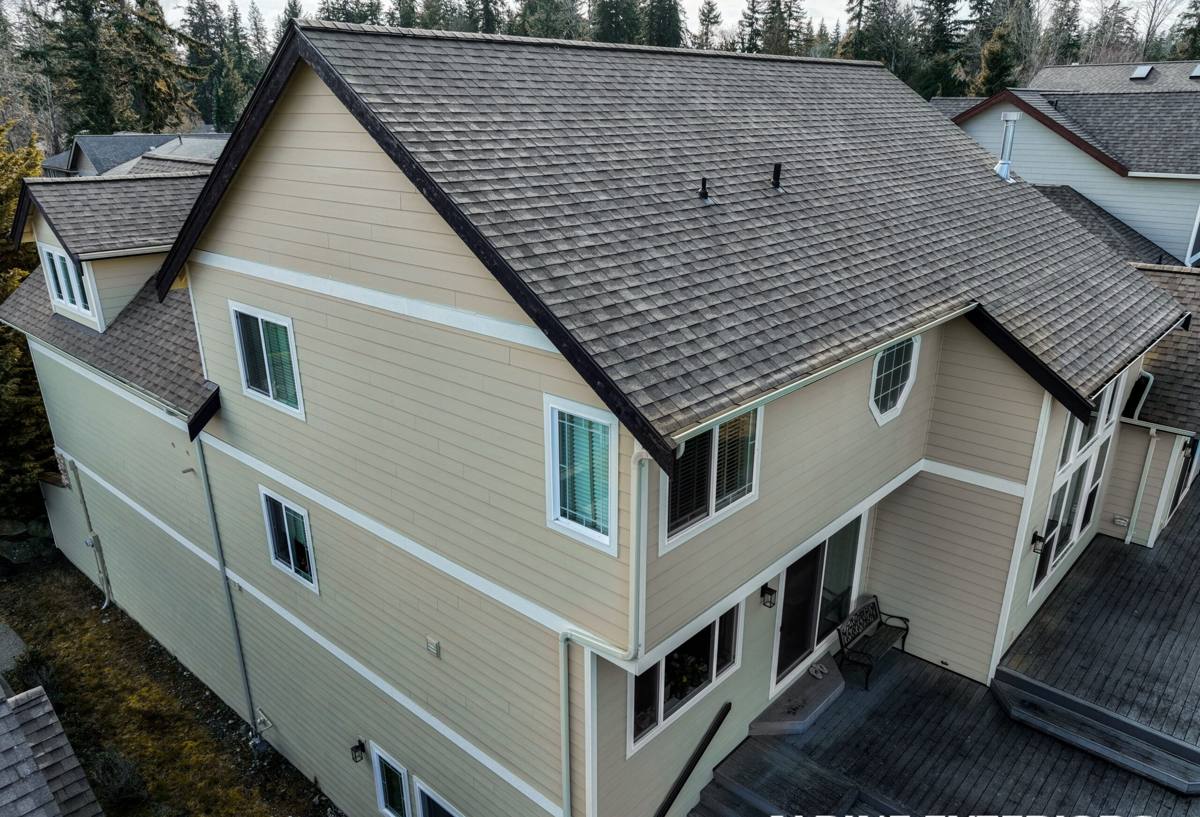
Why Whatcom County's Coastal Conditions Wear Decks Out Faster
Salt Air and Metal Fatigue
Homes closer to the water in Blaine deal with airborne salt that settles on every exposed surface, including deck fasteners, joist hangers, and railing hardware. Standard galvanized coatings break down faster under that exposure. Once a fastener starts corroding, it doesn't just look bad — it loses holding strength, and that's a structural problem, not a cosmetic one.
Driving Rain and Trapped Moisture
Whatcom County gets long stretches of steady, wind-driven rain rather than short heavy downpours. That pattern pushes water sideways into gaps, ledger connections, and any spot where two pieces of framing meet without a gap to drain and dry. A deck that looks fine on the surface can be rotting from the inside if water has been getting into the framing for a few seasons without anyone noticing.
Moss, Algae, and Slick Surfaces
The combination of shade, moisture, and mild temperatures gives moss and algae a long growing season on any horizontal wood surface. Beyond looking bad, moss holds moisture against the board surface and creates a genuinely slippery walking surface — a real safety issue on stairs and near entry doors, not just a maintenance nuisance.
Signs a Blaine Deck Needs Replacement Rather Than Repair
Not every tired-looking deck needs a full tear-off. But there's a point where patching stops making sense — where you're spending real money to extend the life of a structure that's already compromised. Here's what we look for:
- Soft or spongy spots in the decking, especially near the house or around post bases
- Visible rot or discoloration at the ledger board where the deck attaches to the house
- Rust streaking from fasteners or joist hangers
- Railings or posts that flex more than they should when you push on them
- Persistent moss or algae that keeps coming back within weeks of cleaning
- Gaps that have widened between boards, or boards that have cupped or crowned
- A deck more than 15-20 years old built with older lumber grades or fastening methods
If you're seeing two or more of these, it's worth having someone look underneath the deck, not just at the walking surface. Surface wear tells you a little; the framing tells you the real story.
What a Correct Deck Replacement Actually Involves
The Substructure Comes First
The framing — posts, beams, joists, and the ledger connection to the house — is where a deck's real lifespan is decided. In a climate that stays wet for months at a time, joist spacing, proper flashing at the ledger, and hardware rated for exterior and coastal exposure matter more than the decking material on top. We don't reuse old framing on a full replacement unless it's genuinely sound; hiding new boards over questionable framing just moves the problem a few years down the road.
Flashing and Drainage Details
The ledger board — where the deck ties into your house — is the single most common failure point we see on older decks in this area. Proper flashing keeps water from tracking behind the siding and into the house framing. This is one of those details that's invisible once the deck is finished but determines whether you have a rot problem in five years or in twenty.
Fasteners and Hardware
Given the salt exposure closer to the water in Blaine, we use fasteners and structural hardware rated for coastal and treated-lumber contact, not the minimum-grade hardware that's fine for a drier, inland build. It costs a little more up front and it's the difference between hardware that lasts and hardware that starts staining and weakening within a few years.
Board Spacing and Airflow
Correct gapping between boards lets water drain through instead of pooling, and proper under-deck ventilation keeps the framing drying out between rain events instead of staying damp. In a climate where things rarely get a long dry stretch, this airflow detail matters more than it would somewhere drier.
Decking Material Options for a Wet, Coastal Climate
| Material | How It Handles This Climate | Maintenance | Typical Lifespan |
|---|---|---|---|
| Pressure-treated lumber | Good rot resistance when properly sealed and maintained; needs attention at cut ends and fastener points | Annual cleaning, periodic re-sealing | 15-25 years with upkeep |
| Cedar | Naturally resists rot and insects; still needs sealing against constant moisture and salt exposure | Regular sealing, moss removal | 15-20 years with upkeep |
| Composite decking | Doesn't rot or absorb moisture the way wood does; performs well in wet, salty conditions | Occasional washing, no sealing required | 25-30+ years, varies by product |
There's no universally "right" answer — it depends on your budget, how much upkeep you want to commit to, and how the deck is used. What we won't do is recommend a material or fastening approach we know performs poorly in this specific climate just because it's cheaper up front. If a product has real maintenance trade-offs or moisture sensitivity in coastal, high-moss conditions, we'll tell you that plainly before you buy it, not after.
Our Deck Replacement Process
- On-site assessment. We look at the decking, the framing underneath, the ledger connection, and the posts and footings — not just the surface.
- Honest scope and estimate. You get a clear breakdown of what needs full replacement versus what's sound, along with material options and a straightforward price range.
- Permitting where required. Deck work often requires a permit depending on size, height, and attachment to the structure — we handle that coordination rather than leaving it on you.
- Tear-off and framing. Old decking and any compromised framing come out; new structural members go in to current code, with proper flashing at the ledger.
- Decking, railing, and hardware installation. Installed with attention to spacing, drainage, and fastener choice appropriate to the exposure.
- Final walkthrough. We go over the finished deck with you, including care and maintenance guidance specific to the material you chose.
Permits and Local Code Considerations
Deck replacements in Whatcom County typically fall under local building code requirements once you're rebuilding structural elements, especially anything involving guardrails, stairs, or a new ledger attachment. Requirements can vary depending on the deck's height, size, and whether it's attached to the house. We handle the permit process as part of the job rather than treating it as an extra step you have to manage yourself — it's part of doing the work correctly.
Why a Crew That Already Works in Blaine Matters
A contractor who's spent time working decks in this specific area already knows the ledger rot patterns, the moss buildup rates, and the fastener corrosion issues that come with proximity to the water — before they even start the assessment. That's not a sales pitch, it's a practical advantage: less guesswork, fewer surprises mid-project, and a build informed by what actually fails on decks around here versus what a generic install guide assumes for a drier climate. Being based nearby in Sumas also means we're not driving a long distance for follow-up visits, warranty questions, or seasonal maintenance advice.
Deck Replacement Cost Factors
Every deck is different, so we don't quote a number without seeing the site, but the main variables that move the price are consistent:
- Total square footage and deck height off the ground
- Extent of framing replacement versus decking-only replacement
- Material choice (pressure-treated, cedar, or composite)
- Railing style and stair complexity
- Ledger and flashing work required at the house connection
- Permit requirements based on size and structure
- Site access and how far materials have to be carried or staged
We'll walk through each of these with you during the estimate so the number you get reflects your actual deck, not a generic average.
Get a Straightforward Estimate
If your Blaine deck is showing soft spots, rust streaks, persistent moss, or is simply old enough that you're wondering whether it's still safe, we're glad to take a look. The estimate is free, there's no pressure, and you'll get a clear picture of what's actually going on before you decide anything. Use the form below to get started.