 Sumas Roofing
 Building New in Goshen: What the Climate Asks of Your Windows
When you're framing a new home or addition in the Goshen area, the windows you choose and how they're installed will decide how that structure performs for the next 20-30 years, not just how it looks on move-in day. Whatcom County sits in a corner of the Pacific Northwest where new construction has to answer to a specific set of conditions: driving rain that comes in sideways during winter storms, a long moss and mildew season where surfaces stay damp for weeks at a stretch, and salt-tinged air moving in off the Salish Sea that accelerates corrosion on hardware and fasteners. None of that is dramatic on any single day. It's the accumulation, year after year, that separates a window installation that still performs a decade out from one that's already showing rot at the sill.
New construction gives you an advantage that a remodel never fully replicates: you get to build the water management right into the wall assembly before siding or trim ever goes on. That's the opportunity, and it's also where the job most often gets shortcut.
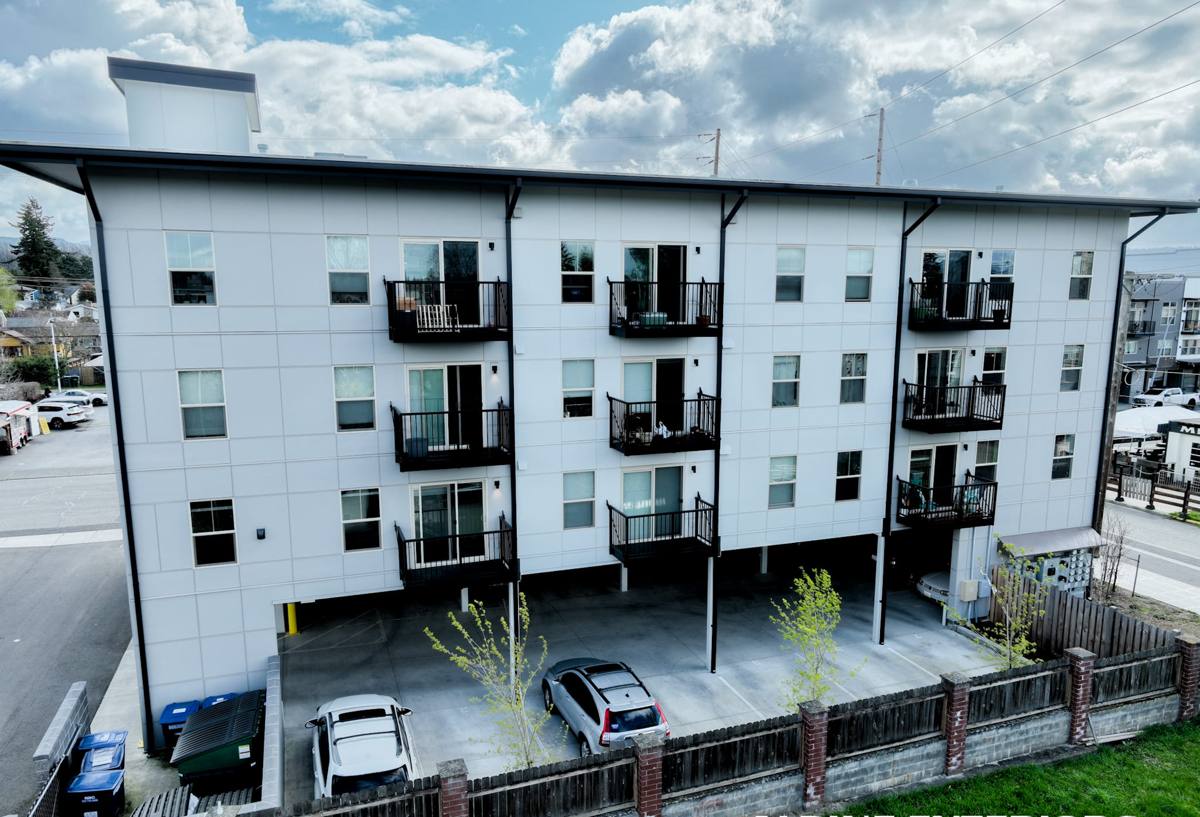
New-Construction Windows vs. Replacement Windows: Why the Distinction Matters
These are two different products installed two different ways, and mixing them up on a new build is a common and costly mistake.
- New-construction windows have a nailing fin (flange) around the perimeter that fastens directly to the wall sheathing before the weather-resistive barrier and siding go on. This is the correct choice for open-wall framing.
- Replacement windows are built without a nailing fin, sized to slip into an existing rough opening where the exterior wall is already finished. Using a replacement-style window in new framing means improvising a fastening and flashing method that the window wasn't engineered for — and that's exactly where leaks start.
On a true new build or addition in Goshen, we spec nailing-fin windows and integrate them into the wall's drainage plane as part of the framing sequence, not as an afterthought once siding crews show up.
Window Types and Materials for Whatcom County Conditions
There's no single "best" window material — the right call depends on the home's design, budget, and how exposed the walls are to wind-driven rain. Here's how the common options compare for a new build in this climate:
| Material | Moisture & Salt Air Performance | Maintenance | Typical Fit |
|---|---|---|---|
| Vinyl | Good — won't corrode or rot; seams are the weak point if welds are poor | Low | Cost-conscious builds, rentals, spec homes |
| Fiberglass | Excellent — dimensionally stable, resists swelling and warping in damp cycles | Low | Owner-occupied homes wanting longevity over decades |
| Aluminum-clad wood | Very good exterior protection, but interior wood still needs sealed finishes and dry detailing | Moderate | Custom/high-end builds prioritizing interior wood look |
| Bare aluminum | Prone to pitting and corrosion in salt-influenced air over time unless well-coated | Higher | We generally steer builders away from this near the coast |
We don't push one brand as universally "the" answer — the honest trade-off is usually price versus long-term maintenance. What we will flag is that any window going into a Goshen build should carry hardware and fasteners rated for coastal or marine-influenced environments; standard interior-grade hardware corrodes faster here than it would on the dry side of the state.
Glass Packages Worth Considering
Double-pane, low-E glass is the baseline we'd recommend for this region — it manages heat loss through the long gray stretches and cuts glare during the brighter summer months. Argon-filled units add a modest efficiency bump for a modest cost. Triple-pane is available but is usually more upgrade than most Goshen builds need; we'll tell you plainly if we think it's overkill for your project rather than upselling it by default.
Flashing and Water Management: The Part That Actually Prevents Leaks
The window unit itself is rarely what fails first — it's the flashing detail around it. In a climate with as much driving rain as Whatcom County sees, water will find any gap in the drainage plane eventually, and it needs somewhere to go besides the wall cavity.
Our sequence on new construction follows a shingle-style, gravity-fed approach:
- Sill pan flashing installed first, sloped to the exterior, so any water that gets past the window has a dedicated exit path instead of soaking into the sheathing.
- Weather-resistive barrier (housewrap or equivalent) lapped correctly at the rough opening before the window goes in.
- Window set into the opening, shimmed level and square, fastened per the manufacturer's schedule — not just "a few screws and move on."
- Side and head flashing tape applied in the correct shingle order — sides first, head last — so each layer overlaps the one below it.
- Integration with the drainage plane and, where applicable, a rainscreen gap before siding closes it all in.
Skip or reorder any one of those steps and you've built a hidden leak path into the wall that won't show up as a stain on drywall for a year or two — by which point there's already rot and mold behind the finish. This is the single biggest reason we treat window flashing as a framing-stage task, not something to rush through so trim carpenters can get in.
Our New-Construction Window Process in Goshen
We work new-construction windows as one coordinated phase with the builder or general contractor, not as an isolated trade that shows up and leaves.
What that looks like on site:
- Rough opening verification against actual window sizes before units arrive — undersized or oversized openings cause more callback headaches than any other single issue.
- Sill pan and flashing installed and inspected before the window is set.
- Window set, shimmed, and fastened to manufacturer spec, with attention to how the unit will settle as the structure cures.
- Flashing tape and WRB integration completed and photographed for our own records before siding covers it.
- Interior air-sealing at the rough opening (low-expansion foam or backer rod plus sealant) so the window performs on the energy side too, not just the water-management side.
- Final walkthrough on operation, hardware function, and screen fit once trim is complete.
We coordinate scheduling around the framer and siding crew so windows go in at the right point in the sequence — not too early, when the opening might still shift, and not so late that the wall's been exposed to weeks of open-cavity weather.
Window Placement, Light, and Wind Exposure
Beyond material and installation, where windows sit in the wall and how they're oriented matters in this region. West and south-facing walls in Goshen catch more of the wind-driven rain during winter storms, so those elevations deserve extra attention to flashing detail and, in some cases, a case for slightly deeper overhangs or trim detailing that sheds water further from the wall face. North-facing walls tend to stay damp longer and are where moss and algae growth on adjacent trim and siding shows up first — something to keep in mind when specifying finishes near the window trim, since low-maintenance material choices there save real upkeep down the line.
We'll talk through orientation with you or your builder during the estimate — it costs nothing to flag it early, and it's much cheaper to plan for than to retrofit after the siding's on.
What Drives Cost on a New-Construction Window Job
| Factor | Why It Matters |
|---|---|
| Window count and size | Larger openings and more units mean more material and labor hours, straightforwardly |
| Material choice | Vinyl is the lowest entry cost; fiberglass and clad-wood run higher but often lower lifetime maintenance |
| Glass package | Standard low-E vs. argon-filled vs. triple-pane changes both material and long-term energy cost |
| Wall complexity | Multiple stories, tricky rooflines, or extensive flashing detail add labor time |
| Scheduling coordination | Tight coordination with framing/siding crews reduces rework, which keeps costs predictable |
We'd rather walk your specific plans and give you a real number than throw out a broad range that doesn't mean much until we've seen the drawings and the site.
A Checklist Before You Order Windows for a Goshen Build
- Confirm you're speccing true new-construction (nailing fin) units, not replacement-style windows.
- Verify hardware and fastener ratings are suited to coastal-influenced air, not just standard interior grade.
- Ask how sill pan flashing will be handled before the window ever goes in the opening.
- Confirm the flashing tape sequence (sides-then-head, shingle-style) is part of the written scope.
- Check that rough openings will be verified against actual window dimensions before delivery — not assumed from plans.
- Ask whether air-sealing at the interior rough opening is included, not just exterior weatherproofing.
- Get the installation sequence coordinated in writing with your framer and siding crew so nothing gets rushed.
Why a Crew That Already Works Goshen Makes a Difference
A lot of window problems on new builds in this region trace back to installers who learned their sequencing somewhere with a different climate and never adjusted it. Flashing details that are optional in a dry climate are not optional here. We work new-construction windows across Whatcom County and around Sumas regularly enough to know which elevations need extra flashing attention, which hardware holds up against the salt air over years rather than months, and how long a wall cavity can sit open before it's time to get windows in and dried in. That's not a marketing point — it's the difference between a window that's still sealing tight in year fifteen and one that's already causing sill rot by year five.
If you're framing a new home or addition in the Goshen area and want windows specified and installed right the first time, we're glad to walk the plans with you and put together a straightforward, no-pressure estimate using the form below.