 Sumas Roofing
 Blaine's Marine Climate Puts Extra Stress on Siding
Blaine sits right against the salt water of Semiahmoo Bay and Drayton Harbor, and that location shapes what your siding has to deal with year after year. Salt-laden air drifts inland with the marine breeze, driving rain comes in sideways off the water during fall and winter storms, and the same damp, shaded conditions that make this corner of Whatcom County so green also make it one of the better environments in the state for moss and algae to take hold on a north-facing wall. None of that is dramatic on its own, but stacked up over a decade or two it wears down siding that wasn't built, sealed, or maintained with that exposure in mind.
Homes closer to the water tend to show the earliest wear — chalky or pitted paint, corroded fasteners, soft trim boards — while homes set back a bit more inland deal more with the moss and standing-moisture side of things. Either way, a repair that only patches the visible damage without addressing why it happened in the first place doesn't hold up long in this climate.
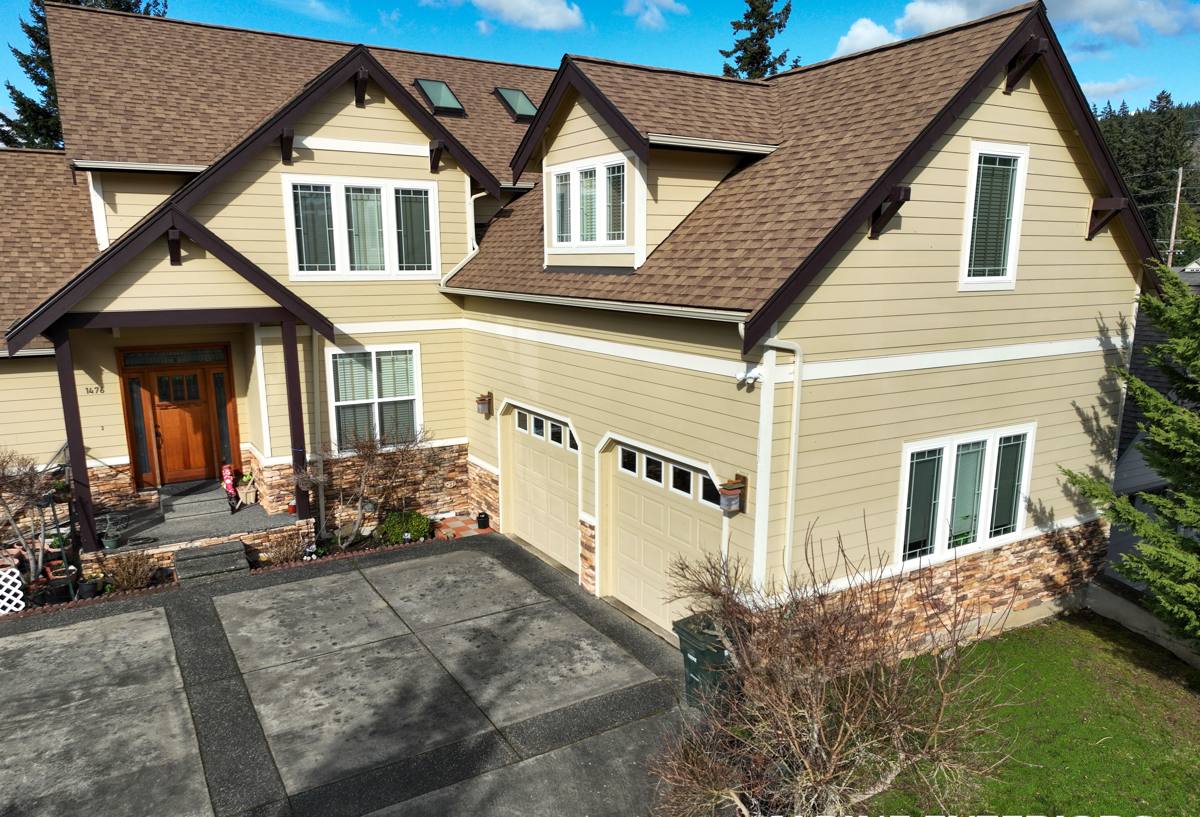
Signs a Blaine Home Needs Siding Repair
Most of the siding repair calls we get in Blaine start with something a homeowner noticed while doing yard work, pressure-washing, or just walking the perimeter of the house. Worth checking for:
- Cracked, split, or visibly buckled siding panels or boards
- Soft or spongy spots when you press on the siding, especially near the bottom courses
- Peeling, bubbling, or chalky paint that keeps coming back not long after repainting
- Dark streaking or thick moss growth, particularly on shaded or north-facing walls
- Gaps opening up around trim, windows, or corner boards
- Nail heads popping loose or rust bleeding down the face of the siding
- A musty smell or staining on an interior wall that shares an exterior wall with the affected siding
Any one of these on its own might be minor. Several together, especially combined with softness you can feel by hand, usually means moisture has been working its way behind the siding for a while — which changes what the repair needs to look like.
What a Correct Siding Repair Actually Involves
Finding the Moisture Path First
Patching the outside without figuring out how water got in is the most common shortcut we see undone within a year or two. A proper repair starts by tracing the actual path — a failed seal at a window, a gap where trim meets siding, a downspout dumping water against a wall, or years of driving rain finding a seam that was never fully sealed. On coastal homes like the ones in Blaine, we also check whether salt exposure has degraded fasteners or trim independently of any water intrusion, since corroded nails and screws can loosen siding even when the boards themselves are sound.
Matching the Existing Siding
Fiber cement siding is manufactured in batches, and factory finishes weather slightly over time, so a patch cut from a brand-new plank next to ten-year-old siding can stand out even when the material is identical. We match profile, exposure, and color as closely as the product line allows, and we're upfront when an exact color match isn't realistic so you can decide whether to repair in place or repaint the affected section for a cleaner blend.
Getting the Flashing and Sealant Details Right
The siding itself is only part of the system. Repairs that don't reinstall flashing correctly at windows, doors, and butt joints, or that rely on caulk to do a flashing's job, tend to fail again in the same spot — usually right around the next major storm season. We treat flashing and water-resistive barrier details as part of the repair, not an afterthought.
Repair or Replace? How We Make the Call
Not every damaged section needs full replacement, and we're not going to talk you into more work than the house needs. Here's roughly how the decision plays out:
| Factor | Points Toward Repair | Points Toward Full Replacement |
|---|---|---|
| Extent of damage | Isolated to one or two wall sections | Spread across multiple elevations |
| Siding age | Under 15-20 years, otherwise sound | Original siding nearing or past expected service life |
| Moisture behind the siding | Surface-level, no sheathing damage found | Rot or soft sheathing discovered during inspection |
| Material | Fiber cement or other durable material in good general condition | Deteriorating wood, vinyl, or engineered wood siding elsewhere on the house |
| Color/profile availability | Match is close enough to blend acceptably | Product discontinued or match would look patchy |
When we open a wall for repair and find rot in the sheathing or framing, we'll show you what we found and explain the options before doing anything — that's a conversation, not an upsell.
Why We Only Repair and Install James Hardie Fiber Cement
When a repair calls for new material, or when enough of a wall's siding is compromised that patching stops making sense, we use James Hardie fiber cement — nothing else. Fiber cement doesn't absorb water the way wood-based siding does, so it doesn't swell, rot, or feed moss root systems the way a softer material can in a damp coastal climate. It's also non-combustible, which matters on any home, and Hardie's ColorPlus factory finish is baked on and warranted separately from the substrate, so a repaired section holds its color closer to the rest of the wall for longer than a field-painted patch typically does.
We've made a standard of not installing LP SmartSide, vinyl, Cemplank, Allura, or primed wood siding, including on repair work. It's not that those products can't be installed correctly — it's that we've settled on one system we know inside and out, that performs consistently in Whatcom County's marine climate, and that comes with a strong transferable warranty. Mixing repair materials or switching brands mid-house is exactly the kind of thing that leads to mismatched aging and warranty gaps down the road, and we'd rather not put a homeowner in that position.
Our Siding Repair Process in Blaine
- Inspection: We walk the affected area, check for soft spots and moisture with hands and moisture meters where needed, and look at fasteners, flashing, and trim, not just the siding face.
- Diagnosis: We identify the actual cause — a sealant failure, flashing gap, moss holding moisture against the wall, or salt-driven fastener corrosion — and explain it in plain terms.
- Written plan and estimate: You get a clear scope: what's being repaired, what material is being used, and what it costs, before any work starts.
- Repair: Damaged sections are removed, the underlying issue is corrected, new flashing and sealant are installed to spec, and matching Hardie siding is fitted and fastened correctly.
- Cleanup and walkthrough: We clear debris and walk the repair with you so you know what was done and what, if anything, to keep an eye on going forward.
What Siding Repair Costs Depend On
Every Blaine home is a little different, so we don't quote fixed prices sight unseen, but the same factors drive cost on nearly every job:
| Cost Factor | Why It Matters |
|---|---|
| Size of the damaged area | More linear feet of siding and trim means more material and labor |
| Hidden damage | Rot found in sheathing or framing adds repair scope beyond the siding itself |
| Accessibility | Second-story or hard-to-reach sections require more staging and time |
| Color and profile matching | Discontinued colors or profiles may require repainting or a wider repair area for a clean blend |
| Flashing and sealant scope | Doing the water-management details correctly, not just swapping boards |
We'll always give you the real number after we've actually looked at the damage, not a guess based on square footage alone.
Why It Matters to Hire a Crew That Already Works in Blaine
A siding repair crew that spends time in Blaine and the surrounding Whatcom County coastline has already seen which walls take the worst of the driving rain and salt exposure, which HOA and permitting expectations are typical for the area, and how fast moss reestablishes itself on a shaded elevation here compared to a drier inland town. That local pattern recognition shows up in small but real ways — knowing to check fastener corrosion on water-facing walls even when the siding face looks fine, or recommending gutter and drainage fixes alongside the siding repair because we've seen the same combination cause repeat problems on other Blaine homes.
Keeping Repaired Siding Looking Good Longer
A correct repair buys you time, but a little upkeep buys you more. Rinsing salt residue off exterior walls periodically, especially after windier stretches off the water, keeps it from sitting on fasteners and trim. Keeping gutters clear and downspouts directed away from the foundation reduces the standing moisture that feeds moss growth. And catching small issues — a cracked caulk line, a loose piece of trim — early means they stay small repairs instead of turning into the kind of hidden moisture damage that's expensive to fix later.
If you're seeing any of the warning signs above, or you just want a second opinion on a section of siding that doesn't look right, we're happy to take a look. Fill out the form below for a free, no-pressure estimate on siding repair for your Blaine home.