 Sumas Roofing
 Board & Batten in a Whatcom County Climate
Lynden sits in the part of Whatcom County where the weather doesn't do anything by half measures. Homes here take on driving rain for months at a stretch, salt-laden air moving in off the Sound, and a moss season that seems to start earlier every year and stick around longer. Board & batten siding — with its bold vertical lines and deep shadow lines from the battens — is one of the more popular looks for farmhouses, modern builds, and remodels in this area, but it's also one of the least forgiving styles if it's installed with the wrong product or the wrong technique. Vertical boards funnel water differently than horizontal lap siding, and every seam, batten strip, and panel joint is a place where moisture can get behind the cladding if it isn't detailed correctly.
This page is about doing board & batten right for a Lynden-area home — what the style needs to hold up here, what a correct installation actually involves, and why we install it with one product line only.
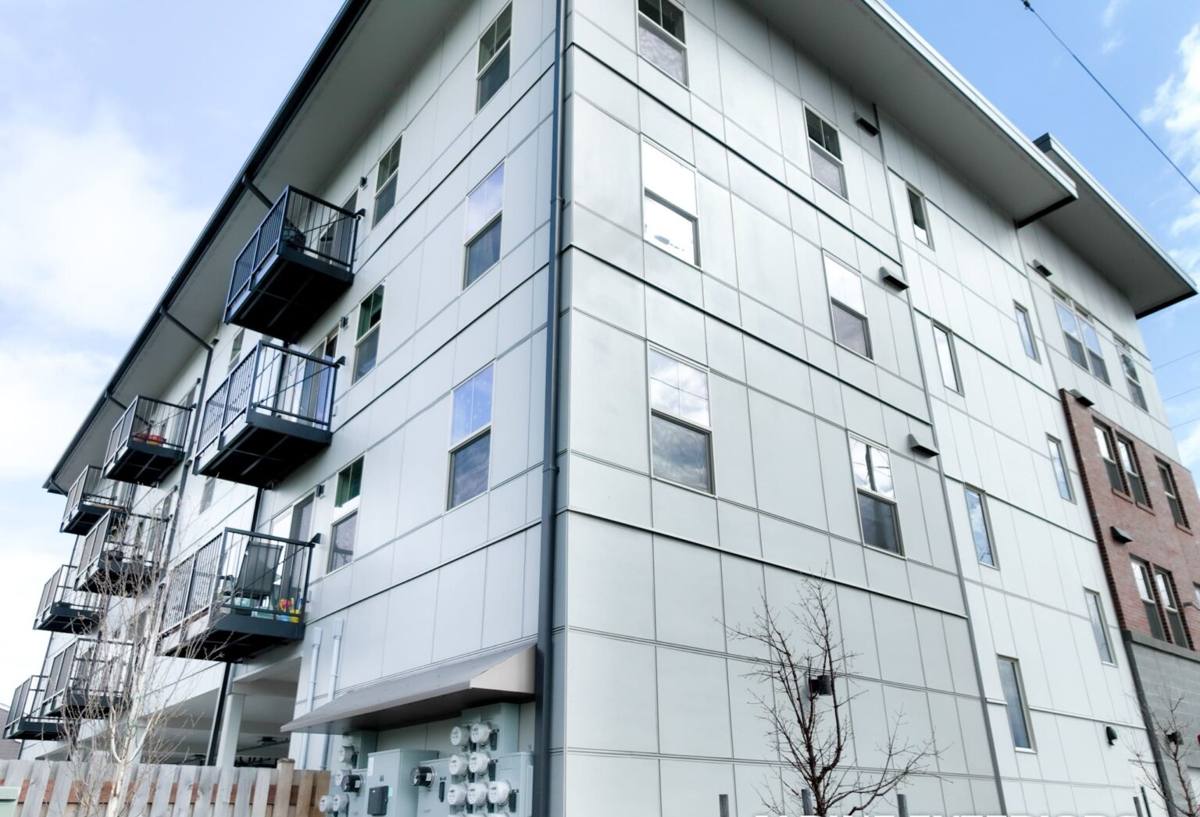
What Board & Batten Siding Actually Is
Board & batten is a vertical siding pattern: wide flat panels or boards installed vertically, with narrower strips (the "battens") covering the seams between them. It's an old style — you'll see it on barns and farmhouses going back generations — but it's also a common choice on newer builds because of the strong, clean vertical lines it gives a home's exterior.
Why the Vertical Orientation Matters
Horizontal lap siding is designed so each course overlaps the one below it, shedding water downward by gravity. Board & batten doesn't work that way. Water runs down the face of the boards and along the battens, and at every horizontal cut, window head, or trim intersection, that water needs somewhere controlled to go. Get the flashing and drainage details wrong on a vertical pattern and water has a much more direct path to travel down behind the siding than it does with lap.
Why We Install James Hardie — And Not the Alternatives
Board & batten is available in several materials, and each one gets sold to homeowners with its own pitch. We only install James Hardie fiber cement board & batten. Here's the honest reasoning, not a sales pitch:
Vinyl Board & Batten
Vinyl board & batten panels are inexpensive and easy to install fast, and that's exactly what they're good for. The trade-off is that vinyl expands and contracts more than fiber cement with temperature swings, the color is molded in rather than factory-baked, and it fades and chalks over time. In a climate with this much sustained damp and UV cycling, that shows up as a siding job that looks tired well before a fiber cement job does.
LP SmartSide and Wood-Based Panels
LP SmartSide and other engineered wood products use a wood-strand core, which means the material itself can swell, delaminate at cut edges, or take on moisture damage if the finish is compromised anywhere — a nail pop, a scuff, a gap at a seam. In a region with a genuine moss season and driving rain for a good chunk of the year, that's a real maintenance liability, not a hypothetical one.
Cedar and Primed Spruce
Real wood board & batten has a warmth that fiber cement can't fully replicate, and we won't pretend otherwise. But wood needs ongoing refinishing, is a natural food source for the moss and mildew that thrive in this climate, and is combustible. It's a legitimate architectural choice — it's just not the one we choose to warranty our labor on.
What Fiber Cement Gets Right
James Hardie fiber cement is non-combustible, engineered specifically for wet climates (the HZ10 product line is formulated for exactly the kind of moisture exposure Whatcom County sees), and comes with a factory-applied ColorPlus finish that's baked on rather than field-painted, with a warranty backing the finish separately from the substrate. It costs more upfront than vinyl and roughly comparable to or more than engineered wood. We think that trade-off is worth it on a siding style that lives or dies on how well it manages water.
Comparing the Options Side by Side
| Material | Moisture Behavior | Fire Rating | Finish Life | Typical Maintenance |
|---|---|---|---|---|
| James Hardie fiber cement | Won't rot or swell; engineered for wet climates | Non-combustible | Factory ColorPlus finish, warrantied separately | Occasional wash; caulk checks |
| Vinyl board & batten | Doesn't rot but traps moisture behind it if installed tight | Combustible, can melt/warp | Molded-in color fades and chalks | Low, but replacement (not repair) when damaged |
| LP SmartSide / engineered wood | Vulnerable at cut edges and compromised finish points | Combustible | Field-applied or factory finish, shorter practical life in wet climates | Regular inspection for swelling/delamination |
| Cedar / primed spruce | Absorbs moisture; prone to moss and rot without upkeep | Combustible | Needs refinishing on a recurring cycle | High — sanding, staining or painting |
What a Correct Board & Batten Installation Involves
The style is simple to look at, but the installation details are where a job either holds up for decades or starts leaking behind the siding within a few years.
The Drainage Plane
Every board & batten job we do goes over a weather-resistive barrier with a proper drainage gap — typically furring strips or a rainscreen product — behind the siding. This gives any moisture that does get past the cladding a path to drain and dry out instead of sitting against the sheathing. On a vertical pattern, in a climate that sees the volume of driving rain Whatcom County does, this isn't optional detailing — it's the difference between siding that lasts and one that hides a rot problem you won't see until it's expensive.
Fastening and Panel Layout
Fiber cement board & batten needs to be fastened per the manufacturer's engineering — correct fastener type, spacing, and penetration into framing, not just into sheathing. Panels need to be blocked and joined at the right points, with joints staggered and flashed rather than simply butted and caulked.
Flashing at Every Transition
Window and door heads, roof-to-wall intersections, deck ledgers, and any horizontal trim band are all places where water concentrates. Each of those needs flashing that directs water out and away from the wall assembly — sealant alone is a maintenance item, not a permanent solution, and it fails first at exactly the transitions that see the most water.
Caulking and Sealant Joints
Battens and panel seams get sealed with a high-quality, paintable, flexible sealant rated for the exposure — not whatever's cheapest. Sealant joints are also the one part of a board & batten job that a homeowner can and should keep an eye on over the years, since they're the first thing to show wear.
Our Process on a Lynden-Area Home
- Walkthrough and assessment — we look at the existing wall assembly, moisture history, and any problem areas (north-facing walls, shaded sections prone to moss, low-clearance spots near grade).
- Scope and product selection — we confirm panel width, batten spacing, and color/finish, and explain exactly what's included in the install.
- Prep and drainage plane installation — removal of the old siding, repair of any sheathing issues found underneath, and installation of the weather-resistive barrier and furring/rainscreen system.
- Panel and batten installation — fastened and flashed to manufacturer spec, with attention to every window, corner, and roofline transition.
- Final walkthrough — we go over the finished job with you before we consider it done.
Keeping Board & Batten Siding Sound Over the Years
Fiber cement board & batten is genuinely low-maintenance compared to the alternatives, but "low-maintenance" isn't "no-maintenance." A short annual check catches small issues before they become expensive ones.
- Look at sealant joints at battens and around windows/doors for cracking or gaps once a year.
- Check for moss or algae buildup on shaded or north-facing walls — a soft wash keeps it from taking hold.
- Confirm gutters and downspouts are directing water away from the wall, not sheeting down it.
- Look at the bottom clearance of the siding from grade, decks, and roof lines — soil, mulch, or debris buildup against the bottom edge holds moisture against the material.
- After any major windstorm, do a quick visual pass for loose battens or panels.
Why a Local Crew Matters for This Style
Board & batten is unforgiving of shortcuts, and it's also a style where the small regional judgment calls matter — how much drainage gap to build in for a wall that catches wind-driven rain, where moss pressure is heaviest on a given lot, how to detail a wall that's going to spend the winter shaded and damp. A crew that already works Lynden and the surrounding Sumas area has already made those calls on other homes with similar exposure, similar builds, and the same Whatcom County weather pattern. That's not something you can fully substitute with a crew driving in from outside the area for a one-off job, no matter how skilled they are in general.
It also matters for the parts of the job that aren't glamorous — knowing what inspectors in this area tend to flag, having a working relationship with the local building department, and being reachable easily if a question comes up two years after the install rather than two weeks.
Get a Straight Answer on Your Home
If you're weighing board & batten for a home in the Lynden or Sumas area, we're happy to take a look and give you a straightforward assessment — what your walls actually need, what it would involve, and a real number, not a guess. Reach out for a free, no-pressure estimate using the form below.