 Sumas Roofing
 Why Board & Batten Fits Blaine's Coastal Character
Board and batten has become one of the most requested siding profiles for homes in Blaine, and it's easy to see why. The strong vertical lines read as clean and modern on newer builds, but they also echo the barn-and-farmhouse look that fits comfortably into a coastal Whatcom County setting. Beyond looks, the profile has a practical side: wide vertical boards with battens covering the seams shed water differently than horizontal lap siding, which matters on a stretch of coastline that sees a lot of wind-driven rain off the water.
That combination — a look homeowners want and a shape that performs well against weather — is exactly why we get asked about board and batten so often on Blaine homes. But the profile is only as good as the material and the installation behind it, and that's where a lot of board and batten jobs in this area go wrong.
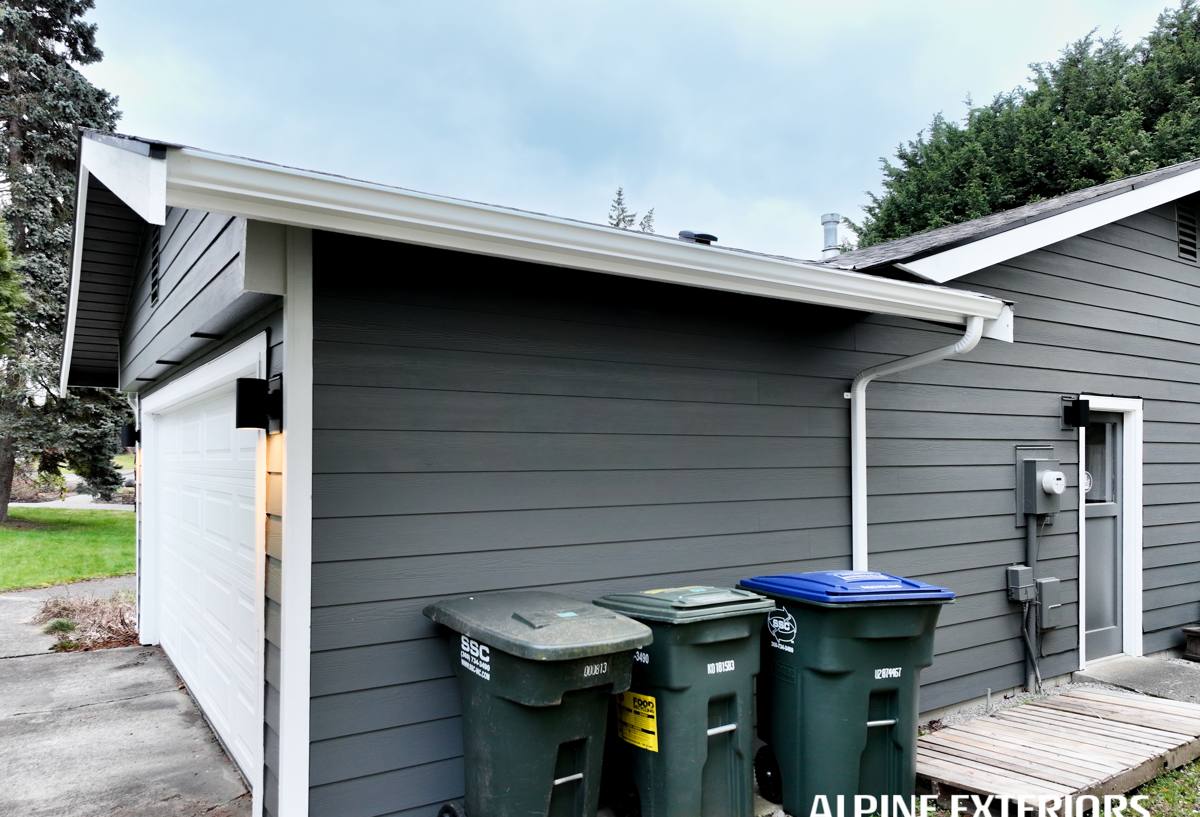
What This Coastline Does to Siding
Blaine sits close enough to the water that salt air, near-constant moisture, and heavy shade all show up in how siding ages. None of these are exotic problems — they're the same three things that wear down exteriors up and down this part of the Washington coast — but they add up faster here than they do a few miles inland.
Salt Air
Airborne salt doesn't just sit on the surface of siding — it works into fasteners, joints, and any exposed raw edge. Over years, that means corroding nails or staples, degraded caulk, and paint that fails earlier than the can promised. Materials and fastening details that would be fine in a dry inland climate need to be upgraded near the coast.
Driving Rain
Storms coming off the water don't fall straight down — wind pushes rain sideways into walls, which puts real pressure on every seam, joint, and butt edge in a board and batten installation. A siding system that only handles rain falling vertically will eventually let moisture behind the boards.
The Long Moss Season
Whatcom County's wet season runs long, and shaded, north-facing walls in Blaine can stay damp for months at a stretch. That's exactly the environment moss and mildew need. Once moss gets a foothold at the base of boards or in batten seams, it holds moisture against the material around the clock, which shortens the life of anything that isn't built to resist it.
What Board & Batten Siding Actually Is
Board and batten is a two-layer siding system: wide vertical boards installed with a gap between them, then narrower battens fastened over each seam to cover the gap and shed water away from the joint. It's a simple idea, but the details of how it's built determine whether it holds up.
Two Common Approaches
Some crews install true board-and-batten, with battens over the seams of flat boards. Others use a reveal panel system that gives the same vertical look with fewer seams and less caulk to maintain long-term. Both can look nearly identical from the street, but they behave differently in wet, salty conditions — fewer seams generally means fewer places for water to find a way in.
The Look Is Only Half the Job
Because board and batten has more seams and joints than plain lap siding, it's less forgiving of shortcuts. A batten nailed straight through both edges of the boards below it, without room to move, will eventually crack the boards as the material expands and contracts. This is a profile where installation quality matters as much as, or more than, the material choice underneath it.
Why We Install Only James Hardie Fiber Cement for This Look
We install James Hardie fiber cement exclusively — not vinyl, not LP SmartSide, not primed spruce or cedar. That's not a marketing position; it's a standard we set because of what we've seen play out on coastal homes over time. Each of the alternatives has real strengths, but none of them handles the combination of salt air, driving rain, and prolonged dampness as consistently as fiber cement.
| Material | Salt Air Behavior | Moisture / Moss Resistance | Typical Maintenance |
|---|---|---|---|
| James Hardie fiber cement | Non-combustible, dimensionally stable, resists salt-driven corrosion at properly fastened joints | Engineered for wet climates; factory finish resists moisture absorption | Occasional rinse and caulk checks; ColorPlus finish holds color for years |
| Cedar / primed wood | Attractive natural material but absorbs moisture readily | Prone to swelling, rot, and moss growth in shaded, damp areas without diligent upkeep | Regular repainting, sealing, and moss/mildew treatment |
| Vinyl | Can become brittle and warp with temperature swings; seams are vulnerable to wind-driven rain | Doesn't rot, but traps moisture behind it if installed poorly | Low upkeep but limited repair options once damaged |
| LP SmartSide (engineered wood) | Wood-strand core is sensitive to sustained moisture exposure | Requires strict edge sealing and flashing to avoid swelling at cut ends and seams | Ongoing caulk and paint maintenance, especially at joints |
For a profile like board and batten, with its extra seams and butt joints, we want a material that stays dimensionally stable when it's wet and doesn't need heroic maintenance to keep water out. Fiber cement, finished with James Hardie's factory-applied ColorPlus finish, is what we've standardized on for that reason.
What a Correct Board & Batten Installation Involves
Most of the board and batten failures we get called out to inspect in this area trace back to a handful of installation shortcuts, not the material itself. Doing it right takes more steps than it looks like from the ground.
A Drainage Gap Behind the Boards
In a climate that gets this much wind-driven rain, any water that does get behind the siding needs somewhere to go. A rainscreen gap — furring strips that hold the boards off the wall assembly — lets moisture drain and air circulate behind the siding instead of sitting against the sheathing.
Fastening, Flashing, and Seams
Battens need to be fastened so the boards underneath can still move slightly with temperature and moisture changes, not pinned rigid on both edges. Every butt joint and window or door transition needs proper flashing and Hardie-approved sealant, not just a bead of caulk smeared over the gap.
Factory Finish vs. Field-Painted
James Hardie's ColorPlus finish is baked on at the factory under controlled conditions, which gives more even coverage and better resistance to fading and moisture than field-applied paint. On the coast, where UV and salt both work against paint, that factory finish buys years of extra life before repainting is even a conversation.
Our Process for Board & Batten Projects in Blaine
- On-site assessment of the existing wall assembly, moisture exposure, and which sides of the home take the most wind-driven rain
- Removal of old siding and inspection of the sheathing underneath for hidden rot or moisture damage before anything new goes up
- Installation of a weather-resistant barrier and rainscreen furring for proper drainage
- Board and batten installation following James Hardie's fastening and clearance specifications
- Flashing and sealing at every window, door, corner, and butt joint
- Final walkthrough covering finish, caulk lines, and clearances before we consider the job done
Living With Board & Batten Siding in This Climate
Fiber cement is low-maintenance compared to wood, but "low-maintenance" isn't "no-maintenance," especially this close to the water. A little seasonal attention goes a long way toward getting the full lifespan out of the siding.
- Rinse siding once or twice a year to clear salt residue, especially on sides facing the water
- Check shaded, north-facing walls for early moss growth before it spreads into seams
- Look over caulk lines at butt joints and trim annually and touch up any that have cracked or pulled away
- Keep gutters and downspouts clear so runoff isn't sheeting down the face of the siding
- Trim back vegetation that keeps a wall shaded and damp longer than it needs to be
Why Hiring a Crew That Already Works in Blaine Matters
Board and batten installed to a generic spec doesn't always hold up to Blaine's specific mix of wind exposure and moisture. A crew that already works this stretch of Whatcom County knows which walls typically take the worst of the driving rain, where moss tends to establish first, and how much of a drainage gap actually makes sense for a given house's exposure. That's the kind of judgment that only comes from doing the work here repeatedly, not from a spec sheet.
Local experience also means fewer surprises mid-project — knowing what inspectors in the area expect to see on flashing and moisture barriers, and building to that standard from the start instead of correcting it after the fact.
Is Board & Batten the Right Call for Your Home?
Board and batten isn't the right fit for every house, and it's worth thinking through before committing to it.
- You want strong vertical lines and a farmhouse or modern coastal look rather than traditional lap siding
- Your home has walls that see heavy shade or sit close to mature trees, where moss resistance matters more
- You're replacing siding that's already showing rot, moss staining, or failed caulk at seams
- You want a factory-finished product that won't need repainting every few years in this climate
- You're planning to stay in the home long enough to benefit from a durable, low-maintenance exterior
If that sounds like your home, board and batten in James Hardie fiber cement is worth a serious look. We're happy to walk your property, look at how weather actually hits your walls, and put together a straightforward, no-pressure estimate using the form below.