 Sumas Roofing
 Board & Batten Siding for Custer Homes
Board and batten keeps showing up on remodel wish lists in Custer, and it's easy to see why. The vertical lines suit the mix of older farmhouses and newer builds you find out this way, reading as classic on one and modern on the other. But board and batten isn't just a look — it's a joint pattern, with a batten strip covering every seam between boards. Each of those seams is a place water can try to get behind the wall. Out here, close enough to the water that salt-tinged air is a routine part of the exposure, with wind that pushes rain sideways instead of straight down, and a moss season that runs most of the calendar on shaded lots, how those seams are built matters as much as which siding ends up on the invoice.
We install James Hardie fiber cement board and batten exclusively, and every seam, fastening pattern, and flashing detail gets built around what Whatcom County's climate does to a wall over ten, twenty, and thirty years — not around what looks tight on the day the scaffolding comes down.
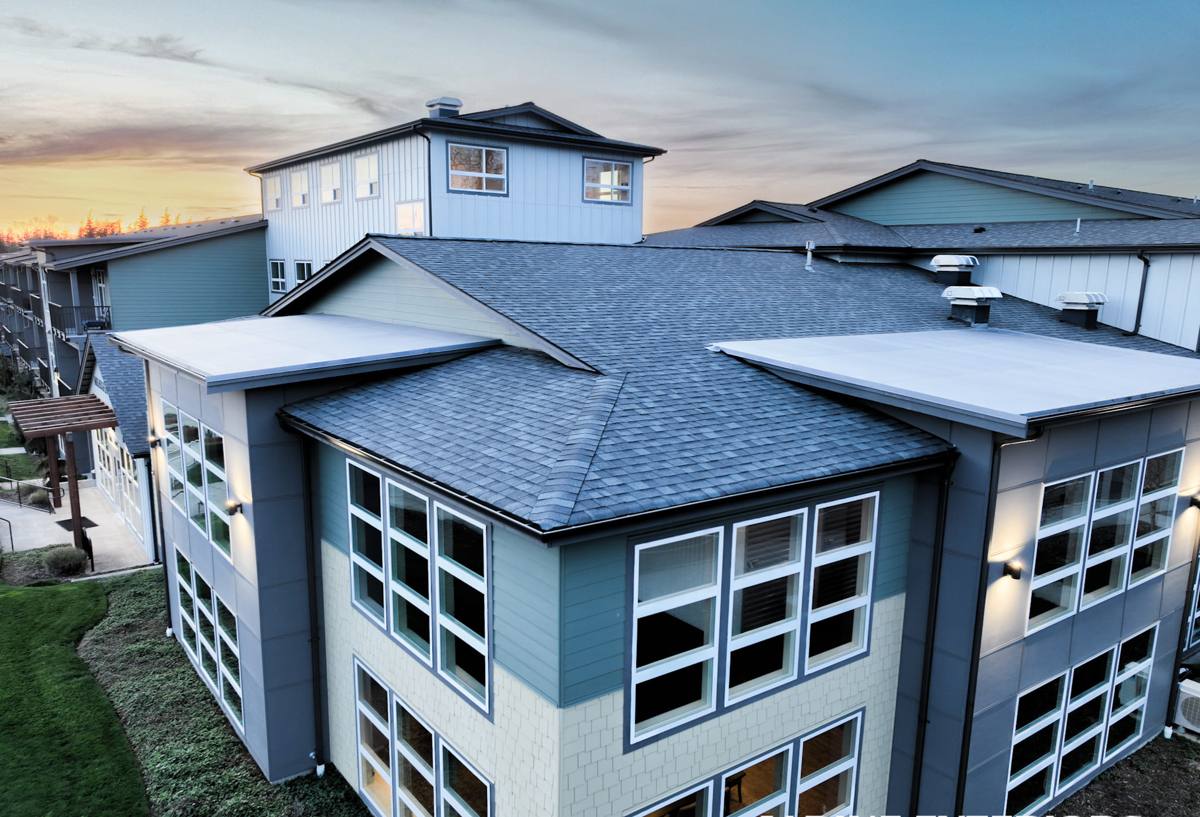
What Custer's Climate Does to a Vertical-Seam Wall
Custer sits up near the Canadian border, close enough to the water that these three conditions show up on almost every property, not just the ones with a view of it.
Salt Air
Salt-laden air speeds up corrosion on exposed metal and accelerates wear on factory finishes. Board and batten uses more fasteners per square foot than a standard lap profile, since both the boards and the battens each need to be secured, so getting the fastener spec right — corrosion-resistant, correctly sized, driven at the right depth — carries more weight on this profile than on most others.
Wind-Driven Rain
Rain out here rarely falls straight down for long. Wind pushes it sideways, and a vertical profile with battens running the full height of a wall gives that rain a lot of joint length to work against. A batten installed without room to move, or one that's caulked shut instead of properly lapped over the board edges, can end up pulling water toward the fastener line instead of shedding it.
A Long Moss Season
Mild temperatures and steady moisture keep moss and mildew active for most of the year on shaded, tree-lined lots, which describes a good share of Custer properties. Organic growth on a wall traps moisture against the surface behind it, and on a vertical profile with narrow reveals, that trapped moisture has fewer places to dry out between rain events than it would on a wider, horizontal lap board.
Why Board & Batten Demands More Precision Than Lap Siding
A standard lap profile has one horizontal seam type, repeated up the wall, and decades of installation practice built around getting it right. Board and batten has two overlapping systems — the field boards and the battens covering their joints — and both have to be detailed correctly for the wall to perform.
More Seams, More Fasteners, More Room for Error
Every vertical seam is a potential water path, and every batten adds another line of fasteners penetrating the water-resistive barrier behind the siding. A crew that treats board and batten like "lap siding turned sideways" tends to under-detail the seams and over-drive the fasteners, and neither mistake shows up on a walkthrough — they show up as staining or soft spots five to ten years later.
Reveal Spacing and Expansion Room
Fiber cement expands and contracts with temperature and moisture, just less dramatically than wood or vinyl. Battens installed tight against their boards, with no room to move, can crack at the fastener line as the material shifts through Custer's wet winters and warmer, drier summer stretches. Getting the reveal and gap spacing right at installation is a lot cheaper than fixing cracked battens after the fact.
What a Correct Board & Batten Installation Involves
The material matters, but the installation is what determines whether that material actually performs for thirty years. This is the sequence we hold to on every board and batten job.
Water-Resistive Barrier and Flashing First
Before the first board goes up, the wall needs a continuous water-resistive barrier with properly lapped and taped seams, plus flashing at every window, door, and horizontal transition. Board and batten depends on this layer more than most profiles because of the sheer number of fastener penetrations involved — the siding is the second line of defense, not the only one.
Fastening Pattern and Clearances
James Hardie specifies fastener type, spacing, and placement for board and batten installations, along with minimum clearances from grade, rooflines, and decks. Those clearances keep splash-back and standing moisture away from the board edge, which matters more in a high-rainfall climate than it would somewhere drier.
The Factory Finish
James Hardie's ColorPlus finish is baked on in a controlled factory environment in multiple coats, rather than field-painted after installation. On a vertical profile with a lot of cut edges and butt joints, factory-applied color consistency and touch-up products matter more than they would on a wall with fewer seams to color-match.
Board & Batten vs. Other Siding Profiles for a Custer Home
| Profile | Look | Seam Count | Best Fit |
|---|---|---|---|
| Board & batten (vertical) | Farmhouse or modern, strong vertical lines | Higher — a seam under every batten | Homes wanting a distinct architectural statement, gable ends, accent walls |
| Traditional lap siding | Classic, widely familiar | Lower — one horizontal seam type | Whole-house siding where a simpler, proven detail is preferred |
| Shingle-style panels | Cottage or coastal look | Moderate | Accent areas, gables, or homes matching a specific architectural style |
None of these profiles is objectively better — they're different tools. What we won't do is install any of them in anything other than James Hardie fiber cement, for the same reasons across every profile: performance in this climate over the life of the siding, not just at installation.
Why We Only Install This in James Hardie Fiber Cement
Board and batten is available in vinyl, engineered wood, and cedar as well as fiber cement, and we get asked about all three. Vinyl board and batten is affordable, but its panels rely on lapped, unsealed joints and expand and contract more than fiber cement, which is a harder combination on a profile that already depends heavily on joint integrity. Engineered wood options use a treated wood-fiber core that needs every cut edge and fastener penetration to stay sealed indefinitely — workable, but it puts a lot of long-term maintenance on the homeowner in a climate where wet weather is the default. Cedar board and batten looks the part, but it's organic and combustible, and it needs a paint or stain schedule kept up consistently or moss and mildew move in fast.
James Hardie's HZ5 product line is engineered for regions with sustained moisture exposure and freeze-thaw cycling, which fits Whatcom County's winters better than products built primarily for hot, dry climates. That climate-specific engineering, combined with the ColorPlus finish and a strong transferable warranty, is why fiber cement — and James Hardie specifically — is the only board and batten we put on a Custer home.
What Drives the Cost of Board & Batten in Custer
| Cost Factor | Why It Moves the Price |
|---|---|
| Full-wall vs. accent application | Whole-house board and batten costs more than using it as a gable or entry accent over standard lap |
| Wall height and complexity | Steep gables, dormers, and multiple corners add cutting, fitting, and scaffolding time |
| Existing siding removal and any wall repair | Tear-off and repair of rot or water damage found underneath is priced separately from new material |
| Trim and batten spacing chosen | Tighter batten spacing means more material and more labor hours than wider spacing |
| Color | Standard ColorPlus colors versus custom or premium color selections can shift material cost |
We give ranges, not invented precise numbers, because every one of those factors changes the total. A firm number comes from an on-site look at the walls involved.
Our Process, Start to Finish
- On-site assessment — we walk the exterior, check for existing moisture or rot, and measure the walls that are actually getting board and batten.
- Written estimate — material, labor, and any tear-off or repair work broken out separately, with an honest range and what would change it.
- Material order — James Hardie board and batten components in the chosen ColorPlus finish, ordered to the job's measurements.
- Tear-off and wall prep — removal of existing siding where needed, repair of any damaged sheathing found underneath, and a fresh water-resistive barrier installed correctly.
- Installation to spec — correct clearances, fastening pattern, reveal spacing, and flashing at every penetration and transition.
- Final walkthrough — a check of the finished wall together before we consider the job done.
Why Hiring a Crew That Already Works Custer Matters
Board and batten installed to a generic spec sheet, without accounting for what a specific climate does to it, is how a good-looking wall turns into a maintenance headache a decade in. A crew that already works this area knows what wind-driven rain does to a poorly lapped batten out here, knows what a shaded, moss-prone lot needs that a sunnier lot doesn't, and has already made — and learned from — the small judgment calls that a spec sheet doesn't cover. That local repetition is worth more on a joint-heavy profile like board and batten than it is on almost any other siding style.
If you're weighing board and batten for a home in or around Custer, we're happy to take a look and walk you through what it would actually involve on your walls — no pressure, no obligation. A free on-site estimate is the easiest way to get a real answer instead of a guess.