 Sumas Roofing
 Roofing for Clearbrook's Particular Mix of Weather
Clearbrook sits close enough to the water and low enough in the Fraser Valley that its roofs deal with a combination most inland towns don't: salt-laden air moving up from the coast, long stretches of driving rain off the Pacific systems, and short winter days that keep north-facing slopes damp for weeks at a time. None of that is dramatic on its own. What it does is quietly shorten the working life of a roof that wasn't built or installed with those conditions in mind. We've spent enough time working shingle roofs on both sides of the Sumas border crossing to know which parts of a typical asphalt shingle job matter most here, and which corners get cut on roofs that fail early.
This page is about one thing: asphalt shingle roofing done right for homes in Clearbrook. Not a general overview of roofing services, and not a sales pitch for a specific shingle brand — just a straightforward look at what this climate asks of a shingle roof, what a correct installation actually involves, and how we approach the work.
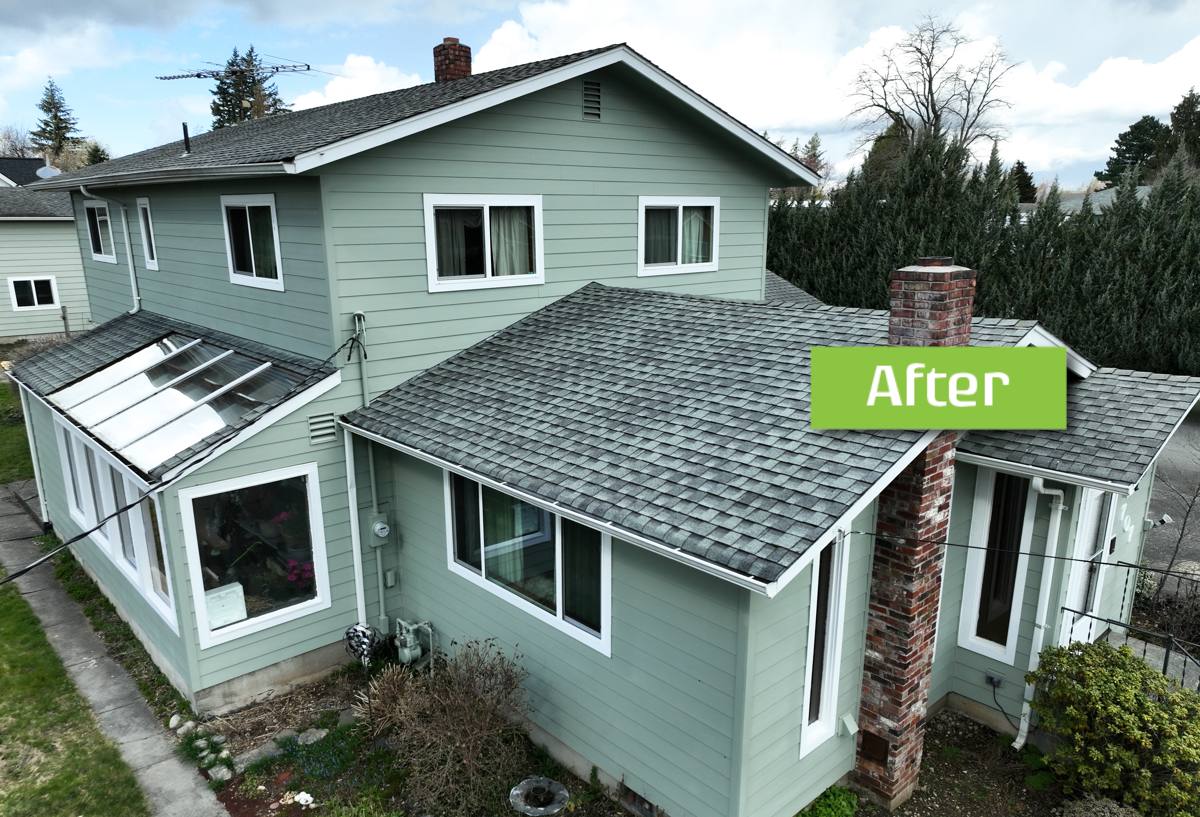
What Clearbrook's Climate Actually Does to a Shingle Roof
Driving rain and wind-driven moisture
Rain that falls straight down is easy for any roof to shed. Rain that comes in sideways during a Fraser Valley wind event is a different problem — it gets pushed up under shingle tabs, along ridgelines, and around anything that penetrates the roof deck. A roof that only relies on the shingles themselves to keep water out will eventually leak in these conditions, usually at a valley, a chimney, or a low-slope section where water has time to sit and search for a gap.
A long moss season
Shaded, north-facing, and lower-pitched roof sections in this area rarely get a chance to fully dry out between fall and spring. That damp window is exactly what moss needs. Once moss takes hold, it holds moisture against the shingle surface, lifts tabs as it grows, and works its way under the shingle edges — accelerating granule loss and shortening the roof's life well ahead of its rated warranty.
Salt air and material fatigue
Homes closer to open water or exposed ridgelines pick up salt-carrying air more than homes tucked into sheltered valleys. Over years, that salt exposure speeds up the breakdown of exposed metal — flashing, fasteners, vent caps — faster than it would inland. A roof that skimps on corrosion-resistant metal components is choosing a shorter service life to save a small amount up front.
What a Correct Asphalt Shingle Installation Involves Here
Asphalt shingles are a proven, cost-effective roofing material, but "asphalt shingle roof" covers a wide range of actual build quality. For Clearbrook's conditions, we treat these as non-negotiable:
Underlayment that does real work
The shingles are the visible layer, but the underlayment underneath is what protects the deck if wind-driven rain gets past the shingle surface — which it eventually will, on every roof, during a bad storm. We use synthetic underlayment as standard and add self-adhered ice-and-water membrane at vulnerable areas: valleys, eaves, and around every penetration. This is the layer that decides whether a hard rain event is a non-event or a ceiling stain.
Flashing done in metal, not roof cement
Chimneys, skylights, wall-to-roof transitions, and vent pipes are where the majority of shingle roof leaks actually start — not in the open field of shingles. Proper step flashing, counter-flashing, and pipe boots installed correctly the first time cost more labor than smearing sealant over a gap, but sealant degrades with UV and temperature swings; formed metal flashing doesn't.
Ventilation that matches the attic
A shingle roof that can't breathe traps moisture in the attic, which condenses, soaks insulation, and rots decking from the inside — a problem that often gets blamed on the roof when it's really an airflow issue. We check intake (soffit vents) and exhaust (ridge or roof vents) as part of every asphalt shingle job, not as an afterthought.
Nailing pattern and fastener choice
Manufacturer nailing patterns exist for wind resistance, and shortcuts here are invisible until the first serious windstorm pulls shingles loose. We use corrosion-resistant fasteners placed exactly where the shingle line calls for them — not high, not low, not stapled — because that's what keeps the warranty valid and the shingles on the roof.
Shingle Tiers: What the Difference Actually Buys You
Homeowners often ask what separates a basic shingle from a premium one beyond price. The honest answer is durability under exactly the kind of weather Clearbrook sees — wind uplift resistance, algae resistance, and how well the shingle holds its granules over time.
| Shingle Type | Typical Lifespan | Best Suited For | Trade-Offs |
|---|---|---|---|
| 3-Tab (Standard) | 15–20 years | Budget-conscious re-roofs, rental properties | Lower wind rating, less algae resistance, flatter appearance |
| Architectural / Laminate | 25–30 years | Most Clearbrook homes | Better wind and impact rating, higher upfront cost than 3-tab |
| Premium / Designer | 30+ years | Steep-slope, highly visible roofs | Highest cost, heavier, longer lead times on some colors |
For most homes in this area, an architectural shingle rated for high wind and algae resistance is the practical middle ground — it costs more than a 3-tab up front but holds up noticeably better against the moss and moisture cycle described above, which usually makes it the better value over the life of the roof.
Our Process, Start to Finish
- Roof assessment. We get on the roof (not just a look from the ground) to check deck condition, flashing points, ventilation, and moss or moisture damage before quoting anything.
- Written estimate. A clear scope of work and price — what's being replaced, what underlayment and flashing are included, and the shingle options available, with no vague allowances.
- Tear-off and deck check. Old shingles come off and the deck is inspected for soft spots or rot before anything new goes down; any deck repair is flagged and priced before we cover it up.
- Underlayment and flashing installation. Ice-and-water membrane at vulnerable areas, synthetic underlayment across the field, new metal flashing at every transition.
- Shingle installation. Installed to manufacturer specification for nailing pattern, exposure, and ventilation tie-in.
- Site cleanup and magnetic sweep. Debris and stray fasteners cleared from the property before we consider the job finished.
- Final walkthrough. We go over the finished roof with the homeowner and answer any questions about care or warranty coverage.
Signs Your Clearbrook Roof May Need Attention
Most shingle roof problems here show themselves gradually. Worth checking for, especially heading into the wetter months:
- Dark streaking or green-black patches on shaded or north-facing slopes (early algae or moss growth)
- Granules collecting in gutters or at downspout outlets
- Shingle edges that look curled, cupped, or lifted rather than lying flat
- Visible daylight or staining around chimney, skylight, or vent flashing from inside the attic
- Soft or spongy spots when walking the roofline (deck damage underneath)
- Missing or torn shingles after a windstorm
- Moisture stains or musty smell in the attic, even without a visible leak
Catching any of these early is almost always cheaper than waiting for an interior leak, since the damage is still limited to the roof system rather than insulation, drywall, or framing.
Maintenance That Actually Extends Roof Life Here
Asphalt shingles don't need much, but in Clearbrook's climate, skipping the basics shortens the roof's life measurably:
Moss control
Regular, gentle removal of moss buildup — not pressure washing, which strips granules — keeps it from working under shingle edges. Zinc or copper strips near the ridge can help slow regrowth on shaded slopes.
Gutter and downspout care
Clogged gutters back water up under the lowest course of shingles during heavy rain, which is one of the more common causes of eave leaks we see on older roofs in this area.
Attic ventilation checks
Confirming vents haven't been blocked by insulation or debris keeps moisture from building up underneath the deck, which protects both the roof and the insulation below it.
Why a Crew That Already Works Clearbrook Matters
Roofing crews that mainly work well inland or in drier regions sometimes treat moss and wind-driven rain as edge cases. Around here, they're the normal condition a roof has to be built for. Because we regularly work this stretch near the Sumas border crossing, we've seen which shingle installs hold up through a full Fraser Valley winter and which ones come back with the same complaints — a leak at the same chimney, moss regrowing in the same valley, shingles lifting off the same exposed slope. That's the kind of pattern recognition that only comes from doing this work locally and consistently, not from a general roofing checklist.
It also means we're familiar with the practical side of working in this area — coordinating around weather windows, working efficiently with local suppliers, and understanding the kind of building requirements homeowners here are expected to meet before and after the work is done.
Get a Straightforward Estimate
If your Clearbrook home needs a new asphalt shingle roof, a repair, or just an honest opinion on what shape your current roof is in, we're happy to take a look. There's no pressure and no obligation — just a clear assessment and a written estimate you can take your time with. Use the form below to request your free estimate.