 Sumas Roofing
 Roofing Built for the Sumas-Clearbrook Corridor
Clearbrook sits just north of the border from Sumas, close enough that the same weather system soaks both sides of the line on any given week. Homes here deal with the same moisture-loaded marine air that rolls in off the coast and settles into the Fraser Valley, and that air does not care which country a roof is on. If you're planning a new roof installation for a Clearbrook property, the job needs to be built around that reality from the first layer of underlayment to the last ridge cap, not treated like a generic reroof.
A new roof is one of the few home improvements where the visible result and the real result are almost entirely different things. What you see is shingles or panels. What actually determines whether the roof lasts is everything underneath — the parts nobody looks at again until there's a stain on a ceiling. In a climate that stays wet and shaded for long stretches of the year, those underlying details matter more here than they would in a dry climate, and they're where a lot of underbid roofing jobs quietly fail.
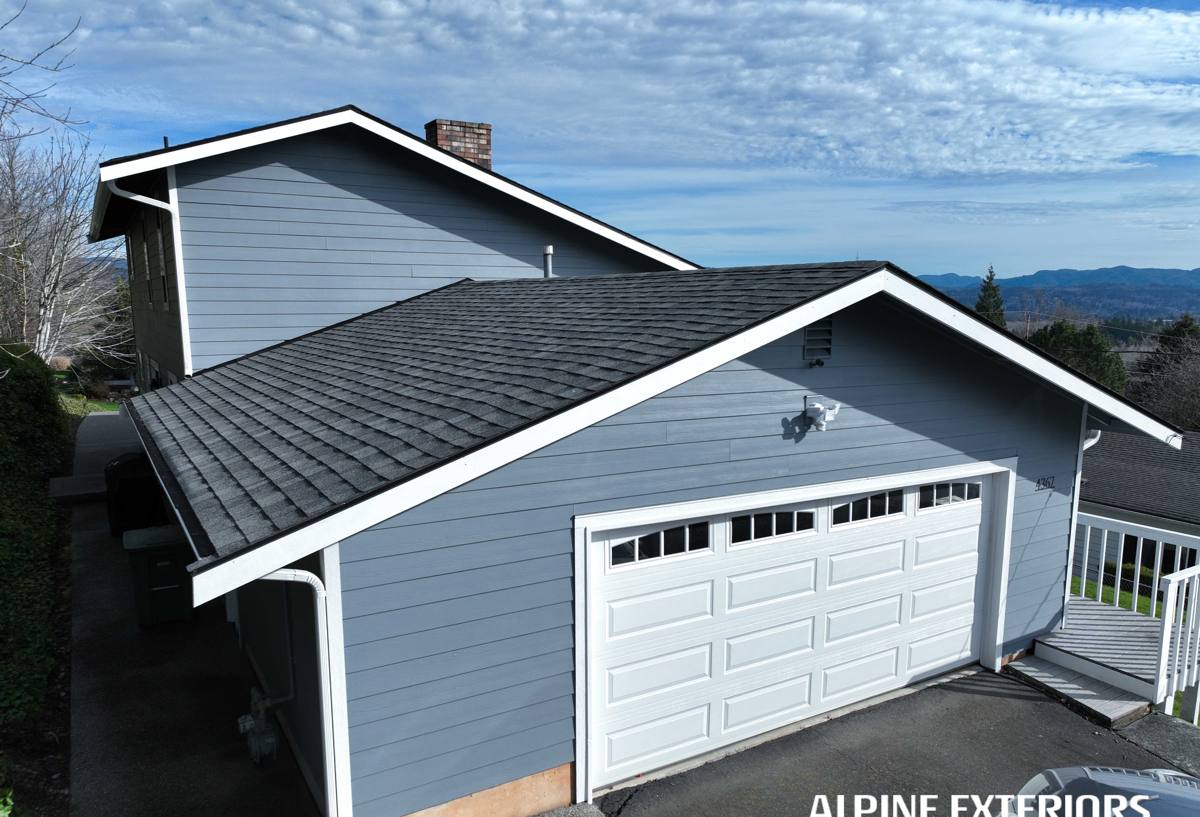
What Local Homes Are Actually Up Against
A long moss season
Moss doesn't just grow on old, neglected roofs — it grows on any roof that stays damp and shaded long enough, and in this part of the Fraser Valley that's most of the fall through spring. Moss holds moisture against the roofing surface, works its way under shingle tabs and panel seams, and can lift material that would otherwise have years of life left in it. A new roof installed without moss-resistant strategy built in is starting its clock already behind.
Driving rain, not just rain
The difference between rain falling straight down and rain being pushed sideways into a roof edge, valley, or wall intersection is enormous. Wind-driven rain finds every shortcut in a roofing system — lifted starter courses, under-lapped flashing, gaps at penetrations — and pushes water uphill against gravity in ways a light drizzle never would. A correct installation assumes wind-driven rain will happen and is detailed to shed it anyway.
Temperature swings and salt-influenced air
Whatcom County and the surrounding lowlands see enough marine influence in the air that fasteners, flashing, and metal components benefit from corrosion resistance most manufacturers treat as optional upgrades elsewhere. Combined with freeze-thaw cycling at the colder end of winter, this is a climate that rewards roofs built with a margin of safety rather than the bare minimum spec.
What a Correct New Roof Installation Actually Includes
"New roof" gets used loosely. A correct installation is a stack of specific components, each doing a job the others can't cover:
- Tear-off and deck inspection — removing the old roofing down to the sheathing and replacing any wood that's soft, delaminated, or stained from past leaks, not decking over it.
- Ice-and-water shield at eaves, valleys, and around every penetration — a self-adhering membrane that seals around fastener holes, which standard felt does not.
- Synthetic underlayment across the full deck for a secondary water barrier that also holds up better than old-style felt if the roof sits open during a weather delay.
- Drip edge at eaves and rakes, installed in the correct order relative to the underlayment — a detail that's easy to install backwards and easy for a homeowner to never notice was wrong.
- Balanced attic ventilation — intake at the soffits, exhaust at the ridge, sized to match each other. Ventilation is the single biggest factor in how long shingles actually last and how much moss pressure the roof faces.
- Step and counter-flashing at every wall intersection, chimney, and skylight, not just caulk covering a gap.
- Proper fastening — correct nail placement and count per manufacturer spec, which is what most wind-related warranty denials come back to.
Skip or shortcut any one of these and the roof can still look fine for a year or two. The failures show up on the timeline of moss growth and wind events, which in this area means they show up.
Choosing a Roofing Material for This Climate
There's no single "best" roofing material — there's the material that fits your home's exposure, budget, and how much maintenance you actually want to do. Here's how the common options stack up for a Clearbrook property:
| Material | Typical Lifespan | Moss / Moisture Behavior | Relative Cost | Best Fit |
|---|---|---|---|---|
| Architectural asphalt shingle | 25–30 years | Good with proper ventilation and algae-resistant granules; needs periodic moss treatment on shaded slopes | Lowest to mid | Most homes; best value-to-performance balance |
| Standing seam metal | 40–50+ years | Sheds water and moss fastest of the common options; steep slopes stay cleanest | Highest | Homes with heavy tree cover or owners planning to stay long-term |
| Cedar shake | 20–30 years with upkeep | Attractive but holds moisture and needs regular maintenance to resist rot and moss in a wet climate | High | Homeowners committed to ongoing maintenance for the look |
| Synthetic/composite shake | 40–50 years | Mimics cedar's look without the moisture retention | Mid to high | Owners who want the cedar aesthetic with less upkeep |
We'll walk through these trade-offs against your actual roof slope, tree cover, and budget during the estimate — there's no reason to pay for standing seam on a roof with light shading, and no reason to under-spec a heavily shaded, steep roof either.
How the Installation Process Works
- On-site inspection and estimate. We look at your current roof, attic ventilation, and any problem areas — moss buildup, soft decking, past leak evidence — and give you a written scope, not just a square-footage price.
- Material selection. We go over the options above against your home and budget, with a straight answer on what we'd choose if it were our own house.
- Scheduling around the weather window. Tear-offs are timed to avoid leaving a deck exposed overnight when rain is likely, and we sequence the job to keep the house protected the entire time.
- Tear-off and deck repair. Old material comes off, the deck gets inspected board by board, and any damaged sheathing is replaced before anything new goes down.
- Underlayment, flashing, and ventilation installation. This is the stage that determines the roof's actual lifespan, and it's where we spend the time most crews rush.
- Roofing material installation to manufacturer spec, including correct fastening and exposure.
- Cleanup and magnetic sweep for stray nails, plus a final walkthrough so you know exactly what was done and why.
Why a Crew That Already Works Clearbrook Matters
A new roof is a job you want done once, correctly, by people who understand the specific conditions of your street — not a generalized national spec sheet. Working regularly on both sides of the Sumas-Clearbrook line means we're used to the logistics of a cross-border job: coordinating material delivery and crew scheduling across the border crossing, and being upfront with homeowners about confirming local permit requirements with Abbotsford before work starts, since building code and permitting authority differ from the Washington side. That's not a detail to sort out mid-project.
It also means we've seen how roofs in this specific corridor actually age — which slopes hold moss longest, which older homes in the area were built with ventilation that was adequate decades ago but isn't by current standards, and which flashing details tend to have been done wrong the first time. That local pattern recognition is worth more than a lower bid from a crew driving in from somewhere with a completely different climate.
Getting the Most Life Out of a New Roof
A correct installation is most of the battle, but a little maintenance stretches it further:
- Keep gutters clear so water isn't backing up under the eave edge, especially going into fall.
- Trim back overhanging branches where possible — less shade means less moss pressure and fewer needles collecting in valleys.
- Have moss growth treated before it's visible from the street, not after — early growth is a maintenance issue, established growth is a lifting-and-damage issue.
- Schedule a roof check after any major windstorm, even if nothing looks obviously wrong from the ground.
Signs You Need Replacement, Not Another Repair
Repairs make sense when a roof has isolated damage and years of usable life left. Replacement is the honest call when the underlying material is at the end of its service life — patching it just delays a bigger bill. Signs worth a real inspection:
- Granule loss heavy enough to see bare, shiny patches on asphalt shingles
- Shingles that are cupping, curling, or cracking across multiple slopes, not just one spot
- Moss or algae staining that keeps returning within a season of being cleaned
- Daylight visible through the attic decking, or damp insulation after a heavy rain
- A roof approaching or past 20–25 years old with no major work done
- Multiple past repairs in different spots — a sign the whole system is aging out at once
If you're not sure which category your roof falls into, that's exactly what an inspection is for — we'll give you a straight answer either way, including when a repair is genuinely the right call instead of a full replacement.
If you're weighing a new roof for a Clearbrook property, we're glad to come take a look and put together a clear, no-pressure estimate — just fill out the form below.