 Sumas Roofing
 Why Window Installation in Clearbrook, BC Calls for Local Know-How
Clearbrook sits just north of the Sumas border crossing, inside Abbotsford's Fraser Valley, and it shares the same weather system that soaks Whatcom County for most of the year. Homes here don't fail because of bad luck — they fail because windows were installed for a drier climate than the one they actually sit in. A window that's caulked instead of flashed, or set without a proper drainage path, might look fine for a year or two before the rot shows up in the framing around it.
Window installation is one of those jobs that looks simple from the outside and isn't. The window itself is a manufactured product built to a spec; how it performs in a wall depends almost entirely on the installation. For homes in Clearbrook and the surrounding Fraser Valley/Whatcom border area, that installation has to account for near-constant moisture, driving wind off the valley, and a moss season that runs longer than most homeowners realize.
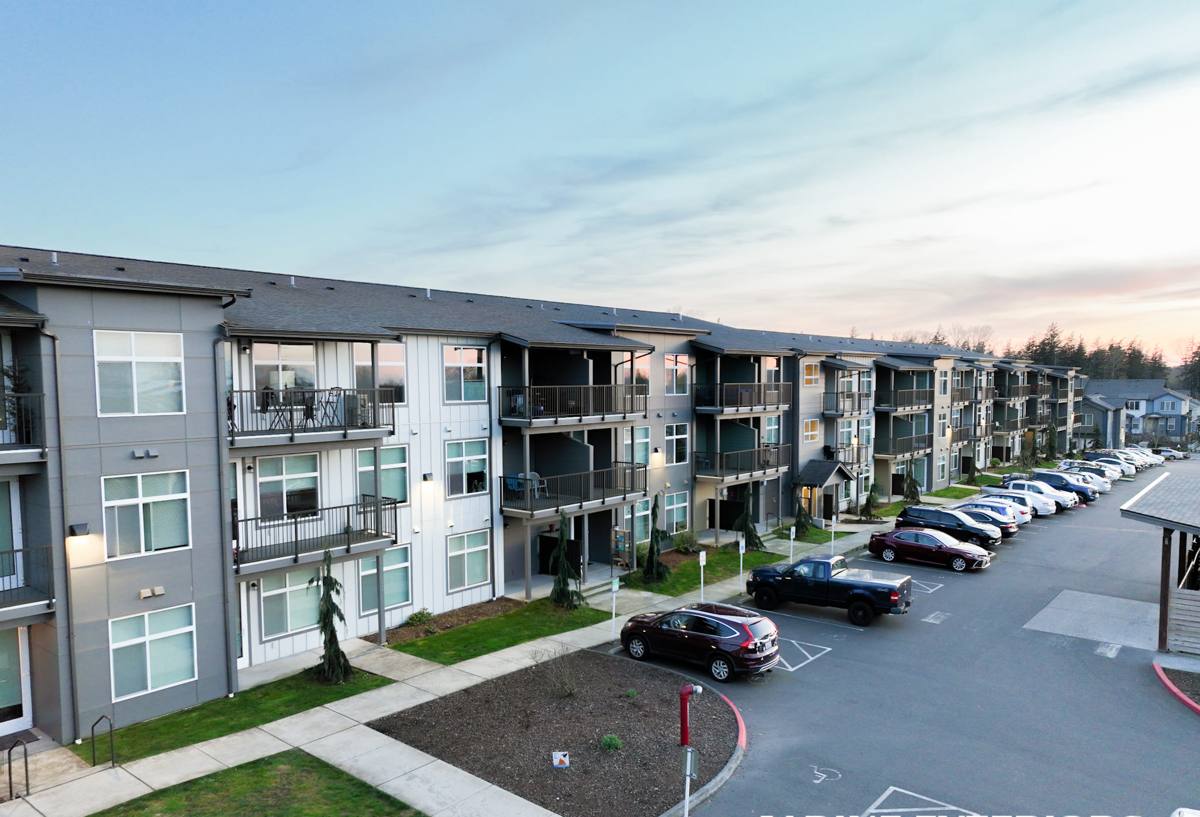
The Regional Climate Factor
Salt-tinged marine air moves inland off the Salish Sea and settles into the Fraser Valley and Whatcom County corridor for much of the fall, winter, and spring. Combined with the valley's rainfall pattern, that means windows here spend far more of the year wet than dry. A few specific pressures show up again and again on homes in this area:
Driving Rain and Wind
Storms in this region rarely fall straight down. Wind pushes rain sideways against the wall, and that pressure finds every gap a standard installation leaves behind — nail fin edges, corner joints, and the top of the window where builders often skip a proper head flashing. Water that gets behind the siding doesn't dry out quickly in this climate; it sits.
Moss, Mildew, and Prolonged Dampness
The same conditions that grow moss on roofs and north-facing siding create a steady low-grade dampness around window openings, especially on shaded walls. Trim and sills that stay damp for weeks at a stretch are where rot and mildew take hold first, and once moisture is trapped behind the window unit rather than just on the surface, the damage is hidden until it's serious.
Temperature Swings and Condensation
Cold nights followed by damp, moderate days create condensation on interior glass and, in older single-pane or poorly sealed units, inside the wall cavity itself. That's a comfort issue day to day, but over years it's also a slow moisture source that a good installation is designed to manage rather than ignore.
What "Correct" Window Installation Actually Involves
A window installed to hold up in this climate isn't just set into the opening and caulked around the edges. It follows a specific sequence, and skipping steps is exactly how leaks start two or three years down the road instead of showing up right away.
Flashing and Drainage Path
Every window needs a continuous path for water to drain out and away from the framing, not just a bead of sealant hoping to keep it out entirely. That means integrating the window with the weather-resistive barrier in the correct shingle-lap order — sill flashing first, then jamb flashing, then head flashing lapped over the top — so water that does get behind the siding is directed back out, not trapped against the sheathing.
Air Sealing and Insulation
The gap between the window frame and the rough opening needs to be sealed and insulated correctly, not overpacked with expanding foam (which can bow the frame and cause the window to operate poorly) and not left open (which lets moist air condense inside the wall). Low-expansion foam or backer rod and sealant, applied properly, keeps the unit both airtight and able to move slightly with temperature changes.
Sill Pans and Sloped Sills
A sloped sill pan under the window is cheap insurance against the most common failure point. It gives any water that does get past the window a way to run back outside instead of pooling on the sill and soaking into the framing underneath. On older Clearbrook-area homes without one, adding a sill pan during replacement is one of the highest-value upgrades we make.
Choosing Materials for This Climate
There's no single "best" window brand — the right choice depends on the home, the budget, and how much upkeep the homeowner wants to take on. What matters more than the label is how the frame material handles constant damp exposure over decades, not just its first season.
| Frame Material | Moisture Behavior | Maintenance | Typical Cost Range |
|---|---|---|---|
| Vinyl | Doesn't rot or corrode; performs consistently in wet climates | Low — occasional cleaning, no painting | Lower to mid |
| Fiberglass | Very stable in temperature swings; excellent moisture resistance | Low | Mid to higher |
| Wood-clad | Attractive but the wood core is vulnerable if the exterior clad or seals fail | Higher — needs monitoring at joints and sills | Higher |
| Aluminum | Durable but conducts cold, leading to more interior condensation | Low | Varies |
We'll walk through the trade-offs honestly rather than push one product. For most homes in the Sumas–Clearbrook area, vinyl or fiberglass hold up the best against long-term damp exposure with the least ongoing attention, but there are good reasons a homeowner might choose otherwise for appearance or a historic-style home.
Our Installation Process
- On-site assessment — we check the existing framing, sill condition, and any signs of past water intrusion before quoting anything.
- Measure and order — accurate measurements matter more than the window brand; a well-built window installed to a sloppy opening will still leak.
- Remove and inspect — old units come out carefully so we can see the condition of the sheathing and framing underneath before anything new goes in.
- Repair as needed — any soft or water-damaged framing gets addressed before the new window goes in, not covered over.
- Install with proper flashing sequence — sill pan, sill flashing, jamb flashing, head flashing, integrated with the existing weather barrier.
- Seal and insulate the gap — low-expansion foam or backer rod and sealant around the frame, sized correctly for the opening.
- Finish and inspect — trim work completed, and the finished install checked for square, level, and proper operation before we call it done.
Warning Signs Your Current Windows Are Already Failing
Because moisture damage builds slowly in this climate, most homeowners don't notice a problem until it's well established. A few things worth checking:
- Soft or discolored trim or drywall around the window frame
- Persistent condensation between panes (a sign the seal has failed on a double- or triple-pane unit)
- Difficulty opening, closing, or latching a window that used to operate smoothly
- Visible gaps, cracked caulk, or daylight around the frame edges
- A musty smell near the window that doesn't go away with cleaning
- Moss or dark staining building up on the sill or exterior trim below the window
Cost Factors to Expect
Every home is different, so we quote after seeing the actual openings, but a few factors consistently move the price up or down:
| Factor | Why It Matters |
|---|---|
| Number and size of windows | More openings and larger glass units mean more material and labor |
| Frame material chosen | Vinyl, fiberglass, and wood-clad carry different unit costs |
| Condition of the existing opening | Rotted framing found during removal adds repair time before the new window goes in |
| Access and home height | Second-story or hard-to-reach windows take longer and may need staging |
| Full-frame vs. insert replacement | Full-frame (tear-out to the studs) costs more but is often the right call when flashing or sill damage is present |
We'd rather flag a hidden repair honestly during the estimate than have it surprise anyone once the old window is out.
Serving Homes on Both Sides of the Border
Sumas sits right at the border, and a good number of the homes we work on are just across the line in Clearbrook and the surrounding Abbotsford area. The weather doesn't stop at the crossing — the same driving rain, marine-influenced air, and long moss season affect homes on both sides equally, which means the same installation standards apply regardless of which side of the line a house sits on. We're upfront with every Clearbrook homeowner about scheduling and logistics for a cross-border job, and we work within whatever local permitting or inspection requirements apply to the property.
Why Hire a Crew That Already Works in Clearbrook
A window installer who normally works in a drier climate will often build to that climate's standards out of habit — less flashing, more reliance on caulk, no sill pan. That's not necessarily bad workmanship, it's just the wrong workmanship for this region. A crew that regularly installs windows in Whatcom County and the Fraser Valley has already seen what fails here and builds every install to handle it from the start, rather than learning that lesson on your house.
If you're weighing a window replacement for a Clearbrook home, we're happy to take a look and give you a straightforward, no-pressure estimate — what your current windows need, what a correct installation involves for your specific openings, and what it will realistically cost. Reach out through the form below to get started.