 Sumas Roofing
 Siding Replacement, Built for Custer's Exposure
Custer sits far enough out in Whatcom County that a lot of homeowners assume their siding problems are just age catching up with the house. Sometimes that's true. More often, when we get called out to look at a wall that's cupping, staining, or soft at the bottom courses, the real story is that the original siding was never a great match for what this specific stretch of the county throws at a house year-round. Siding replacement here isn't just swapping old material for new material in the same style. It's an opportunity to put something on the wall that's actually engineered for salt-tinged air, sideways rain, and a moss season that barely takes a break.
This page is about that one job, done right, for Custer homes specifically. Not a general siding overview, not a sales pitch for whatever's cheapest — a straight look at what a correct replacement involves out here and why the details matter more in this location than they might somewhere drier and further from the water.
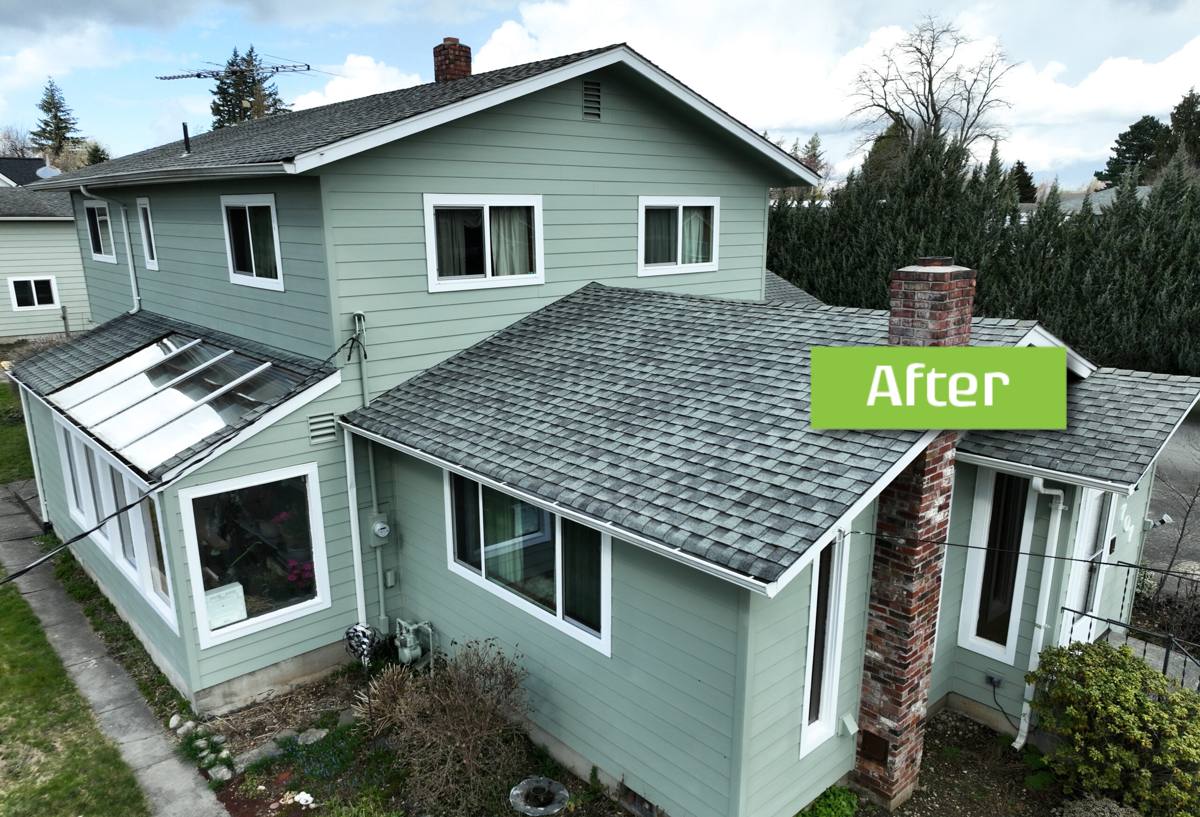
What Custer's Climate Does to a Wall Over Time
Three conditions do most of the damage to exterior siding in this part of Whatcom County, and they compound each other rather than acting independently.
Salt Air
Proximity to the water means salt-laden air is a routine part of the exposure on a lot of Custer properties, not just the ones facing the shoreline directly. Salt accelerates the breakdown of paint and factory finishes and speeds up corrosion on fasteners, flashing, and trim hardware. A finish that holds up fine in a drier inland market can wear noticeably faster here, and that difference tends to show up slowly, over a decade or more, rather than as a sudden failure you'd catch early.
Wind-Driven Rain
Rain out here doesn't reliably fall straight down. Wind pushes it sideways into lap joints, under trim, and into any seam where the water-management detailing isn't right. That's a much harder test on caulked joints, butt seams, and any siding material that depends on an unbroken surface coating to keep water out, compared to a location with calmer, more vertical rainfall.
A Long Moss Season
Mild temperatures paired with near-constant moisture mean moss and mildew stay active for most of the calendar year, especially on shaded or tree-lined lots, which describes a good number of Custer properties. Organic growth on a siding surface traps moisture against the wall behind it, and that trapped moisture is where a lot of long-term rot and delamination problems actually start, well before the siding looks obviously bad from the street.
Signs a Custer Home Needs Siding Replacement, Not a Patch
Not every issue means a full tear-off. But a few signs mean the underlying material has already lost the fight, and patching just delays a bigger repair:
- Soft or spongy spots when you press on the siding, especially near the bottom courses and around window and door trim
- Visible cupping, warping, or bowing panels, particularly on north- and west-facing walls that get the most wind-driven rain
- Paint or factory finish that's chalking, peeling, or fading unevenly across a wall
- Persistent moss or dark staining that comes back within a season or two of cleaning
- Visible gaps at seams, corners, or trim where caulk has failed or shrunk away
- Interior signs — musty smells, peeling interior paint, or soft drywall on an exterior wall — that point to moisture already getting behind the siding
What a Correct Siding Replacement Actually Involves
Pulling old siding off and nailing new material up is the easy part. The parts that determine whether the new siding lasts 30 years or 10 happen underneath it, and they're the parts a homeowner usually can't see once the job is finished.
| Step | Why It Matters in Custer |
|---|---|
| Full tear-off and sheathing inspection | Finds hidden rot or water damage behind the old siding before it's covered up again, rather than sealing a problem in |
| Repair or replacement of damaged sheathing and framing | New siding installed over compromised sheathing fails early no matter how good the material is |
| Weather-resistive barrier, correctly lapped | The last line of defense against wind-driven rain that gets past the siding surface |
| Manufacturer-specified clearances at grade, roofline, and deck | Keeps splash-back and standing moisture away from the bottom edge of the siding |
| Correct fastener type, spacing, and depth | Prevents cracking and keeps the water-resistive barrier intact behind the new siding |
| Proper flashing at every window, door, and penetration | The most common failure point on any siding job, and the hardest to fix after the fact |
| Factory-finished material rather than field-painted | Holds color and resists salt-air fading longer than a site-applied coating |
Why We Only Install James Hardie Fiber Cement
We get asked on almost every Custer estimate why we don't offer vinyl, LP SmartSide, or cedar. The honest answer is that we used to install some of those, and years of service calls and tear-offs in this exact part of Whatcom County convinced us to stop.
Vinyl is affordable and low-maintenance in milder climates, but it expands and contracts with temperature swings and relies on lapped, non-sealed joints that aren't built to shed sideways rain the way this area regularly delivers it. Engineered wood products like LP SmartSide use a treated wood-fiber core that performs fine as long as the factory coating and every field-cut edge stay sealed for decades — a lot of ongoing maintenance to depend on in a climate where wet weather is the default. Cedar and primed spruce are genuine, traditional materials, but they're organic, combustible, and dependent on a paint or stain schedule that has to be kept up consistently, and moss finds an organic surface especially hospitable here.
James Hardie fiber cement is a blend of Portland cement, sand, and cellulose fiber, cured into rigid boards. It's inorganic, so it doesn't have a wood-based core that can swell, rot, or feed insects, and it's non-combustible. We specifically use Hardie's HZ5 product line, engineered for regions with sustained moisture exposure and freeze-thaw cycles, and its ColorPlus factory finish, which is baked on in multiple coats under controlled conditions rather than applied on-site, and holds color against salt air and UV better than a field-painted finish. Other manufacturers make fiber cement too — Cemplank and Allura, for example — and fiber cement as a category is the right direction. We standardized on Hardie specifically for its climate-engineered lines, its factory finish, and the strength of its transferable warranty and installer network in this region.
Our Replacement Process for Custer Homes
- On-site assessment. We look at every elevation, not just the visibly damaged one, since wind-driven rain and moss growth affect different sides of a Custer house differently depending on tree cover and prevailing wind.
- Tear-off and sheathing check. Old siding comes off completely so we can inspect the sheathing and framing underneath, rather than covering up hidden damage.
- Repairs as needed. Any soft or water-damaged sheathing gets replaced before anything new goes back on the wall.
- Weather-resistive barrier and flashing. Installed and lapped correctly at every seam, window, door, and penetration, since this layer does the real work when wind pushes rain past the siding surface.
- Hardie installation to manufacturer spec. Correct clearances, fastener placement, and joint treatment, following James Hardie's published installation requirements rather than shortcuts that might pass a casual look.
- Final walk-through. We review the finished job with you before we consider it done, including clearances, trim details, and caulking at penetrations.
A Homeowner's Pre-Project Checklist
- Ask to see the sheathing before it's covered — a contractor confident in the work will show you what's underneath
- Confirm the fiber cement clearances at grade, roofline, and deck match manufacturer specification
- Ask how flashing is handled at windows, doors, and any wall penetrations
- Get the warranty terms in writing, both the material warranty and any workmanship warranty from the installer
- Ask whether ColorPlus factory finish or field-applied paint is being used, and why
- Confirm current Washington contractor licensing and active liability insurance before signing anything
Why Hiring a Crew That Already Works Custer Matters
A crew that regularly replaces siding in and around Custer has already seen which elevations take the worst of the wind-driven rain, how fast salt air corrodes underspecified fasteners, and which lots hold onto moss longest because of shade and tree cover. That's practical knowledge that shows up in small decisions throughout a job — where to add extra flashing attention, which clearances to double-check, which walls tend to need it most — decisions a crew unfamiliar with this specific stretch of Whatcom County might not think to make at all. It also means working with someone who's still reachable years later if a warranty question comes up, rather than a crew that worked the area once and moved on.
What Siding Replacement Typically Costs
Cost on any siding replacement depends on the size and complexity of the house, how much sheathing repair is needed once the old siding comes off, and the trim and detail work involved. A few factors that move the number more than homeowners usually expect:
| Cost Factor | Why It Moves the Price |
|---|---|
| Hidden sheathing or framing damage | Not visible until tear-off, but common on homes with a history of moisture intrusion |
| Number of windows, doors, and penetrations | Each one needs correct flashing, which adds labor time regardless of material cost |
| Trim complexity and architectural detail | More corners, gables, and transitions mean more cutting, fitting, and finish work |
| Home size and number of stories | Affects both material quantity and the equipment or scaffolding needed to do the work safely |
| Siding profile and color selection | ColorPlus factory finishes and certain profiles carry different material costs |
We won't quote a number without seeing the house, because the hidden-damage factor alone can swing a project significantly once tear-off starts. What we can promise is a written estimate that's specific to your home, not a rough range pulled from a national average.
If your Custer home's siding is showing its age or you're just tired of the moss coming back every season, we're glad to take a look and walk you through what we're seeing and what it would take to fix it right. Use the form below to request a free, no-pressure estimate.