 Sumas Roofing
 Building Decks That Hold Up in Ferndale's Climate
Ferndale sits close enough to the water that salt-laden air is a real factor in how a deck ages, not just an abstract concern. Add Whatcom County's long wet season, driving rain that comes in sideways during winter storms, and a moss season that can run from October through April, and you have a set of conditions that punishes decks built to a generic national standard. A deck that would be perfectly fine in a dry inland climate can start showing fastener corrosion, soft spots, and slick, moss-covered boards within a couple of seasons here if it wasn't built with this specific environment in mind.
This page covers what a deck actually needs to hold up in Ferndale, what correct construction looks like, and how our process works when we build or replace a deck in this area. It's meant to be useful whether you're planning a new deck, replacing a failing one, or trying to figure out why a deck that's only a few years old is already having problems.
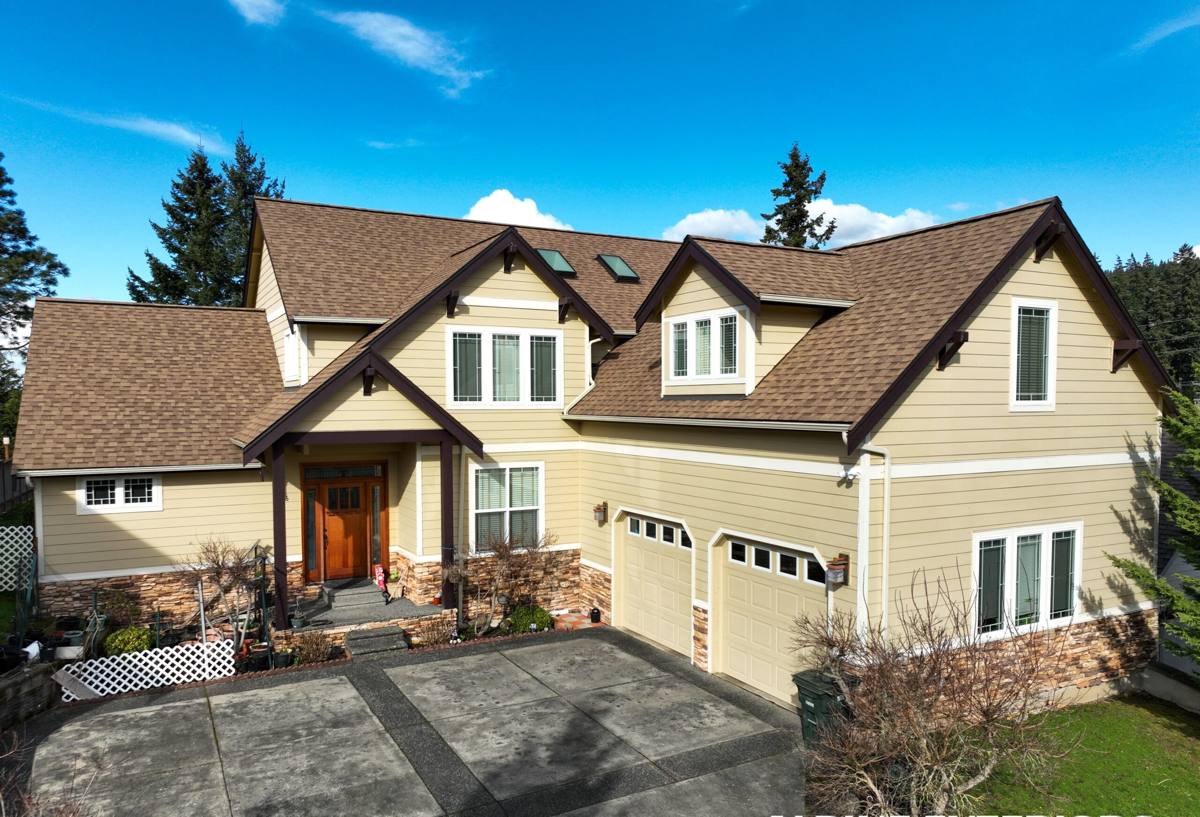
What Local Homes Actually Need From a Deck
Three climate factors drive most of the decisions on a Ferndale deck build:
Salt Air and Metal Fatigue
Even a few miles inland from the water, airborne salt accelerates corrosion on any fastener, bracket, or hardware that isn't rated for it. Standard electro-galvanized screws and joist hangers can start rusting and staining decking boards well before the wood itself is due for replacement. This is one of the most common reasons we get called out to look at decks that are structurally young but cosmetically failing.
Driving Rain and Water Management
Rain here doesn't just fall straight down — wind-driven rain gets under railings, into ledger board connections, and behind fascia if the flashing detail isn't right. A deck attached to the house is only as good as the flashing where it meets the siding or sheathing. Poor flashing at that ledger connection is one of the more expensive mistakes to fix later, because by the time it shows up as a problem, there's often rot in the rim joist or wall framing behind it.
Moss and Sustained Moisture
Whatcom County's moss season is long, and a deck with poor drainage, tight board spacing, or heavy shade will grow moss faster than most homeowners expect. Beyond looking bad, moss holds moisture against the board surface, which shortens the life of wood decking and makes the deck genuinely slippery — a real safety issue on stairs and near entry doors.
Decking Material Comparison for This Climate
There's no single "best" decking material — it depends on budget, maintenance tolerance, and how much shade and moisture the specific site gets. Here's how the common options actually perform in a Ferndale-type environment:
| Material | Moisture/Moss Behavior | Maintenance | Typical Lifespan Here |
|---|---|---|---|
| Pressure-treated fir/hem-fir | Prone to moss and graying if not sealed; treatment resists rot but not surface growth | Annual cleaning, resealing every 2-3 years | 15-20 years with upkeep |
| Western red cedar | Naturally rot-resistant, but still needs cleaning to prevent moss film | Cleaning plus periodic oil/stain | 20-25 years with upkeep |
| Composite decking | Won't rot, but can still grow surface moss/algae in shaded, damp spots | Periodic washing, no sealing needed | 25-30+ years, manufacturer-dependent |
| PVC/capped composite | Best moisture resistance of the common options; smooth or lightly textured surfaces shed moss film easiest | Occasional washing | 25-30+ years, manufacturer-dependent |
We don't push any one product as the answer for every job. Composite and capped composite cost more up front but trade ongoing maintenance for durability, which matters if you don't want to be out there scrubbing and resealing every couple of years. Cedar and treated lumber cost less initially and can look great, but only if the owner keeps up with cleaning and sealing — skip that in this climate and moss and graying show up fast. We'll walk through the honest trade-offs for your specific site and sun exposure rather than defaulting to whatever's easiest to sell.
What a Correctly Built Deck Involves
A deck that's going to last in this climate needs more attention to a handful of details than the framing lumber itself:
- Ledger flashing: Properly integrated flashing where the deck attaches to the house, not just a bead of caulk, to keep driving rain out of the wall assembly.
- Corrosion-resistant hardware: Stainless steel or heavy hot-dip galvanized fasteners, hangers, and structural screws rated for the coastal-influenced air, not standard interior-grade hardware.
- Footings sized for local soil and frost depth: Concrete footings set to the depth required by Whatcom County code for the site conditions, not a generic minimum.
- Board spacing for drainage: Gapping that lets water and debris pass through instead of pooling, which also slows moss buildup between boards.
- Joist protection: Joist tape or flashing on top of the framing so standing water doesn't sit directly on cut lumber, which is one of the most common hidden rot points.
- Railing and stair connections built to code: Proper post attachment and baluster spacing, since these are also the components inspectors check most closely.
Skipping any of these doesn't usually show up as a problem on day one — it shows up two, five, or ten years later as soft framing, rusted-through hangers, or a railing that's gone loose. That delay is exactly why cutting corners on a deck build is a bad trade: the visible finish looks the same either way until it doesn't.
Our Deck Building Process in Ferndale
1. Site Visit and Design
We look at sun exposure, drainage, existing grade, and how the deck will attach to the house before talking materials. A shaded, north-facing deck footprint needs different drainage and material choices than a sunny one, and we'll tell you that up front.
2. Permitting and Engineering
Deck projects above certain sizes or heights require a permit through the applicable jurisdiction, and elevated decks often need engineered footing and ledger details. We handle the permit submission and make sure the design meets current code rather than leaving that for you to sort out.
3. Demolition or Site Prep
For replacement decks, this includes checking the condition of the ledger connection and rim joist once the old decking is off — this is often when hidden moisture damage from a prior build gets found and addressed before it's covered up again.
4. Framing and Flashing
Footings, posts, beams, ledger flashing, and joists go in first, with corrosion-resistant hardware throughout. This is the stage that determines whether the deck lasts 10 years or 30.
5. Decking, Railings, and Stairs
Surface material goes down with proper spacing and fastening, followed by railings and stairs built to current code for baluster spacing and load.
6. Final Walkthrough
We go over the finished deck with you, including what maintenance it needs and on what schedule, before we consider the job done.
Living With a Deck in a Moss-Prone, Rainy Climate
Even a well-built deck needs some ongoing attention here. A simple seasonal routine keeps most problems from ever starting:
- Sweep debris off the deck surface regularly, especially in fall when leaves and needles collect and hold moisture
- Wash the surface at least once a year with a deck cleaner appropriate for the material to knock back moss and algae before it takes hold
- Check and clear gaps between boards so water keeps draining instead of pooling
- Inspect railing posts and stair connections annually for looseness
- Reseal or restain wood decking on the schedule the product calls for — don't wait until it's visibly gray
- Look at the ledger flashing line where the deck meets the house once a year for any signs of water staining below it
None of this is complicated, but skipping it is how a well-built deck in this climate turns into a slippery, moss-covered maintenance headache well before it should.
Why a Crew That Already Works in Ferndale Matters
A deck built by a crew unfamiliar with this specific coastal-influenced climate tends to make the same predictable mistakes: standard hardware instead of corrosion-resistant fasteners, ledger flashing treated as an afterthought, and material recommendations that ignore how much shade and moss exposure the site actually gets. We work in Whatcom County regularly, which means we're familiar with the local permitting process, the inspectors who review this work, and — most importantly — what actually fails on decks around here versus what fails on decks somewhere dry. That local pattern recognition is worth more than it sounds like on paper; it's the difference between a deck that needs attention in year three and one that's still solid in year twenty.
What Affects the Cost of a Ferndale Deck Project
| Factor | Why It Matters |
|---|---|
| Deck size and footprint shape | More square footage and complex shapes (multiple levels, angles) increase framing and material time |
| Height off grade | Elevated decks need engineered stairs, railings, and often deeper footings, which adds cost and permit complexity |
| Decking material | Composite and PVC cost more upfront than treated lumber or cedar but reduce long-term maintenance cost |
| Ledger and structural condition | Replacement projects that uncover rot behind old flashing require repair before new decking goes on |
| Railings and stairs | Custom railing styles and multi-flight stairs add labor beyond a simple platform deck |
| Site access | Difficult access for equipment or material delivery can add labor time |
Because of these variables, an honest number only comes from actually looking at the site — anyone quoting a firm price over the phone without seeing the property is guessing. We'll walk the site with you, talk through material trade-offs for your specific exposure and budget, and give you a real number based on what your project actually needs.
If you're planning a new deck or need to replace one that's showing its age, we're happy to come take a look and talk through your options. There's a free, no-pressure estimate form below — reach out and we'll get a time on the calendar.