 Sumas Roofing
 Why Deming Homes Need Siding Built for This Climate
Deming sits in the Nooksack River valley in Whatcom County, and the weather pattern here punishes exterior materials in ways a lot of homeowners don't think about until it's too late. Driving rain moves through the valley for months at a stretch, humidity lingers under tree cover long after a storm has passed, and any wall that stays shaded through the day spends a good part of the year damp enough to grow moss and algae. On top of that, salt-tinged air working its way inland from the Puget Sound corridor adds to the load on paint, caulk, and seams. It's a combination that goes after wood-based and lower-grade materials faster than most manufacturers' warranties account for.
Siding on a Deming home isn't just cosmetic — it's the first line of defense against a climate that stays wet for months and dries slowly. That's the standard we hold every project to: not what looks good on a sample board, but what will still be watertight and holding its finish after fifteen or twenty Whatcom County winters.
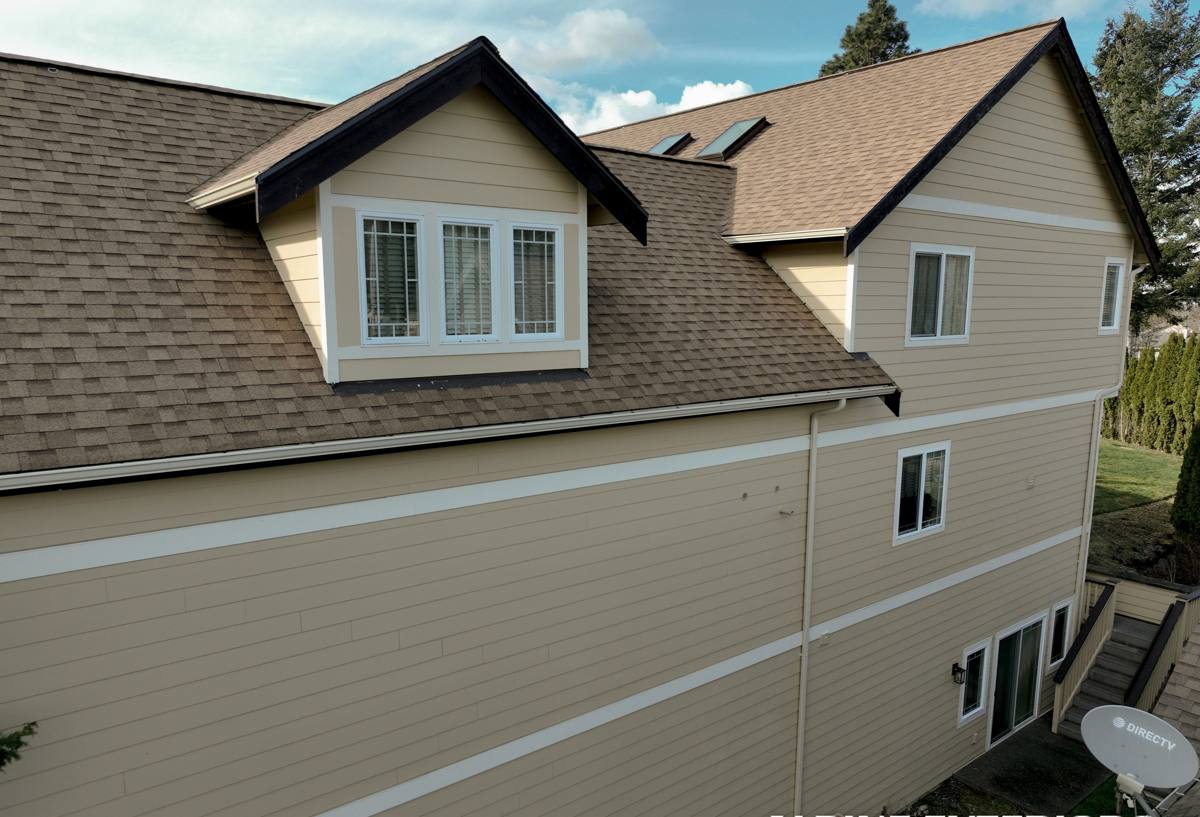
Why We Only Install James Hardie
We don't carry vinyl, LP SmartSide, Cemplank, Allura, or primed wood siding. That's a deliberate standard, not a supply gap. James Hardie fiber cement is engineered around moisture and freeze-thaw performance rather than a one-size-fits-all national spec. It doesn't swell or delaminate the way wood-based composite panels can when they take on water at a cut edge, it won't dent or distort the way vinyl can in a hard freeze, and the factory-applied finish isn't fighting a losing battle against mildew and moss the way field-painted trim is from year one.
None of that means every other product on the market is worthless — it means we made a call about what we're willing to put our name behind in this climate, and we stopped installing anything else.
What "Climate-Engineered" Actually Means
James Hardie doesn't sell one national product; it sells regional HZ formulations. The HZ5 line used across Western Washington is built for high-moisture, freeze-prone conditions — a different mix than the formulation sold into hot, humid Gulf Coast markets. For a Deming project, that regional engineering matters more than plank width or color choice. It's the difference between a product actually tested against this weather and one that just happens to be available here.
What a Correct James Hardie Installation Involves
The product is only half the equation. Most siding failures we get called out to look at in Whatcom County weren't caused by bad material — they were caused by installation shortcuts that let water get behind the siding, where it has nowhere to go. A correct Hardie installation includes:
- A code-compliant weather-resistive barrier installed and properly lapped before a single piece of siding goes up
- Correct flashing at every window, door, and roofline intersection — most moisture intrusion we find starts here, not in the open field of the wall
- The fastening pattern and fastener type specified in Hardie's installation guide, not a generic "close enough" spacing
- Minimum clearance gaps at the base of the wall, around the foundation, and anywhere siding meets a hard surface like a deck or patio, so water can't wick up into the plank
- Joints and butt seams sealed with a product rated for the ColorPlus finish, not a generic caulk that will fail early and discolor
- A drainage path behind the cladding where the wall assembly calls for one, so any moisture that does get in can dry out instead of sitting against the sheathing
Skip any one of these steps and a product rated to perform for decades can end up failing in a fraction of that time. This is exactly where the installer matters as much as the brand on the truck.
Moss, Moisture, and Maintenance Specific to Deming
Deming's tree cover and valley humidity make moss and algae a near-constant maintenance issue on local homes, not an occasional one. A few things worth knowing:
North and Shaded Walls Take the Worst of It
Any wall that doesn't get direct sun most of the day stays damp longer after each rain event, and that's where moss establishes first. ColorPlus factory finish resists staining better than field-applied paint, but it isn't moss-proof. Periodic gentle washing — never a pressure washer aimed directly into the seams — keeps growth from getting a foothold long term.
Roofline and Gutter Interaction
Where siding runs near a roofline or a gutter that backs up during a heavy rain event, water can sheet down the wall far more than most homeowners expect. Keeping gutters clear heading into the wet season protects the siding as much as it protects the roof structure above it.
Ground Clearance
Landscaping beds, mulch, or grade that's crept up over the years can bring soil moisture and splash-back into direct contact with the bottom edge of the siding. Checking clearance is a five-minute job that heads off a much bigger repair down the road.
Our Process for a Deming Siding Project
We run every project the same way, whether it's a full re-side or a single wall replacement:
- On-site assessment — we look at wall orientation, existing moisture damage, trim condition, and drainage before quoting anything
- Product and color selection — walking through HardiePlank lap siding, HardiePanel for accent areas, and HardieTrim options, with ColorPlus finishes suited to this region
- Removal and prep — old siding, trim, and any compromised sheathing come off and get inspected; we don't cover over rot
- Weather barrier and flashing installed to current code before any new siding goes up
- Installation following Hardie's published fastening, clearance, and joint specifications, not a shortcut version of them
- Final walkthrough and warranty registration, so the transferable warranty is properly on file with your name and address
Comparing Siding Materials for Whatcom County Weather
Every siding material has trade-offs. Here's how the common options stack up against the conditions Deming homes actually face:
| Material | Moisture Resistance | Moss/Algae Resistance | Typical Maintenance | Fire Rating |
|---|---|---|---|---|
| James Hardie fiber cement | High — won't swell, rot, or delaminate from water exposure | Factory finish resists staining; occasional washing keeps it clean | Low — no recurring repaint cycle with ColorPlus | Non-combustible |
| Vinyl | Sheds water but can warp or crack through repeated freeze-thaw cycles | Prone to algae streaking in shaded, damp areas | Low, but damaged panels can't be spot-repaired invisibly | Combustible; can soften or deform near heat |
| Wood-based composite | Vulnerable to swelling and edge failure if moisture reaches the substrate | Needs consistent sealing to resist moss and algae staining | Higher — finish and cut-edge sealing need ongoing monitoring | Combustible |
| Cedar | Natural material; moisture-sensitive without diligent upkeep | Susceptible to moss and mildew without regular treatment | Highest — repainting or staining on a recurring cycle | Combustible |
Cost Factors for a Deming Hardie Project
We won't quote a number without seeing the walls in person, but the line items that actually move a Hardie project's price are consistent from house to house:
| Cost Factor | Why It Matters |
|---|---|
| Wall square footage and number of stories | More material and more staging or scaffolding time for second-story and taller walls |
| Condition under the existing siding | Rot or compromised sheathing found during removal adds repair scope before new siding can go up |
| Trim and detail work | Corner boards, window trim, and accent panels take more labor than a plain wall run |
| Product line and ColorPlus selection | Lap siding, panel siding, and premium ColorPlus colors carry different material costs |
| Site access | Steep lots, limited driveway access, or tight setbacks near property lines slow staging and material handling |
Why Hiring a Crew That Already Works Deming Matters
Fiber cement installation is detail work, and the details that matter most are local. A crew that's already worked Deming and the rest of the Sumas service area knows which walls in this valley take the worst weather, how Whatcom County's permitting and inspection process runs, and how to plan around wet-season weather windows instead of installing siding in conditions that compromise the job. That's not something you can shortcut with a national installer passing through the area once. It comes from doing the work here repeatedly and living with the results through a full wet season.
What to Ask Before Hiring for a Hardie Installation
- Ask whether the installer is factory-trained on Hardie's fastening and clearance specifications, not just familiar with the product
- Ask specifically how they'll handle flashing at windows, doors, and roof intersections — not just "we'll seal it up"
- Confirm which HZ formulation they're specifying for this climate zone
- Ask how existing sheathing and moisture barrier will be inspected, and what happens if damage turns up once removal starts
- Get warranty terms in writing, including what's required to keep the transferable warranty valid
If you're weighing a siding project on a Deming home, we're happy to take a look and walk you through what your walls actually need. Reach out for a free, no-pressure estimate using the form below.