 Sumas Roofing
 Why Everson Homes Need Siding Built for This Climate
Everson sits in the part of Whatcom County where marine air off the Salish Sea, moisture pushed inland along the Nooksack River valley, and long stretches of overcast, damp weather all combine into one of the tougher siding environments in the Pacific Northwest. Homes here don't just get rain — they get rain that lingers, humidity that never fully clears, and a moss season that can stretch from October into May. Siding that isn't built for that combination doesn't fail dramatically. It fails quietly, one soft spot and one hidden seam at a time, until a homeowner discovers rot behind a wall they assumed was fine.
Fiber cement siding, specifically James Hardie's engineered lines, was developed to handle exactly this kind of exposure. It's the only siding material we install on Everson and greater Sumas homes, and this page explains why, what a correct installation actually involves, and what to expect if you're considering it for your own house.
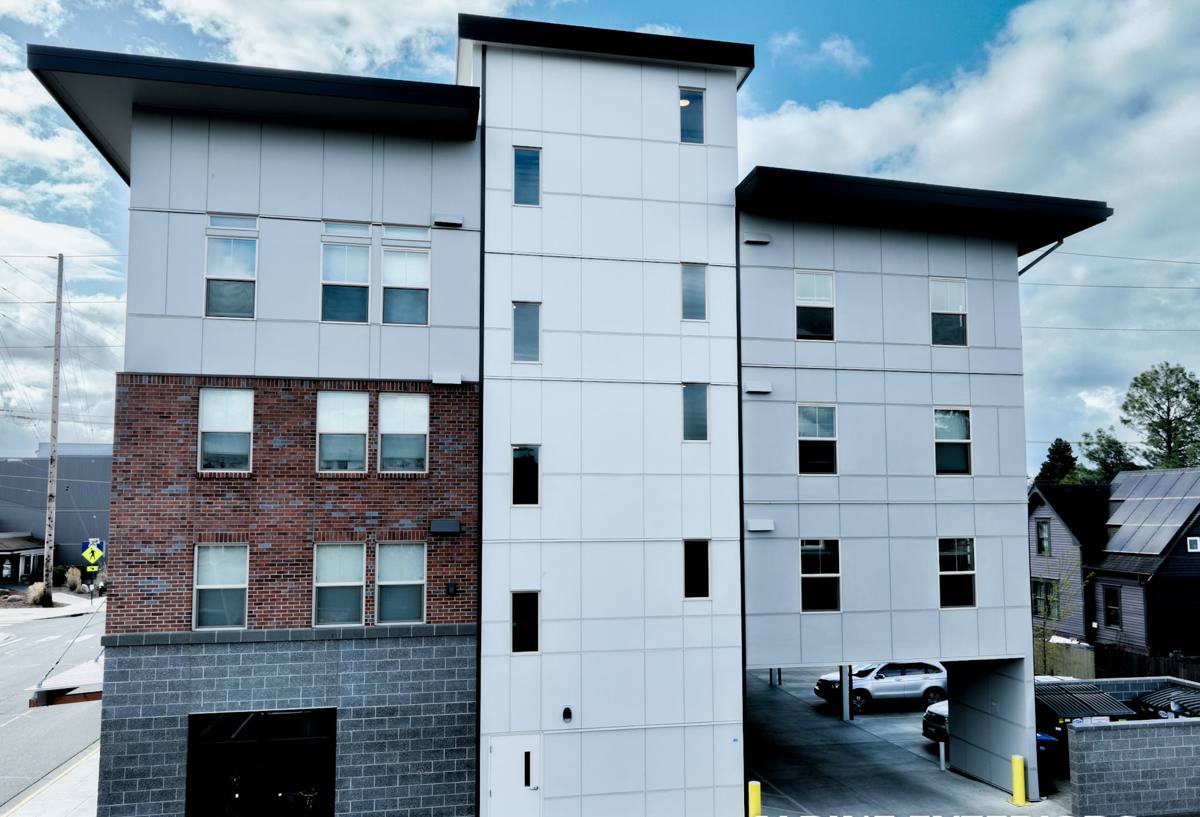
What "Salt Air, Driving Rain, and Moss Season" Actually Do to Siding
Salt-Influenced Air
Everson isn't beachfront, but Whatcom County's proximity to Puget Sound and the Strait of Georgia means airborne salt and moisture travel farther inland than most homeowners assume, especially during winter storm patterns that push wet air up the valley. Salt-laden moisture accelerates corrosion on fasteners, staples, and metal trim, and it degrades paint and caulk faster than dry-climate exposure does.
Driving, Wind-Driven Rain
Storms coming off the water don't fall straight down — they hit siding at an angle, driven by wind. That means water finds its way into laps, seams, and butt joints that would stay dry in a calmer climate. Any siding product with weak seams, absorbent cores, or poor factory sealing is going to take on moisture in these conditions, and once moisture gets behind siding, it has nowhere to go but into the sheathing and framing.
Moss and Prolonged Dampness
Whatcom County's moss season is long because the conditions that grow moss — shade, cool temperatures, and sustained moisture — are present for most of the year. Moss holds water against a surface far longer than open air ever would. On wood-based or absorbent siding, that constant dampness is exactly the environment rot and fungal growth need. On fiber cement, moss is a cosmetic issue that washes off. On lesser materials, it's a slow-motion moisture trap.
Why We Only Install James Hardie — Not Vinyl, LP SmartSide, Cemplank, Allura, or Cedar
Homeowners in Everson often ask why we don't offer other siding options. It's a fair question, and the honest answer is that we standardized on James Hardie fiber cement because, given this specific climate, it's the product that holds up with the fewest compromises.
- Vinyl siding is inexpensive and low-maintenance in mild climates, but it expands and contracts significantly with temperature swings, can warp or crack in wind-driven storms, and its seams and J-channels give wind-driven rain an easy path behind the panel. It's not engineered for the moisture load this area sees.
- LP SmartSide and other wood-strand products perform reasonably well when detailing and caulking are perfect and stay perfect for decades — an unrealistic standard in a climate this wet. Because the core is engineered wood, any moisture intrusion at a cut edge, fastener, or seam can lead to swelling and rot, and that damage is often hidden until it's advanced.
- Cemplank and Allura are legitimate fiber cement competitors to Hardie, and we don't claim they're poorly made. Our reasoning is about consistency, factory finish quality, warranty structure, and product-line engineering for specific climate zones — areas where we've found Hardie's system to be the strongest fit, and standardizing on one manufacturer lets our crews master one installation system rather than splitting expertise across several.
- Primed spruce and raw cedar are the traditional look many older Everson and Sumas homes were originally built with, and we respect that look. But both require an ongoing maintenance commitment — recaulking, repainting, and vigilant inspection — that most homeowners underestimate, and in this climate, gaps in that maintenance show up as rot faster than in drier regions.
None of these products are "bad." They're simply products with trade-offs that don't line up well with sustained coastal-influenced moisture, and we'd rather stand behind one system we can install and warranty with full confidence than offer options we know will disappoint some homeowners a decade in.
What James Hardie Gets Right for This Specific Job
James Hardie fiber cement is a mix of cement, sand, and cellulose fiber, cured into a rigid board that does not absorb water the way wood-based products do, and it will not burn — a meaningful advantage during Pacific Northwest wildfire smoke seasons and for insurance considerations. For Everson specifically, three things matter most:
| Climate Challenge | How Hardie Addresses It |
|---|---|
| Wind-driven rain finding seams | Engineered lap profiles and correct installation create a drainage plane that sheds water rather than trapping it |
| Salt-influenced air degrading finish | ColorPlus factory-baked finish resists fading and chalking better than field-applied paint |
| Moss holding moisture against the surface | Non-absorbent cement core means moss growth stays a surface issue, not a moisture pathway |
Hardie also produces climate-specific "HZ" formulations. The HZ5 line, engineered for colder, wetter regions, is generally the right specification for Whatcom County's climate zone, and it's what we default to when we design a job for Everson and Sumas addresses.
What a Correct Fiber Cement Installation Actually Involves
Fiber cement is only as good as its installation. A huge share of the "fiber cement problems" homeowners hear about nationally trace back to installation shortcuts, not the material itself. Here's what we consider non-negotiable on every Everson project:
- Full tear-off and sheathing inspection — old siding comes off completely so we can inspect for existing moisture damage before anything new goes up. Covering up hidden rot is the single biggest mistake in this trade.
- Correct weather-resistive barrier — a properly lapped and sealed house wrap or building paper, installed to shed water downward and outward, not just stapled up as an afterthought.
- Rainscreen or proper drainage gap where called for — especially important on walls with heavy exposure, giving any incidental moisture a way to drain and dry rather than sit against the sheathing.
- Manufacturer-specified fastening — correct nail type, placement, and depth. Overdriven or underdriven fasteners are one of the most common causes of premature siding failure.
- Proper clearances — minimum gaps from roofing, decks, grade, and other transitions so siding never sits in standing water or trapped moisture.
- Factory-mitered or properly caulked joints — using Hardie-approved sealants rated for this climate, not generic caulk that will fail in a season or two.
- Flashing integration at every penetration — windows, doors, vents, and hose bibs are where most water intrusion actually starts, so flashing details get as much attention as the field siding.
A Simple Pre-Project Checklist for Everson Homeowners
- Ask whether your existing sheathing will be inspected during tear-off, not just covered over
- Confirm which Hardie product line and HZ rating is being specified for your home
- Ask how flashing at windows and doors will be handled, specifically
- Get the fastener schedule in writing (type, spacing, gun vs. hand-nailed)
- Confirm whether a rainscreen gap is included or recommended for your exposure
- Ask what the ColorPlus warranty covers versus the substrate warranty
How Our Process Works
We keep the process straightforward because homeowners in Sumas and Everson are usually juggling this alongside everything else in their lives.
1. On-Site Assessment
We walk the exterior with you, looking specifically at exposure direction (which walls take the worst of the driving rain), existing moisture signs, trim condition, and any moss or lichen buildup that signals a chronic damp area.
2. Product and Line Selection
We recommend the specific Hardie plank profile, texture, and HZ specification suited to your home's exposure — not a one-size-fits-all package.
3. Written Scope and Timeline
You get a clear, itemized scope covering tear-off, sheathing repair contingencies, house wrap, fastening schedule, and trim work, so there are no surprises mid-project.
4. Installation to Manufacturer Spec
Our crews install to James Hardie's published specifications, not shortcuts — this is what keeps the manufacturer's warranty intact and what actually keeps water out long-term.
5. Final Walkthrough
We review the finished work with you, including care basics, so you know what routine maintenance (if any) is actually needed going forward.
Why a Crew That Already Works Everson Matters
Siding installation isn't just about the product — it's about reading a specific house against a specific site. A crew that regularly works Everson and the surrounding Sumas area already understands which wall orientations take the worst of the wind-driven rain off the valley, how aggressively moss establishes itself on north- and shade-facing elevations here, and how the region's damp winters affect drying time and scheduling for a proper install. That local pattern recognition is the difference between a generic install and one actually calibrated to how this particular stretch of Whatcom County behaves through a full year of weather.
It also means faster response if something needs attention after the job is done — a local crew isn't routing a service call through a call center two states away.
What This Typically Costs
Fiber cement siding costs more upfront than vinyl and is comparable to or somewhat above engineered wood siding, largely because of the material's weight, the labor involved in correct installation, and the factory-finish quality. Exact pricing depends on your home's size, number of stories, trim complexity, and whether sheathing repair is needed once old siding comes off — we won't quote a number without seeing the house, because guessing on a job like this does homeowners a disservice.
| Factor | Why It Affects Cost |
|---|---|
| Home size and stories | More square footage and multi-story access both increase labor |
| Existing sheathing condition | Hidden rot found during tear-off requires repair before new siding goes on |
| Trim and detail complexity | Dormers, multiple gables, and window/door count all add installation time |
| Product line and finish | Plank profile, texture, and ColorPlus color selection affect material cost |
Ready to Talk Through Your Home?
If you're weighing siding options for a home in Everson or anywhere around Sumas, we're happy to come take a look, talk through what your specific exposure calls for, and give you a straightforward, no-pressure estimate — no obligation, just an honest assessment of what your house actually needs.