 Sumas Roofing
 Why Everson Homes Need Siding Built for This Climate
Everson sits in the Nooksack Valley, close enough to Sumas and the Puget Sound air mass to get the worst of both worlds: driving rain that comes in sideways during fall and winter storms, and a marine-influenced dampness that never fully dries out between systems. Add in the salt-tinged air that rides inland off the Sound on a west wind, and you've got a combination that's genuinely hard on exterior building materials. Wood siding cups, checks, and rots. Vinyl gets brittle and warps in temperature swings. Cheaper fiber cement that isn't detailed correctly traps moisture behind it and fails from the inside out, long before the face of the siding shows a problem.
The other piece of the puzzle is moss. Whatcom County's moss season isn't a few weeks — it's most of the year. Anything horizontal or shaded stays damp long enough for moss and algae to take hold, and once organic growth is established on siding, it holds moisture against the substrate around the clock. Siding for an Everson home has to be chosen and installed with all of this in mind, not just picked for looks.
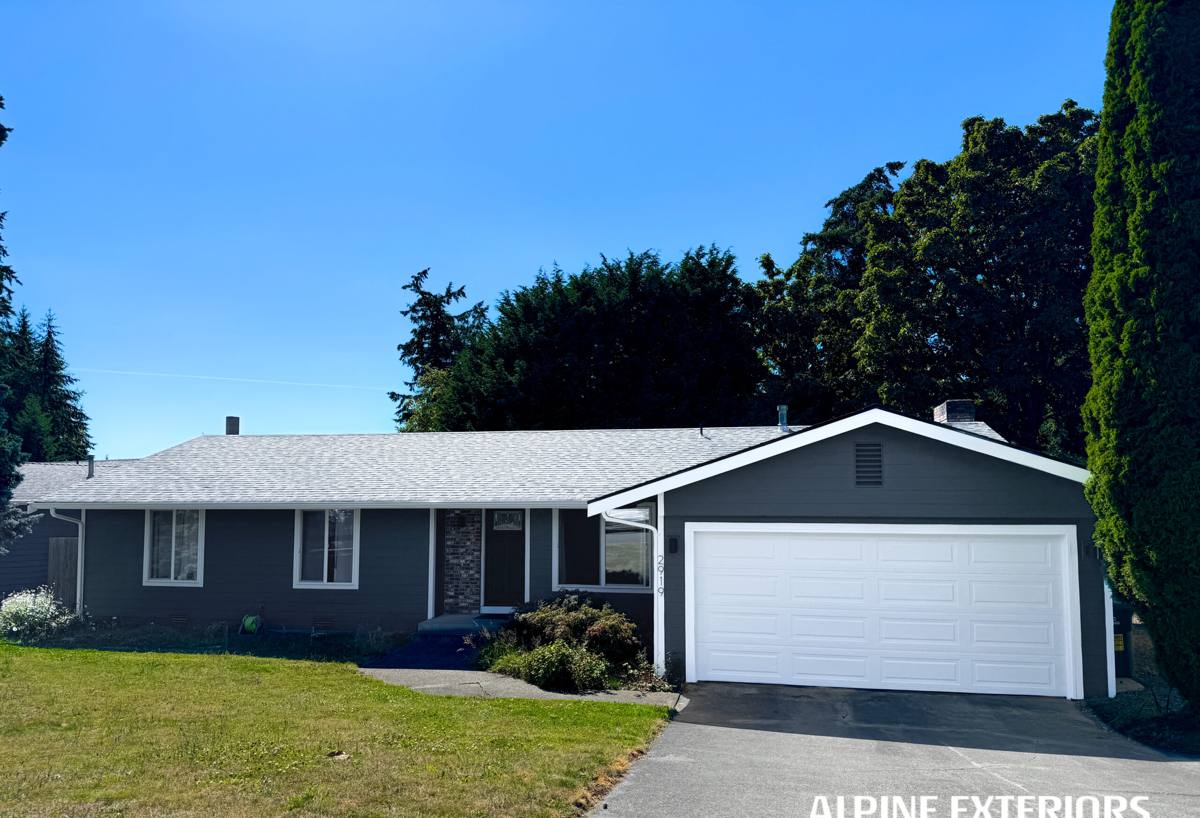
What James Hardie Actually Solves for This Region
James Hardie fiber cement siding is engineered from cement, sand, and cellulose fiber — there's no wood pulp core to rot, no vinyl to go brittle in the cold, and no combustible substrate. That matters in a region where damp is the default condition for half the year.
HZ5 Engineered for Pacific Northwest Exposure
James Hardie makes climate-specific product formulations, and the HZ5 line is engineered for regions with the freeze-thaw cycling and moisture exposure common to the Pacific Northwest. It's manufactured to resist moisture-related damage better than a generic, one-size-fits-all product, which is a real advantage in a valley that sees standing dampness for long stretches.
ColorPlus Factory Finish
Field-painted siding is only as good as the paint job and the weather conditions on the day it was applied — and in Whatcom County, dry, low-humidity painting windows are limited. James Hardie's ColorPlus finish is baked on at the factory under controlled conditions, cures harder than field-applied paint, and comes with its own finish warranty. For a homeowner, that means fewer repaint cycles and a color that doesn't fade or chalk the way lower-grade coatings do under years of damp, low-UV Northwest weather.
What a Correct Installation Involves
Fiber cement siding is only as good as the installation behind it. James Hardie's own installation guidelines are specific for a reason — skipping steps is exactly how a well-made product ends up with moisture problems in a wet climate like this one.
The Details That Actually Matter
- Proper weather-resistive barrier installed and lapped correctly before any siding goes up
- Rainscreen or drainage gap where conditions call for it, so bulk water has somewhere to go
- Correct flashing at every window, door, and roof-to-wall intersection
- Manufacturer-specified fastener type, spacing, and penetration depth
- Proper clearance from grade, decks, and roof lines to keep the bottom edge of the siding out of standing water and splash-back
- Factory-cut and factory-primed edges kept sealed at every field cut
Any one of these skipped is where a fiber cement installation starts trapping moisture instead of shedding it — and once water gets behind the siding in a climate this damp, it doesn't dry out quickly. This is also where a lot of the trade-offs with other products show up: wood siding depends entirely on maintenance discipline to avoid the same fate, and vinyl hides moisture problems behind its panels for years before anyone notices rot in the sheathing underneath.
James Hardie Product Lines We Install
Not every Everson home needs the same profile. Part of doing this right is matching the product line to the house.
| Product | Best Use | What It Adds |
|---|---|---|
| HardiePlank lap siding | Traditional single-family homes | The classic horizontal look, widest color and texture selection |
| HardiePanel vertical siding | Accent walls, gables, modern facades | Clean vertical lines, often paired with board-and-batten trim |
| HardieShingle siding | Craftsman and cottage-style homes | Staggered or straight-edge shingle look without cedar's upkeep |
| HardieTrim boards | Corners, fascia, window and door surrounds | Matches the siding's rot resistance at the edges, where wood trim fails first |
Cost Factors on an Everson Siding Project
Every home is different, but the same handful of factors drive most of the variation in scope and price on a fiber cement re-side in this area.
| Factor | Why It Matters Here |
|---|---|
| Condition of the sheathing underneath | Damp climates increase the odds of hidden rot that has to be repaired before new siding goes on |
| Home's exposure to prevailing wind and rain | Walls that take the brunt of storms need more careful flashing and drainage detailing |
| Existing siding type being removed | Old wood or aluminum siding removal and disposal adds labor that vinyl-over-vinyl jobs don't have |
| Trim and architectural detail | Gables, dormers, and multiple roof lines mean more flashing and cutting |
| Product line and finish selection | Lap widths, textures, and colors carry different material costs |
How Our Process Works
- Free on-site inspection — we look at your current siding, the sheathing condition where accessible, and the trouble spots specific to your home's exposure
- Written estimate that spells out product line, quantities, and any sheathing or moisture repair needed before installation
- Removal of existing siding and inspection of the wall assembly underneath
- Repair of any rot or damaged sheathing found once the old siding is off — this gets flagged and priced before we cover it up, not discovered after the fact
- Installation of weather-resistive barrier, flashing, and James Hardie siding to manufacturer specification
- Final walkthrough so you know exactly what was installed and how to maintain it
Why a Crew That Already Works This Area Matters
Installing James Hardie correctly in a dry climate and installing it correctly in Whatcom County are not the same job. A crew that regularly works Everson, Sumas, and the surrounding Nooksack Valley already knows which walls take the worst of the weather, how much drainage detailing a given exposure actually needs, and what the local moss and moisture patterns do to a house over a few winters. That's knowledge you don't get from a manufacturer's installation manual alone — it comes from seeing how houses in this specific valley perform year after year. It also means someone is nearby if a warranty question or a maintenance question comes up down the road, rather than a crew that installed your siding once and moved on to a different region.
Keeping James Hardie Siding Looking Right in This Climate
One of the real advantages of fiber cement over wood is how little ongoing maintenance it needs — but "little" isn't "none," especially here.
- Rinse siding annually to knock off moss spores and algae before they establish, especially on north-facing and shaded walls
- Keep gutters clean and downspouts directed away from the foundation so wall-splash and overflow don't sit against the siding
- Trim back shrubs and trees that keep a wall shaded and damp longer than the rest of the house
- Check caulking at trim joints and penetrations every year or two — caulk fails well before the siding does
- Address any small dings or damage promptly so the ColorPlus finish stays sealed at the repair
Done this way, a correctly installed James Hardie system is one of the lowest-maintenance exteriors available for a home in this climate, and it's backed by a manufacturer warranty that's transferable if you sell the house.
Signs Your Current Siding May Be Ready for Replacement
- Soft or spongy spots when you press on the siding, especially near the bottom courses
- Paint that won't hold no matter how often you repaint
- Persistent moss or dark staining that comes back within a season of cleaning
- Visible cupping, warping, or gaps opening up between boards
- Rising energy bills that point to a wall assembly that's no longer sealing the way it should
If any of that sounds like your home, it's worth having someone take a real look before the damage spreads to the sheathing underneath, which turns a siding job into a structural repair.
If you're in Everson or anywhere in the surrounding Sumas area and want a straight answer about what your siding needs, we're happy to take a look. The estimate is free, there's no pressure, and you'll get a clear picture of the work before you decide anything — just fill out the form below.