 Sumas Roofing
 Why Decks Near Kendall Wear Out Faster Than People Expect
A deck in Kendall doesn't fail because the homeowner did anything wrong. It fails because the structure sits outside, uncovered, through months of Whatcom County weather that never really lets up. Long stretches of driving rain soak into end grain and fastener holes faster than the wood can dry back out. Add the tree cover common in this part of the county, and you get shade that keeps boards damp for days after a storm has passed. That combination is exactly what feeds the long moss season this area is known for — moss doesn't just look bad, it holds water against the wood and turns a walking surface slick and dangerous.
Homes closer to the coast and lower valley areas of Whatcom County also deal with salt-tinged marine air moving inland on weather systems, which speeds up corrosion on any exposed metal hardware. Even where that influence is lighter, as it is around Kendall's higher, more inland terrain, the base problem is the same: constant moisture cycling. Wood swells wet and shrinks dry, over and over, and every cycle loosens a few more fasteners and opens a few more hairline cracks for water to get into next time.
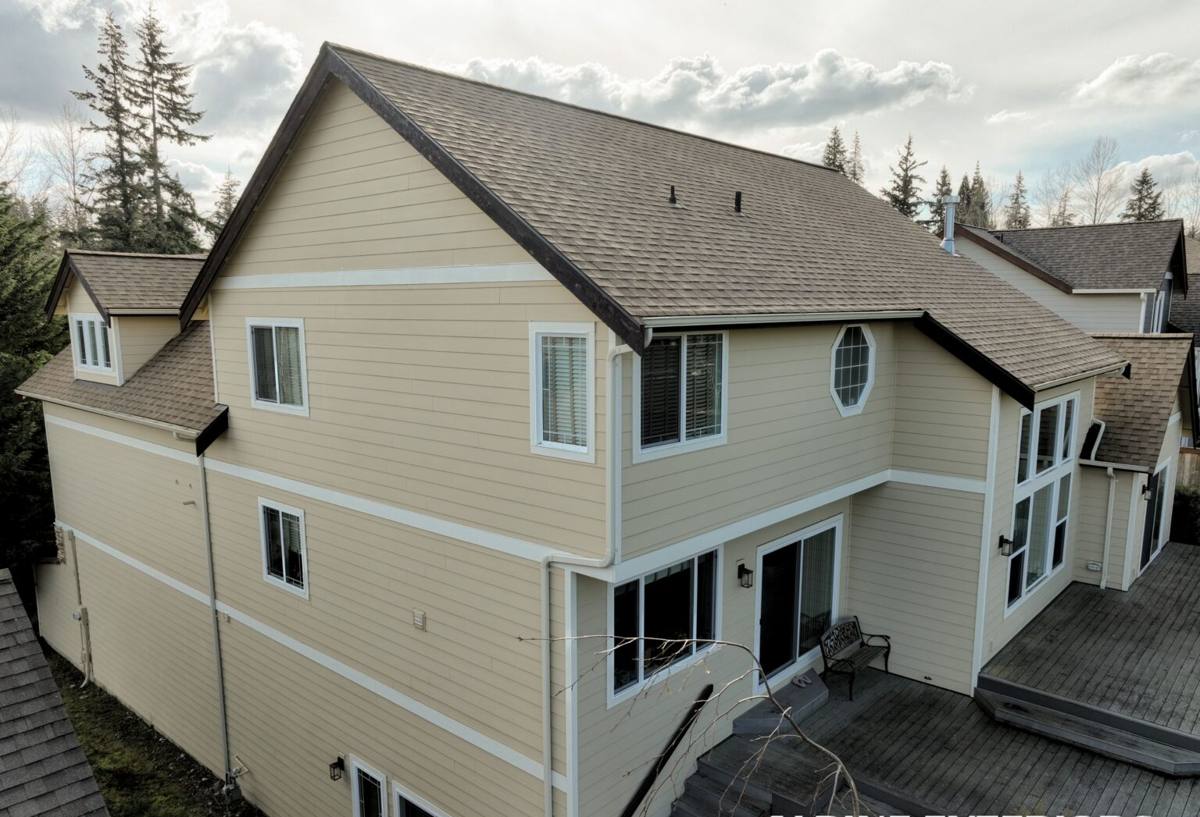
The Damage We Find Most Often on Kendall Decks
Ledger Board and Rim Joist Rot
The ledger board — the piece that bolts the deck to the house — is the single most important structural member on most decks, and it's also the one most likely to be hidden behind siding, flashing, or a band of trim. When flashing was installed poorly or has failed over time, water tracks behind it and rots the ledger and the rim joist it's attached to from the inside out. This is rarely visible until the deck starts to feel loose where it meets the house.
Moss, Algae, and Slick Board Surfaces
On shaded decks around Kendall, moss and algae build up on the north side or under overhangs first, then spread. Beyond the slip hazard, moss holds moisture directly against the decking, which accelerates rot in wood boards and can stain composite material if it's left to sit for a full season.
Corroded or Failing Fasteners
Nails and screws that weren't rated for exterior or ground-contact use corrode, weep rust stains down the board, and eventually lose their grip. We also see a lot of galvanic corrosion where mismatched metals — an aluminum flashing against a steel fastener, for example — were used together.
Sagging or Bouncy Framing
A deck that bounces when you walk across it, or that has visibly sagged along one beam line, usually points to an undersized or rotted joist, a post that has settled or lost contact with its footing, or beam spans that were stretched further than they should have been when the deck was originally built.
What a Correct Deck Repair Actually Involves
Start at the Structure, Not the Surface
It's tempting to judge a deck by its decking boards, but boards are the easiest and cheapest part to replace. A repair that only swaps out bad-looking boards while leaving a rotted joist or a failing ledger connection underneath isn't a repair — it's a cosmetic fix on top of a structural problem. Every job we do starts by getting underneath the deck and probing the framing, not just looking at the surface.
Hardware That Matches the Climate
Given how much moisture this region deals with, we use hot-dip galvanized or stainless fasteners and connectors rated for exterior and ground-contact exposure, and we make sure the metal in flashing, screws, and joist hangers is compatible so we're not setting up galvanic corrosion down the road. It costs a little more up front than mixing whatever is on hand, but it's the difference between a repair that lasts and one you're redoing in five years.
Drainage and Flashing Details
A correct repair re-establishes proper drainage: gaps between boards sized to let water pass through instead of pool, ledger flashing that actually sheds water away from the house rather than behind it, and joist tape or a similar protective layer on the tops of joists so end grain isn't sitting in standing water. These details don't show up in a quick visual inspection, but they're what determines whether the repair holds up through another wet season or not.
Repair or Rebuild? How to Tell Which One You Need
Not every deck problem calls for a full rebuild, and not every deck can be saved with spot repairs. The table below outlines the general factors that push a project toward one or the other.
| Factor | Leans Toward Repair | Leans Toward Rebuild |
|---|---|---|
| Ledger board condition | Solid, no rot at connection points | Soft wood, rust staining, movement at the house |
| Posts and footings | Plumb, stable, no settling | Leaning, cracked footing, or undersized for current code |
| Percentage of damaged boards | Under roughly a third | Widespread rot, warping, or moss staining |
| Age of the structure | Newer deck, isolated issue | Older deck built to outdated span or spacing standards |
| Railing and guard system | Meets current spacing and height rules | Loose, undersized, or missing required guards |
A big part of our first visit is sorting your deck into one of these two columns honestly, rather than defaulting to whichever job is bigger.
Decking Material Trade-Offs Worth Knowing
When boards need to be replaced as part of a repair, homeowners in Kendall usually choose between three options. Each has real trade-offs given the amount of rain and shade this area sees.
| Material | Upside | Trade-Off in This Climate |
|---|---|---|
| Pressure-treated lumber | Lowest upfront cost, easy to source and match | Needs periodic sealing and cleaning to resist moss and checking |
| Cedar | Natural rot resistance, classic look | Softer surface, requires regular maintenance to hold its color and resist moisture |
| Composite | No sealing or staining, resists rot | Higher material cost; still needs regular cleaning to prevent moss and mildew staining |
We'll walk through which option makes sense for your budget and how much shade your deck sits under — that shade factor matters more here than most people expect, since it directly drives how fast moss takes hold.
Our Deck Repair Process
Inspection and Diagnosis
We get underneath the deck, check the ledger connection, probe joists and posts with an awl for soft spots, and check footings for movement. We also look at the railing and stair connections, since those take a lot of stress and are a common source of hidden looseness.
A Written, Straightforward Scope
You get a clear explanation of what's actually wrong, what needs to be fixed versus what's just cosmetic, and what it will cost — before any work starts. If there's a repair-versus-rebuild decision to make, we lay out both options plainly instead of steering you toward the bigger job.
The Repair Itself
We replace rotted framing members rather than sistering new wood onto compromised material, correct flashing and drainage issues at the source, and match fasteners and hardware to what the rest of the structure needs so nothing is left as a weak point.
Cleanup and Walkthrough
We clear debris, remove old fasteners and hardware from the site, and walk the finished repair with you so you know what was done and what basic upkeep — like periodic cleaning to keep moss from returning — will help it last.
Signs Your Kendall Deck Needs Attention Now
- Soft or spongy spots when you press on decking boards or step near the ledger
- Visible gaps, rust streaks, or movement where the deck meets the house
- Moss or dark green-black staining that keeps coming back after cleaning
- Noticeable bounce or sag when walking across the deck
- Railings or stair posts that wiggle when you put weight on them
- Fasteners with rust bleeding down the board, or heads that have popped up
- Standing water that doesn't drain between boards after rain
Why a Crew That Already Works Kendall and Sumas Matters
Deck repair done right depends on understanding how a specific piece of ground and its surrounding tree cover behave over a wet season, not just knowing general building practices. A crew that regularly works decks around Kendall and the broader Sumas area already knows which framing details tend to fail first in this terrain, how much shade a typical lot gets and what that means for moss and drying time, and which fastener and flashing choices actually hold up through a full Whatcom County winter rather than just looking fine when they're installed. That local pattern recognition is what separates a repair that's diagnosed correctly the first time from one that gets reopened a year later because the real cause was never addressed.
Being local also means a faster response when a soft spot or a loose railing needs a look before it becomes a safety issue, and a crew that's still around down the road if a question comes up about how the repair is holding up.
If you've got a deck in Kendall or anywhere around Sumas that's showing any of the signs above, we're happy to take a look and give you an honest, no-pressure estimate — just fill out the form below to get started.