 Sumas Roofing
 Building a Deck That Actually Holds Up in Laurel
Laurel sits in the same weather pattern as the rest of Whatcom County: long, wet winters, driving rain that comes in sideways off the water, salt-tinged marine air, and a moss season that can run eight months out of the year on a shaded lot. A deck built here isn't just an outdoor living space — it's a structure that has to shed water fast, resist rot at every joint, and stay safe underfoot when it's slick with moss or algae for half the year. A deck that would hold up fine in a dry climate can fail here in a fraction of the time if it wasn't built with that reality in mind.
We build custom decks for homeowners in Laurel and around Sumas with that climate as the starting point, not an afterthought. That means specific choices about framing, fasteners, flashing, and decking material that a generic build doesn't always get right.
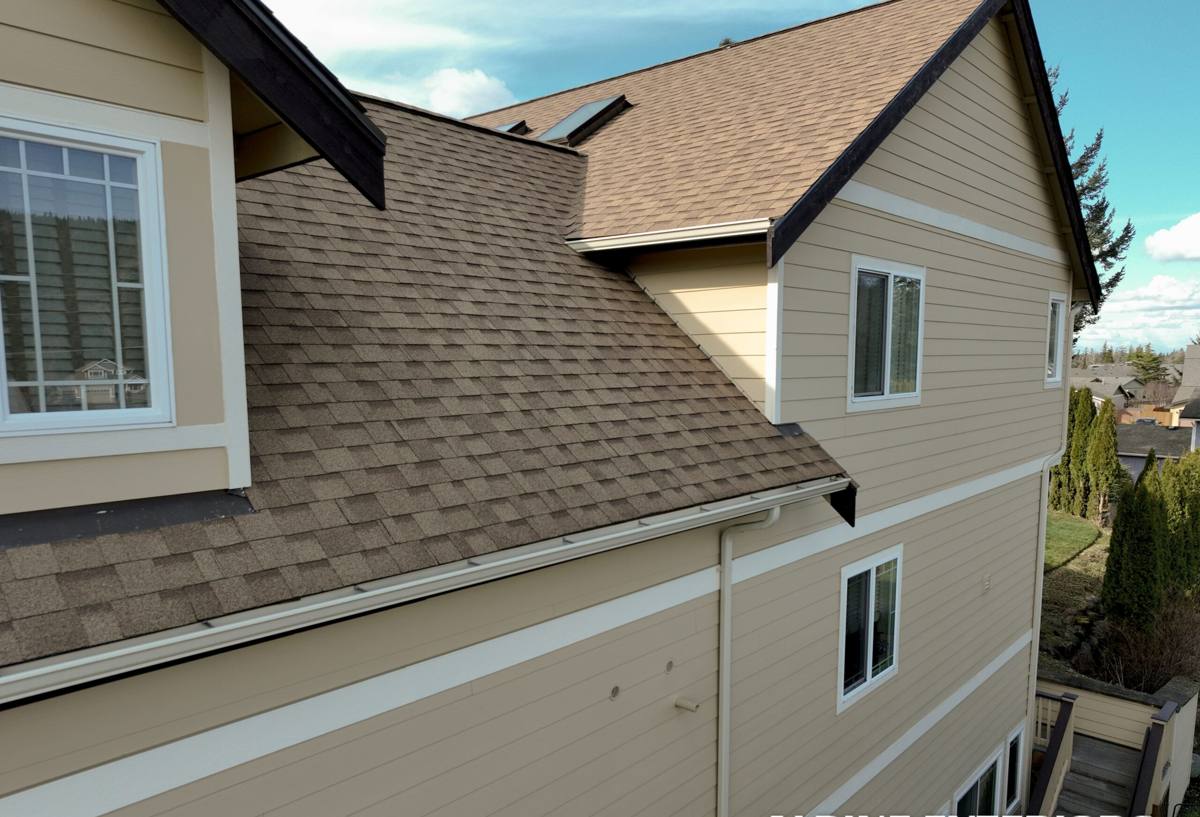
What Laurel's Climate Actually Does to a Deck
Moisture Finds Every Weak Point
Whatcom County's rain isn't just frequent, it's persistent — weeks of steady, low-intensity rain that gives water time to work into joints, end grain, and fastener holes that a heavier but shorter storm wouldn't reach. Any spot where two pieces of wood meet, where a screw penetrates the board, or where a ledger board bolts to the house is a place water wants to sit. Over a few seasons, that's where rot starts.
Moss and Algae Change What "Safe" Means
A long moss season means most decks in this area spend a good part of the year with some degree of surface growth, especially on the north side of a house or under tree cover. Board spacing, surface texture, and drainage underneath the deck all affect how fast moss takes hold and how slick the surface gets. A flat, tightly-spaced deck with poor airflow underneath will grow moss faster than one designed to dry out between rains.
Salt Air Accelerates Corrosion
The marine air common to this part of Washington is harder on metal than most homeowners expect. Fasteners, joist hangers, and structural connectors that aren't rated for exterior or coastal exposure can start corroding well before the wood around them shows any wear. Once a fastener weakens, the connection it's holding — often a critical structural one — weakens with it.
What a Correctly Built Deck Involves Here
A deck built for this climate isn't dramatically different in appearance from one built anywhere else — the difference is almost entirely in details you won't see once it's finished. That's exactly why they matter: nobody checks them again for years.
- Ledger board properly flashed and sealed where it attaches to the house, so water is directed away from the wall structure rather than into it
- Structural connectors, joist hangers, and fasteners rated for exterior or coastal exposure, not general-purpose hardware
- Footings sized and set below frost depth, with proper drainage so standing water doesn't undermine them over time
- Joist spacing and blocking that meets current code for the decking material and expected loads
- Adequate clearance and airflow underneath the deck to let it dry out between rain events
- Board spacing and surface choice that balances drainage with a safe, even walking surface
- Stairs and railings built to code height, spacing, and load requirements — not just what looks right
Skip any one of these and the deck may look fine for the first few years while the damage builds underneath. That's the pattern we see most often on older decks we're called out to repair or replace.
Choosing a Decking Material for This Climate
There's no single right answer here — it comes down to how much maintenance a homeowner is willing to do and what the deck's exposure looks like. Here's how the common options actually compare for a shaded, wet, moss-prone lot like you'll find in Laurel:
| Material | Moss/Moisture Behavior | Maintenance | Typical Lifespan |
|---|---|---|---|
| Pressure-treated wood | Absorbs moisture; needs sealing to resist rot and moss staining | Annual cleaning and re-sealing recommended | 15-25 years with upkeep |
| Cedar | Naturally rot-resistant but still needs sealing in this climate | Sealing every 1-2 years | 20-25 years with upkeep |
| Composite decking | Doesn't rot, but surface can still grow algae/moss film without cleaning | Periodic washing, no sealing needed | 25-30+ years, manufacturer-dependent |
| PVC decking | Fully moisture-resistant surface, least prone to moss adhesion | Lowest maintenance of the group | 25-30+ years, manufacturer-dependent |
Wood costs less up front and gives a more traditional look, but it demands real upkeep in a climate this wet — skip a season of sealing and you're often looking at accelerated wear. Composite and PVC cost more initially but trade ongoing maintenance for material stability, which is worth factoring into the real cost over the life of the deck, not just the install price. We'll walk through the honest trade-offs for your specific lot and sun exposure before you commit to a material.
Railings, Stairs, and Code
Railings and stairs aren't optional details — they're the part of the deck most tied to code and most tied to safety when a surface is wet or mossy for months at a time. Height requirements, baluster spacing, and stair rise/run all have to meet current code, and Whatcom County or the local jurisdiction will inspect against those numbers regardless of how the deck looks. We build to those requirements as the floor, not the ceiling — a railing that just barely passes inspection isn't the same as one that feels solid under a hand reaching for it in the rain.
Stair treads in particular deserve attention on a deck that sees this much moisture. Surface texture and drainage on stair treads matter more than on the flat deck surface, since that's where most slips actually happen.
Our Process for a Laurel Deck Project
1. On-Site Assessment
We look at the lot's sun exposure, drainage, tree cover, and how the deck will attach to the house before talking materials or design. A shaded, low-airflow spot needs different decisions than an open, sunny one, even on the same street.
2. Design and Material Selection
We go over layout, decking material, and railing options with the actual trade-offs laid out — cost, maintenance, and how each option behaves in this climate specifically — so the decision is an informed one, not a guess.
3. Permitting
Deck projects above certain sizes or heights typically require a permit. We handle that process rather than leaving it to the homeowner to sort out, and we build to the approved plan.
4. Construction
Footings, framing, flashing, decking, and railings are installed in that order, with each stage built to hold up under this area's rain load and moss exposure — not just to pass a quick visual check.
5. Final Walkthrough
We walk the finished deck with the homeowner, cover basic care for the material chosen, and answer questions before calling the job done.
Signs an Existing Deck Is Losing the Fight
If you're weighing a repair against a full rebuild, these are the signs worth taking seriously rather than patching over:
- Soft or spongy decking boards, especially near the house or in shaded corners
- Rust staining or visible corrosion around fasteners and joist hangers
- Gaps or water staining where the ledger board meets the house
- Persistent moss or algae film that returns within weeks of cleaning
- Railings or stair posts that flex or feel loose when leaned on
- Standing water underneath the deck after rain rather than it draining away
Any one of these can usually be addressed on its own if caught early. Several at once, especially involving the ledger or footings, usually means the structure has been compromised long enough that a rebuild is the more honest recommendation.
Keeping a New Deck Ahead of the Climate
A well-built deck in this climate still needs a small amount of seasonal attention to reach its full lifespan. This isn't a heavy maintenance list — it's the handful of things that actually matter:
- Clear leaves and debris from between boards and off ledger flashing before fall rains set in
- Rinse or lightly scrub moss and algae film before it has a chance to establish
- Check that gaps between boards haven't closed up with swelling, which traps moisture
- Reseal wood decking on the schedule appropriate to the product, not just when it looks faded
- Confirm underneath the deck is draining and not holding standing water after storms
- Check railing posts and stair connections annually for looseness
Why a Crew That Already Works in Laurel Matters
Building codes, permitting requirements, frost depth, and even material recommendations shift based on real local conditions — a crew that primarily builds in a drier climate and treats every region the same will miss details that matter here. We work throughout Sumas and the surrounding Whatcom County area regularly, which means we already know how footings need to be set for this ground, how much airflow a deck needs underneath to fight moss in a shaded Laurel yard, and which hardware actually holds up against the marine air rather than corroding early. That's not a marketing point — it's the difference between a deck that needs attention again in five years and one that doesn't.
If you're planning a new deck or trying to decide whether an existing one is worth repairing, we're happy to take a look and give you a straight answer. Reach out for a free, no-pressure estimate — we'll walk the site, talk through your options honestly, and give you a clear picture of what the job actually involves before you decide anything.