 Sumas Roofing
 Siding That Can Actually Hold Up in Laurel
Homes in Laurel and the surrounding stretch of Whatcom County take a beating that homeowners in drier parts of the state never have to think about. Wind-driven rain works sideways into laps and seams that would stay dry almost anywhere else. Moist, salt-tinged air off the Sound and the bay moves inland on storm systems and sits against exterior walls for days at a time. And the moss season here isn't a few weeks in spring — it's most of the year, feeding on any surface that holds moisture and shade. Siding that isn't built for that combination doesn't fail dramatically; it fails slowly, at the seams and the bottom courses, in places you don't notice until the sheathing behind it is already compromised.
That's the lens we use on every siding installation in Laurel: not "what looks good going up" but "what still looks and performs the same way in fifteen years, in this specific climate." The material matters, but so does the install — and one without the other doesn't get you very far.
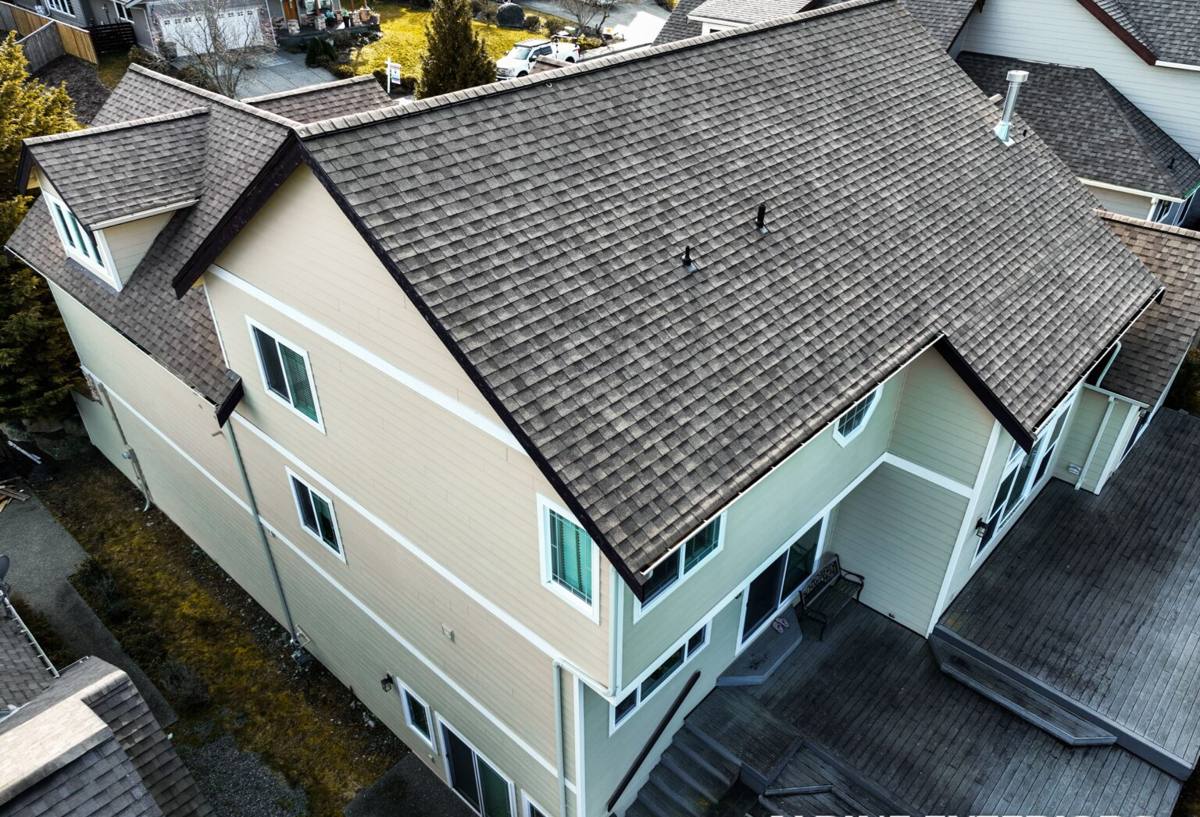
What "Correct" Siding Installation Actually Means Here
Siding is a system, not a single layer. A good-looking install can still let water in if the parts underneath aren't handled right, and in a wet climate like ours, the underneath is where jobs succeed or fail.
The Weather-Resistive Barrier
Everything starts with the water-resistive barrier under the siding. It needs to be continuous, lapped correctly (upper courses over lower, always shedding water downward), and free of tears or staple blowouts. Any penetration — an outlet, a hose bib, a light fixture — needs to be flashed and sealed back into that barrier, not just caulked over the top of the siding and called done.
Flashing and Drainage
Window and door flashing, head flashing above trim, and a drainage plane behind the siding are what actually keep driving rain from tracking back to the sheathing. In a climate that gets sustained, wind-pushed rain rather than just straight-down rain, a drainage gap behind the cladding matters more than it does in milder regions — it gives any moisture that does get past the first layer somewhere to go besides into the wall.
Fastening and Clearances
Fiber cement siding has manufacturer-specified nailing patterns, fastener types, and minimum clearances from grade, roofing, and decks. Skipping these isn't a cosmetic shortcut — it's how you end up with boards that trap moisture at the bottom edge, which is exactly where moss and rot get their start on homes in this area.
Caulking and Sealant Joints
Sealant belongs at specific transition points — not everywhere, and not as a substitute for flashing. Over-caulking a job can actually trap moisture behind the siding instead of letting it drain and dry, which is a common and avoidable mistake on wet-climate installs.
Why We Only Install James Hardie Fiber Cement
We made a deliberate call to install one siding system — James Hardie fiber cement — rather than offer a menu of products. In a climate like Whatcom County's, that decision comes down to how each material actually behaves over time, not just how it performs on a spec sheet.
Hardie's fiber cement is non-combustible, which matters for wildfire-adjacent insurance considerations even here in the wetter part of the state, and it doesn't swell, delaminate, or feed rot the way wood-based products can when they take on moisture repeatedly over a moss-heavy winter. The ColorPlus factory finish is baked on under controlled conditions, which holds up better against the region's mix of rain, damp shade, and UV than field-applied paint tends to. And Hardie engineers specific product lines (their HZ5 line, for instance) for exactly the wet, temperate conditions we have here — it's not a one-size-fits-all product adapted after the fact.
What About Vinyl, LP SmartSide, or Cedar?
Each of those has honest strengths. Vinyl is inexpensive and easy to source. LP SmartSide is a wood-strand product that's lighter and faster to install than fiber cement. Cedar has a real, natural look that some homeowners simply prefer. We're not going to pretend otherwise.
But in a climate that stays wet for most of the year and grows moss on anything that holds shade and moisture, the trade-offs on those products are real: vinyl can warp and doesn't stop moisture from reaching what's behind it; wood-strand products are more sensitive to sustained moisture exposure at cut edges and butt joints; cedar needs ongoing maintenance — refinishing, sealing, moss treatment — to keep performing. We'd rather install one product we can stand behind for the long haul than offer several and hope the maintenance gets done. That's a standard we hold, not a claim that other products don't work anywhere.
Our Installation Process for Laurel Homes
- On-site assessment. We look at your current siding, the condition of the sheathing underneath where accessible, drainage patterns around the foundation, and any moss or moisture staining that points to a bigger issue than the siding itself.
- Removal and inspection. Once old siding comes off, we inspect the sheathing and framing for rot or water damage before anything new goes up. This is the step that gets skipped on rushed jobs, and it's the one that matters most in a wet climate.
- Repair as needed. Any compromised sheathing or framing gets addressed before the new weather barrier goes on — covering over a problem doesn't make it go away, it just hides it behind new siding.
- Weather-resistive barrier and flashing. Installed continuous, lapped correctly, and integrated with window and door flashing per code and manufacturer requirements.
- Hardie installation. Fastened, spaced, and clearanced to James Hardie's specifications — this is what keeps the manufacturer's warranty valid and the siding performing as designed.
- Finish work. Trim, caulking at appropriate joints only, and a final walkthrough so you know exactly what was done and why.
Signs Your Laurel Home May Need New Siding
- Persistent moss or algae growth that returns within a season of cleaning
- Soft spots, bubbling, or visible warping in siding panels
- Paint that's peeling or blistering faster than a normal repaint cycle would explain
- Visible gaps or separation at seams, corners, or around windows and doors
- Water staining on interior walls near exterior corners after heavy rain
- Siding that feels spongy or crumbles when pressed near the bottom courses
- Rising energy bills that don't match any other change in the home
Any one of these on its own isn't necessarily an emergency, but a few of them together usually means the siding is no longer doing its job as a moisture barrier — not just a cosmetic issue.
Cost Factors for Siding Installation
| Factor | Why It Matters in Laurel |
|---|---|
| Home size and wall complexity | More corners, dormers, and cutouts mean more flashing and labor time to do it right |
| Existing siding removal | Multiple layers or damaged sheathing found underneath add time before new siding can go up |
| Sheathing repair | Rot or moisture damage found during tear-off needs to be fixed before installation continues |
| Product profile and trim | Lap width, trim details, and accessory boards affect material cost and install time |
| Access and site conditions | Slopes, tight lot lines, and staging space affect equipment and labor needs |
| Color and finish | Factory ColorPlus finishes cost more upfront than field-painted options but skip a repaint cycle |
We walk through these factors on-site rather than quoting blind, since the same square footage can price very differently depending on what's actually behind the old siding.
Why a Crew That Already Works in Laurel Matters
Siding crews that mostly work drier climates tend to under-build the moisture-management details, because they've never had to watch a job fail from them. A crew that works Whatcom County regularly has seen what happens when flashing is skipped, when clearances are ignored, and when moss gets a foothold at the bottom courses — and builds around avoiding those outcomes by default, not as an afterthought.
Local familiarity also means knowing what the region's building departments expect for permitting and inspection, and having a realistic sense of the weather windows that make for a clean, dry installation. Siding put up between rain systems, with the sheathing protected the whole time, starts its life in better condition than siding rushed up during a wet stretch.
Maintaining Your Hardie Siding in This Climate
Correctly installed fiber cement siding is low-maintenance, not no-maintenance. A yearly rinse to knock down moss and grime before it establishes, a periodic check of caulked joints for cracking, and prompt attention to any impact damage will keep it performing for decades. None of that compares to the upkeep cycle of repainting wood siding or resealing cedar every few years, which is part of why we standardized on Hardie in the first place.
If you're seeing early signs of trouble, weighing a full re-side against patch repairs, or just want an honest read on what your home's current siding is telling you, we're happy to take a look. Reach out for a free, no-pressure estimate — the form below gets you started.