 Sumas Roofing
 Decks in Maple Falls Work Harder Than the Ones in Town
Maple Falls sits up in the wooded, higher-elevation stretch of Whatcom County east of Sumas, and that location changes what a deck goes through year to year. Heavier tree canopy means more shade sitting on the boards for longer stretches of the day, which slows drying time after every rain. Add in the marine-influenced, salt-tinged air that moves through this part of Western Washington, driving rain that comes in sideways more often than most homeowners expect, and a moss season that can stretch from fall through spring, and you've got a recipe for a deck that ages faster than the same structure would in a drier climate. We see it constantly: boards that look fine from a distance but are quietly rotting from the underside, joists holding moisture against the ledger board, and moss turning a walking surface into a slip hazard almost overnight.
None of this means a deck in Maple Falls is doomed — it means it needs to be built and replaced with this specific climate in mind, not built the way a deck would be built somewhere flat, sunny, and dry. That's the whole point of this page: what a deck replacement should actually involve here, not in generic terms.
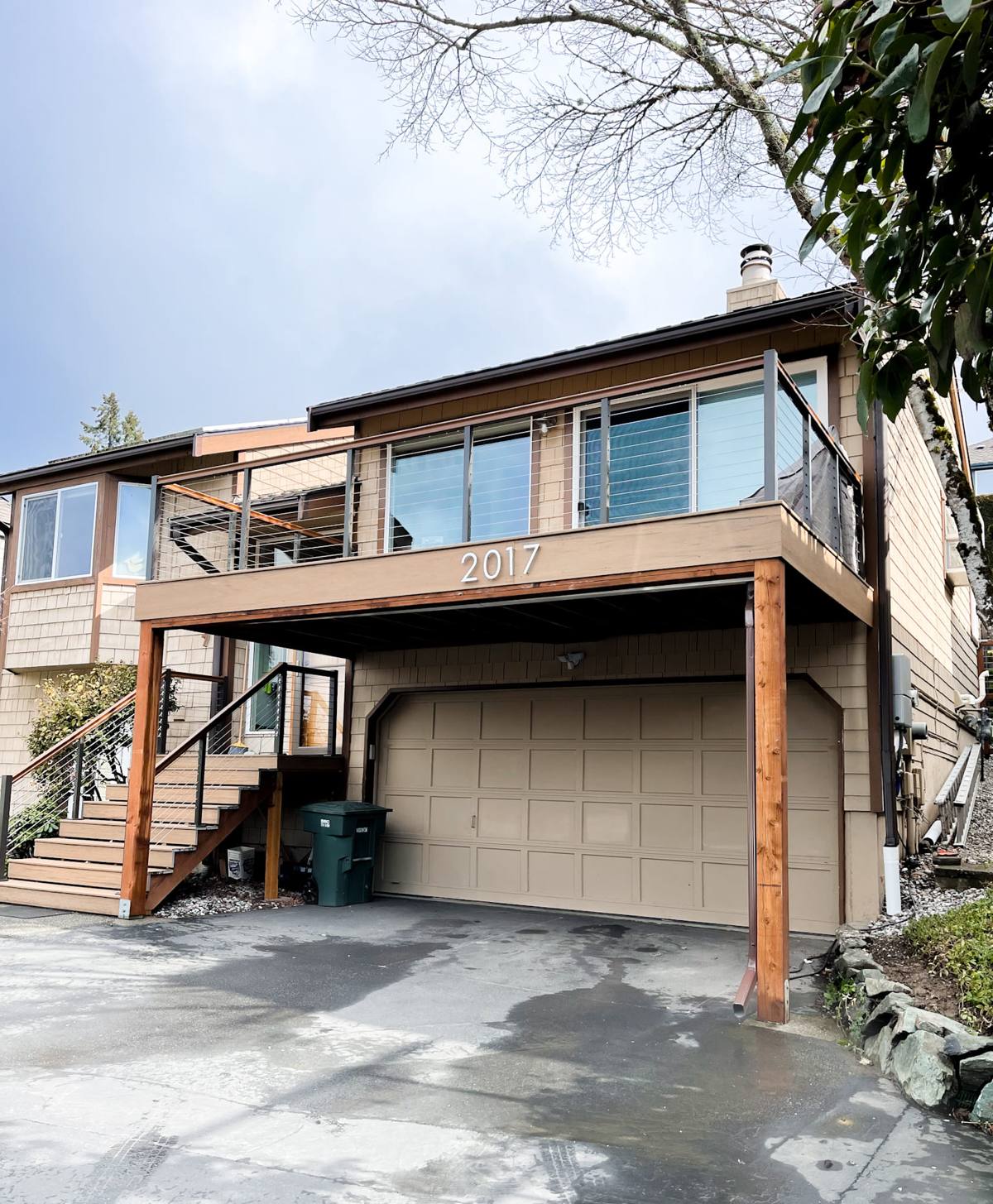
How to Tell a Deck Needs Replacement, Not Another Repair
Every deck reaches a point where patching a board or two stops being a real fix. Here's what usually tips a deck from "repairable" into "replace it" territory in this climate:
- Soft or spongy spots underfoot, especially near the house or in shaded corners — this is almost always rot, not just surface wear
- A screwdriver or awl sinking easily into the ledger board, rim joist, or posts
- Persistent moss or algae staining that comes back within weeks of cleaning, no matter the season
- Visible gaps opening between deck boards and the ledger, or boards cupping and separating from fasteners
- Rust streaks running from fastener heads, which usually means the fasteners are failing faster than the wood around them
- A structure that predates current attachment and flashing standards — many older decks were never properly flashed where they meet the house at all
If you're seeing one or two of these, a repair might still buy time. If you're seeing several, or if the framing underneath is soft, replacement is almost always the more honest recommendation — patching a failing structure just delays a bigger problem and adds cost on top of cost.
What a Correct Deck Replacement Actually Involves
It starts underneath, not with the decking
The part of a deck that fails first in a wet, shaded climate is rarely the decking boards — it's what's underneath them. A proper replacement means pulling the old structure down to the ledger and footings and evaluating each component on its own: is the ledger board properly flashed and separated from the house sheathing with a water-resistant barrier, are the footings sized and set to current frost and load requirements, are the posts and beams sized for the actual span, and is the joist spacing appropriate for the decking material going back on top. Skipping this step and just swapping old boards for new ones on a compromised frame is the single most common shortcut we see, and it's the reason so many "recently redone" decks in this area are already showing problems again within a few years.
Flashing and drainage matter more here than almost anywhere else
Because Whatcom County sees so much sustained rainfall, the flashing detail where the deck ledger meets the house is one of the most important parts of the whole job. Water that gets behind the ledger and into the rim joist or wall framing doesn't just rot the deck — it can work its way into the house itself. Correct flashing, proper fastener spacing, and joist tape on the tops of the framing lumber all reduce how much moisture the wood absorbs in the first place, which matters far more in a climate that rarely gives lumber a long stretch to fully dry out.
Choosing Decking Material for a Wet, Shaded Property
Material choice matters more in Maple Falls than it does in a drier part of the state, because whatever you install is going to spend a lot of its life damp. Here's how the common options actually compare for this climate:
| Material | Moisture Behavior Here | Moss/Algae Resistance | Maintenance Burden |
|---|---|---|---|
| Pressure-treated wood | Absorbs moisture readily; needs to fully dry between rain events, which happens less often under tree cover | Low — moss takes hold quickly on shaded, damp wood | Annual cleaning, periodic sealing/staining |
| Cedar | Naturally more rot-resistant than treated pine, but still absorbs water and needs finish maintenance | Moderate — natural oils slow but don't stop growth | Regular sealing to preserve color and resistance |
| Capped composite | Doesn't absorb water into the core; surface sheds moisture well | Higher — smoother, sealed surface holds less moisture for moss to grip | Occasional washing; no staining or sealing |
| PVC/cellular decking | Fully moisture-resistant core; performs well in constantly damp conditions | Highest of the common options | Lowest — wash as needed, no finish required |
Wood isn't a wrong choice — plenty of homeowners want the look and are willing to keep up with sealing on a set schedule. But for a shaded, damp lot, we're honest with clients that composite or PVC decking will spend a lot less time growing moss and a lot less of your time and money on upkeep. The trade-off is upfront cost, which we walk through plainly rather than pushing one direction.
Our Deck Replacement Process
- On-site evaluation. We look at the existing structure, the framing underneath, drainage around the footings, and how much sun versus shade the deck actually gets through the season.
- Honest scope and material discussion. We tell you plainly whether repair is realistic or replacement is the better long-term move, and walk through material trade-offs for your specific site conditions.
- Removal. Full teardown of decking, framing, and any compromised ledger or posts — not a partial demo that leaves questionable framing in place.
- Structural rebuild. New or reinforced footings, posts, beams, and joists sized correctly for the span and load, with proper ledger flashing and a water-resistant barrier at the house connection.
- Decking installation. Boards installed with correct spacing for drainage and material expansion, using fasteners matched to the decking type.
- Railing and stairs. Rebuilt or replaced to match current code requirements for height and baluster spacing, which older decks in this area often don't meet.
- Final walkthrough. We go over the finished structure with you, including what maintenance (if any) the material you chose will need going forward.
Permits and Local Building Considerations
Deck replacements in Whatcom County generally require a permit once you're rebuilding the structure rather than just replacing surface boards on an otherwise sound frame — the threshold depends on the scope of work and the deck's height and attachment to the house. Higher-elevation properties like those around Maple Falls can also see heavier snow loads in a cold winter than lower-lying parts of the county, which affects post spacing and beam sizing on a proper rebuild. We handle the permit process as part of the job rather than leaving it for the homeowner to sort out, and we build to the load and attachment requirements that apply to the property, not to a generic minimum.
Keeping a New Deck Ahead of Moss Season
Even a well-built deck needs some seasonal attention in this climate, and the amount depends heavily on the material you chose. A simple maintenance rhythm goes a long way toward protecting the investment:
- Sweep debris (needles, leaves, seed pods) off the deck regularly — trapped organic matter holds moisture and feeds moss growth
- Rinse or wash the surface before moss gets a foothold each fall, rather than waiting until it's established
- Check that gaps between boards haven't filled with debris, which blocks the drainage the spacing was designed for
- Inspect the ledger flashing and the area where the deck meets the house once a year for any staining or softness
- For wood decking, keep to a sealing/staining schedule rather than letting it lapse — this is the single biggest factor in how long wood lasts here
- Clear snow promptly in a heavy winter rather than letting it sit and slowly saturate the surface as it melts and refreezes
What Deck Replacement Costs Depend On
We don't publish fixed prices because the honest cost of a deck replacement depends on the specifics of the property, but the main factors are consistent from job to job:
| Factor | Why It Moves the Price |
|---|---|
| Size and shape | Square footage and the number of angles, levels, or stairs all add labor and material |
| Framing condition | A deck needing new footings and posts costs more than one where the frame is sound and only decking needs replacing |
| Decking material | Treated wood costs less upfront than composite or PVC, but the lifetime cost comparison changes once maintenance is factored in |
| Railing and stairs | Rebuilding to current code, or upgrading railing style, adds to both material and labor |
| Site access | Decks on slopes, near trees, or with limited equipment access can add time to removal and rebuild |
| Permit and engineering needs | Larger or elevated structures may need engineered plans, especially where snow load applies |
The only way to get real numbers is a site visit — anything quoted without seeing the existing structure and the property is a guess.
Why It Matters to Hire a Crew That Already Works Maple Falls
A deck replacement is only as good as the details most homeowners never see: how the ledger is flashed, whether the footings are set for this elevation's frost and load conditions, and whether the fastener and material choices actually account for how much time this property spends damp and shaded. A crew that's worked around Sumas and out into Maple Falls regularly has already seen how decks fail here specifically — where moss takes hold first, which framing details hold up and which don't, and what maintenance schedule is realistic for a shaded lot versus a sunny one. That's not something you get from a crew that mostly builds decks in a different climate and treats every job the same way. We price and build every deck for the conditions it's actually going to sit in, not a national average.
If your deck is showing soft spots, chronic moss, or just feels like it's on borrowed time, we're happy to come take a look and give you a straight answer — repair, replace, or somewhere in between. Reach out below for a free, no-pressure estimate.