 Sumas Roofing
 Metal Roofing in Everson: Built for What This Climate Actually Does
Everson sits in the low, flat farmland of Whatcom County, close enough to Sumas that the same weather systems hit both towns on the same afternoon. That means the same problems show up on roofs here that we see across the rest of the county: long stretches of soaking rain, wind that drives water sideways instead of straight down, and a moss season that can run most of the year in shaded, north-facing sections of a roof. Add in the salt-tinged air that rolls in off the coast during storm systems, and you have a climate that is genuinely hard on roofing materials — not in a dramatic way, but in a slow, cumulative way that shows up as granule loss, soft decking, and rust five or ten years earlier than it should.
Metal roofing, installed correctly, handles this combination better than most other options. This page is specifically about what that looks like for a home in Everson — not a generic rundown of metal roofing everywhere, but what the local weather demands, what a correct installation actually involves, and why it matters that the crew doing the work already knows this ground.
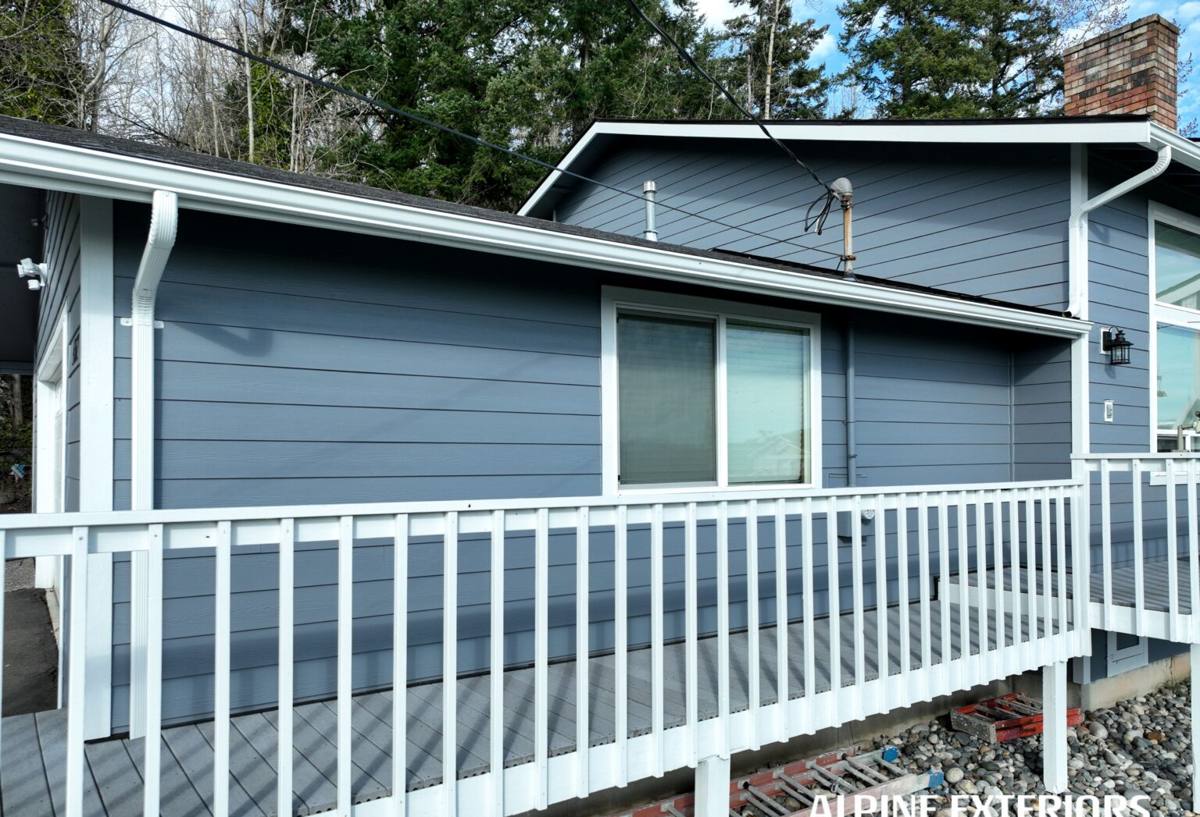
What Whatcom County Weather Does to a Roof Over Time
A Long, Wet Moss Season
Moss doesn't need much to get established — shade, moisture, and time are enough, and Everson has all three for most of the year. On asphalt shingles, moss roots into the granule surface and lifts shingle edges as it grows, letting water underneath. On wood, it holds moisture directly against the material. Metal gives moss almost nothing to grab onto, which is one of the biggest practical advantages of switching, especially on roof sections that stay shaded by trees or a neighboring structure for most of the day.
Driving, Wind-Pushed Rain
Straight-down rain is easy for almost any roof to shed. The rain that causes problems here comes in at an angle, driven by wind off open farmland, and it finds its way under poorly lapped shingles, through worn pipe boots, and along ridge and valley lines that weren't flashed with enough overlap. A metal roof isn't automatically immune to this — a poorly installed one leaks just as badly as a poorly installed shingle roof — but a correctly detailed metal system with proper panel overlap, sealed seams, and well-lapped flashing sheds wind-driven rain far more reliably over the long run.
Salt-Influenced Air
During certain storm patterns, coastal air moves inland across Whatcom County, carrying a light salt content that accelerates corrosion on unprotected metal — fasteners, flashing, and any exposed cut edges. This is a real factor in material selection, not a minor detail: it's why fastener type, coating class, and how cut edges are treated matter more here than they would in a dry inland climate.
Why Metal Roofing Fits This Climate
Put those three factors together — moss pressure, wind-driven rain, and salt-influenced corrosion — and metal roofing addresses all three at once when it's specified and installed correctly:
- Smooth, hard panel surfaces give moss and algae almost nothing to root into, cutting down on the soft, spongy growth that traps moisture against a roof deck.
- A steep water-shedding profile and continuous panel runs move water off the roof faster than a shingle roof's layered, gapped surface.
- Modern coated steel and aluminum systems are engineered specifically for coastal-influenced climates, with coating packages and fastener specs built for corrosion resistance.
- A well-installed metal roof routinely outlasts two full asphalt shingle roof cycles, which matters when you're weighing upfront cost against how often you'll be back on the roof.
None of that means metal is the right fit for every budget or every roof — it's a bigger upfront investment than asphalt, and it has to be installed by someone who understands the material. But for the specific weather Everson deals with, it's a genuinely strong match.
Panel Types We Discuss With Everson Homeowners
"Metal roofing" isn't one product — it's a category, and the differences matter for a house dealing with this much rain and moss pressure. Here's how the common options compare:
| Panel Type | Seam Style | Best For | Maintenance Load |
|---|---|---|---|
| Standing seam | Concealed fasteners, raised interlocking seam | Homes wanting the longest service life and cleanest water-shedding | Lowest — no exposed fasteners to fail over time |
| Exposed-fastener panel | Screwed through the panel face | Budget-conscious projects, outbuildings, some roof pitches | Moderate — fastener washers need periodic checking and eventual replacement |
| Metal shingle/shake profile | Interlocking stamped panels | Homeowners who want a traditional look with metal's durability | Low to moderate, depending on manufacturer's fastening system |
Standing seam is what we recommend most often for full roof replacements in this area, specifically because there are no exposed fastener heads for wind-driven rain to work against over the years. Exposed-fastener panel systems are a legitimate, cost-effective option too — the trade-off is that the washers on those fasteners have a service life of their own and need to be part of a maintenance conversation, not forgotten about.
What a Correct Metal Roof Installation Actually Involves
Tear-Off and Deck Inspection
A metal roof is only as good as what's underneath it. Before any panel goes down, the old roofing comes off and the deck gets inspected for soft spots, delamination, or water staining — problems that are common on older Everson homes where a slow leak went unnoticed for a season or two. Any compromised sheathing gets replaced before we move forward; installing new panels over a weak deck just hides a problem instead of fixing it.
Underlayment Choice
Metal panels are not the only waterproofing layer — the underlayment underneath them does a lot of the real work, especially at seams, fasteners, and any place where a panel is punctured. In this climate we favor synthetic or high-temp ice-and-water-shield-style underlayment in vulnerable areas like valleys and eaves, since it holds up better to the sustained moisture exposure than older felt products.
Flashing and Fastening
Flashing is where most roof leaks actually originate, metal or otherwise. Valleys, chimneys, skylights, and wall-to-roof transitions all need flashing that's lapped in the correct direction and sealed with compatible materials — mixing incompatible metals at a flashing joint can set up galvanic corrosion, which is a real risk in a salt-influenced climate. Fastener spacing and torque matter too: overdriven screws crush the washer seal and underdriven ones leave a gap, and both cause leaks that don't show up until months later.
Ventilation
A sealed, well-insulated attic without adequate ventilation traps moisture underneath the roof deck, which can cause condensation problems on the underside of metal panels regardless of how well the outside was installed. We check and correct ridge and soffit ventilation as part of the job, not as an afterthought.
Our Process, Start to Finish
- On-site inspection — we walk the roof and attic, check the deck condition, and look at how water currently moves off the house.
- Written estimate — a clear breakdown of panel type, underlayment, flashing scope, and total cost, with no vague allowances.
- Material selection — we walk through panel profile, color, and coating options based on your budget and how the roof is exposed to sun, shade, and wind.
- Tear-off and deck prep — old roofing removed, deck inspected and repaired as needed.
- Installation — underlayment, flashing, and panels installed to manufacturer specification and local code.
- Final walk-through — we review the completed roof with you, including any maintenance points specific to your property.
Cost Factors for a Metal Roof in Everson
Metal roofing costs more upfront than asphalt shingles, and the final number depends on several variables that are worth understanding before you get quotes:
| Factor | Why It Moves the Price |
|---|---|
| Panel type | Standing seam runs higher than exposed-fastener panel due to labor and material differences |
| Roof complexity | Valleys, dormers, and multiple roof planes add flashing labor and material waste |
| Deck condition | Rotted or soft sheathing found during tear-off adds repair cost not visible in an initial quote |
| Coating/gauge | Heavier gauge steel and higher-grade coatings cost more but last longer in this climate |
| Roof access | Steep pitch, height, or limited equipment access affects labor time and safety requirements |
We give honest, itemized numbers rather than a single lump sum, so you can see exactly what you're paying for and where there's room to adjust the scope if needed.
Maintenance Checklist for Metal Roofs in This Climate
A metal roof is lower-maintenance than shingles or wood, but "lower" isn't "none." In Everson's climate, a short annual check catches small issues before they become expensive ones:
- Clear debris and organic buildup from valleys and behind chimneys, where moss and moisture concentrate even on a metal roof.
- Check exposed fasteners (if your system has them) for loose screws or worn rubber washers.
- Inspect flashing around penetrations — vents, skylights, chimneys — for sealant that's cracked or pulled away.
- Look for any scratches or scuffs in the coating where cut edges or foot traffic may have exposed bare metal, and have them touched up before rust starts.
- Confirm gutters and downspouts are clear so water leaving the roof actually gets away from the foundation.
Why a Crew That Already Works in Everson Matters
A lot of what makes a metal roof perform well here isn't in the product spec sheet — it's in the details a crew learns from doing this work repeatedly in this specific area. Knowing which roof orientations in this part of Whatcom County hold moss longest, which flashing details actually stand up to the driving rain these storms bring, and which fastener and coating combinations are worth the extra cost in a salt-influenced climate — that's knowledge built from doing the work locally, not from a manufacturer's brochure. It also means faster response if a storm causes damage and you need someone who already knows the area to get out and take a look, rather than waiting on a crew traveling in from outside the county.
If you're weighing a metal roof for a home in Everson, we're happy to walk your roof, answer questions honestly — including whether metal is even the right call for your specific situation — and put together a clear, no-pressure estimate. There's a form below to get that started.