 Sumas Roofing
 Building New in Kendall Means Getting the Windows Right the First Time
When you're building new rather than replacing old windows, you get one real shot at doing the water management right. There's no siding to tear back later, no trim to pry off and re-flash — the window goes in as part of the wall assembly, and whatever gets buried behind the siding stays buried until something fails. In Kendall, tucked up against the foothills north of Sumas in Whatcom County, that first-shot installation matters more than in drier parts of the state. The rain here isn't gentle, the damp season runs long, and a window that's flashed correctly on day one will outlast one that was rushed to keep a framing schedule.
This page is about new-construction windows specifically — the kind that get nailed into open framing before siding goes on, not the insert-style replacements used on existing homes. If you're building a new house, a shop with living space, or an addition in the Kendall area, here's what actually matters.
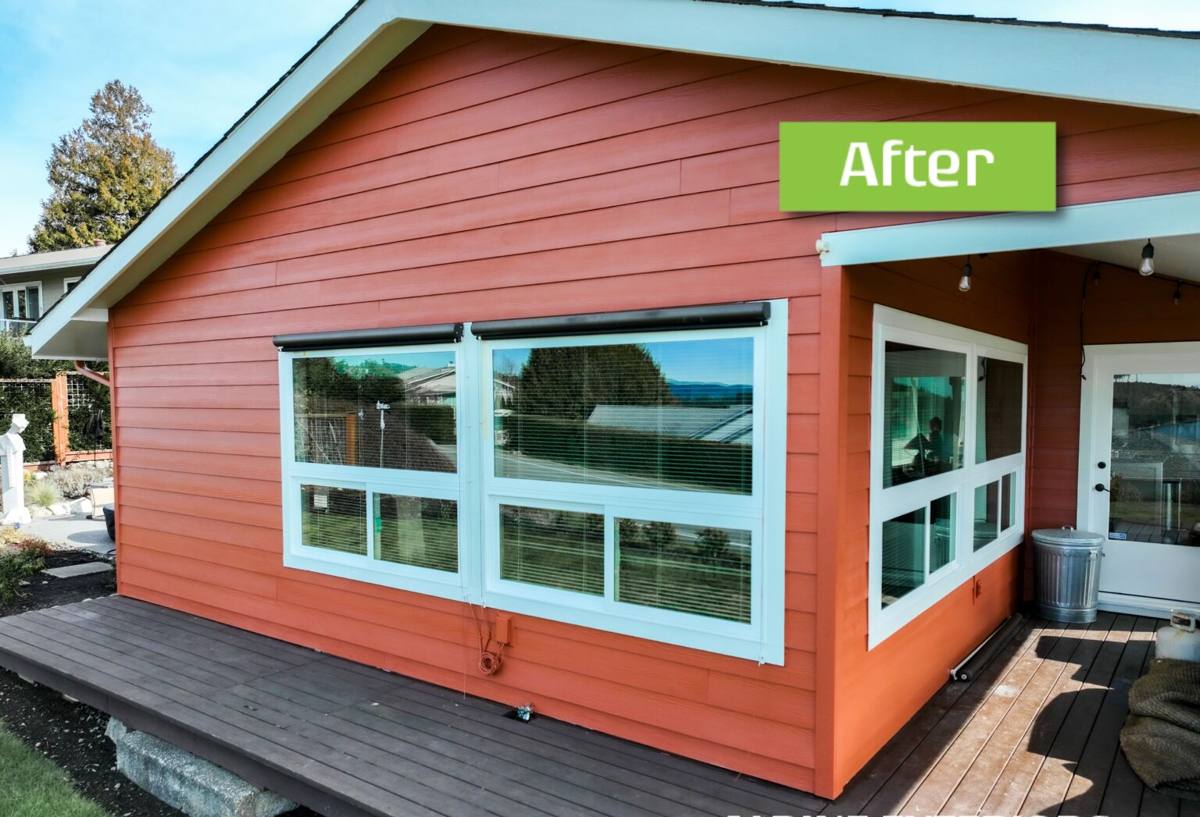
What Kendall's Climate Asks of a New Window Install
Driving Rain and Wind-Driven Moisture
Whatcom County gets a lot of rain, and a fair share of it doesn't fall straight down — wind pushes it sideways into wall assemblies, especially on exposed elevations. A window that's only "sort of" flashed will let water track behind the nailing fin and into the wall cavity long before you ever see a stain on the drywall. New construction gives us the chance to build the water path correctly from the sheathing out, which is the only way to truly stop wind-driven rain rather than just slow it down.
Moss, Mildew, and Long Damp Stretches
The moss season in this part of Whatcom County runs long — shaded, north-facing walls and anything under tree cover stay damp for months at a stretch. That doesn't just affect roofs; it affects sills, trim, and any wood detailing around a window opening. Materials and details that shed water quickly and dry out between storms hold up. Materials that trap moisture against wood framing don't, no matter how good they look going in.
Temperature Swings and Marine-Influenced Air
Kendall sits close enough to the Cascade foothills to see real temperature swings between summer afternoons and winter mornings, while still getting the damp, marine-influenced weather that moves through Whatcom County off the Sound. That combination — humidity plus temperature change — is exactly what causes condensation issues on poorly-sealed frames and glass with a weak Low-E package. New construction lets us size the glass and frame to the actual exposure of each wall instead of using one spec for the whole house.
New-Construction Windows vs. Replacement Windows: Why the Distinction Matters
Homeowners sometimes assume a window is a window, but new-construction and replacement units are built and installed differently, and mixing them up on a new build creates problems later.
| Factor | New-Construction Window | Replacement (Insert) Window |
|---|---|---|
| Installation method | Nailing fin fastens to open sheathing before siding | Fits inside the existing frame, no fin |
| Flashing access | Full access to housewrap, sill pan, and flashing layers | Limited — relies on the old frame's condition |
| Best use | New builds, additions, full wall reframes | Existing homes where framing stays intact |
| Water management | Built into the wall assembly from scratch | Depends heavily on what's already there |
| Long-term risk if installed wrong | Hidden leaks behind new siding, costly to trace | Leaks usually show at the existing frame first |
Using a replacement-style window on new framing (or vice versa) usually means someone is cutting corners on materials or trying to save labor time. On a new build, the nailing-fin, flanged window flashed into the wall assembly is the correct approach almost every time.
Where New-Construction Window Installs Actually Go Wrong
Most window failures on new homes aren't the window's fault — they're an installation sequence problem. The order of operations around the rough opening is what determines whether water sheds away from the house or finds its way behind the wall.
- Sill pan first. A sloped, sealed sill pan under the window opening gives any water that does get past the glass a way out, instead of sitting on bare sheathing.
- Housewrap integrated in the right order. Flashing tape and housewrap need to shingle correctly — upper layers overlapping lower ones — so water moving down the wall is directed out, not in.
- Head flashing that actually diverts water. Especially over windows on rain-exposed elevations, the top flashing detail is doing more work than people realize.
- Proper fastening without over-compressing the fin. Too few fasteners and wind pressure can work the fin loose; too aggressive a nailing pattern can distort the frame and cause the sash to bind.
- Sealant used where it belongs — and left out where it doesn't. Sealing the wrong layer (like caulking the bottom of the nailing fin, which should stay open to let trapped moisture drain) is a classic mistake that traps water instead of releasing it.
None of this shows up in a walkthrough. It shows up two or five years later as a stain, a soft spot in trim, or a musty smell near an exterior wall — right when it's hardest and most expensive to fix.
Frame Materials for Whatcom County New Builds
There's no single "best" window material for every situation, but some hold up better than others against long damp seasons and coastal-influenced humidity.
| Frame Type | Moisture Behavior | Maintenance | Notes for This Climate |
|---|---|---|---|
| Vinyl | Doesn't absorb moisture or rot; won't corrode | Low — occasional cleaning | Reliable, cost-effective choice for most new builds here |
| Fiberglass | Very stable, minimal expansion/contraction | Low | Holds up well through the temperature swings this area sees seasonally |
| Wood-clad | Good if the cladding stays intact; interior wood needs protection | Higher — finish and seal maintenance | Can work, but any gap in the cladding lets moisture reach bare wood in a long-rain climate |
| Aluminum | Conducts cold, can condensate without thermal breaks | Moderate | Generally not our first recommendation for residential in this climate |
We'll talk through trade-offs based on your home's design and budget rather than pushing one material — the honest answer is usually vinyl or fiberglass for most new residential builds in this area, with wood-clad reserved for homeowners who want that look and are prepared to maintain it.
How We Handle New-Construction Window Installs
- Coordinate with your builder or GC on timing. Windows go in after sheathing and housewrap, before siding — we work off the framing schedule, not the other way around.
- Verify rough openings before the windows arrive. Openings that are out of square or undersized get caught before install day, not after.
- Install sill pans and flashing in the correct sequence for each elevation's exposure, with extra attention on walls that take direct wind-driven rain.
- Set and fasten the window level, plumb, and square — this affects both weather-tightness and how smoothly the sash operates for years.
- Flash the head and integrate with housewrap so the wall assembly sheds water as a system, not window-by-window.
- Document the install so if siding or trim work is done by a separate crew, they know exactly what's already sealed and what still needs attention.
Energy Performance and Code Considerations
Washington's energy code sets minimum performance requirements for new-construction glazing, and those minimums matter more on north- and west-facing walls that take the brunt of Kendall's weather. U-factor (how well the window resists heat loss) and the glass package's solar heat gain characteristics both play into code compliance and into how comfortable specific rooms feel year-round. We size glass packages to match wall orientation and exposure rather than defaulting to the same spec on every opening — a shaded north wall and a west wall that gets afternoon sun don't need identical glass.
Why Hiring a Crew That Already Works Kendall Matters
A lot of window problems in new construction come down to installers treating every job the same regardless of exposure, elevation, or local weather patterns. A crew that regularly works in and around Sumas and Kendall already knows which walls on a typical lot take the worst of the driving rain, how long the moss season really runs, and where builders in this area tend to run into inspection questions. That familiarity means fewer surprises — we're not guessing at flashing details or learning the local weather the hard way on your house. We also know how to work alongside general contractors and framing crews without slowing down a build schedule, which matters when windows sit on the critical path to getting siding started.
What to Ask Before You Sign a New-Construction Window Contract
- Does the quote specify nailing-fin, new-construction windows — not replacement inserts?
- Is sill pan flashing included as a standard part of the install, or is it an add-on?
- Who coordinates timing with the general contractor or framer — you, or the window crew?
- What frame material and glass package is being quoted, and why for your specific walls?
- Is there a written warranty covering both the window unit and the installation/flashing work?
- Will the same crew that installs the windows be on-site, or is labor subcontracted out?
If you're building in Kendall or anywhere around Sumas and want windows installed the right way the first time, we're happy to walk the plans with you and put together a straightforward, no-pressure estimate — just fill out the form below.