 Sumas Roofing
 Siding That Has to Work Year-Round in Nooksack
Nooksack sits in the part of Whatcom County where the weather doesn't do things halfway. Winters bring long stretches of saturated air and driving rain off the Fraser Valley, summers are short, and the shoulder seasons in between are damp enough that moss and algae get a real head start on anything organic. Homes here don't fail because of one bad storm — they fail from years of siding that stayed wet longer than it should have, or that was never built to handle moisture in the first place. That's the whole conversation when it comes to choosing a siding product for this area: not "does it look good on day one," but "what does it look like in year twelve."
We install James Hardie fiber cement siding exclusively. Not because it's the only product on the market, but because after years of working on homes in and around Sumas and Whatcom County, it's the one system we're willing to stand behind through this climate. This page covers what Hardie siding specifically brings to a Nooksack home, what a correct installation actually involves, and how we run the job from estimate to finish.
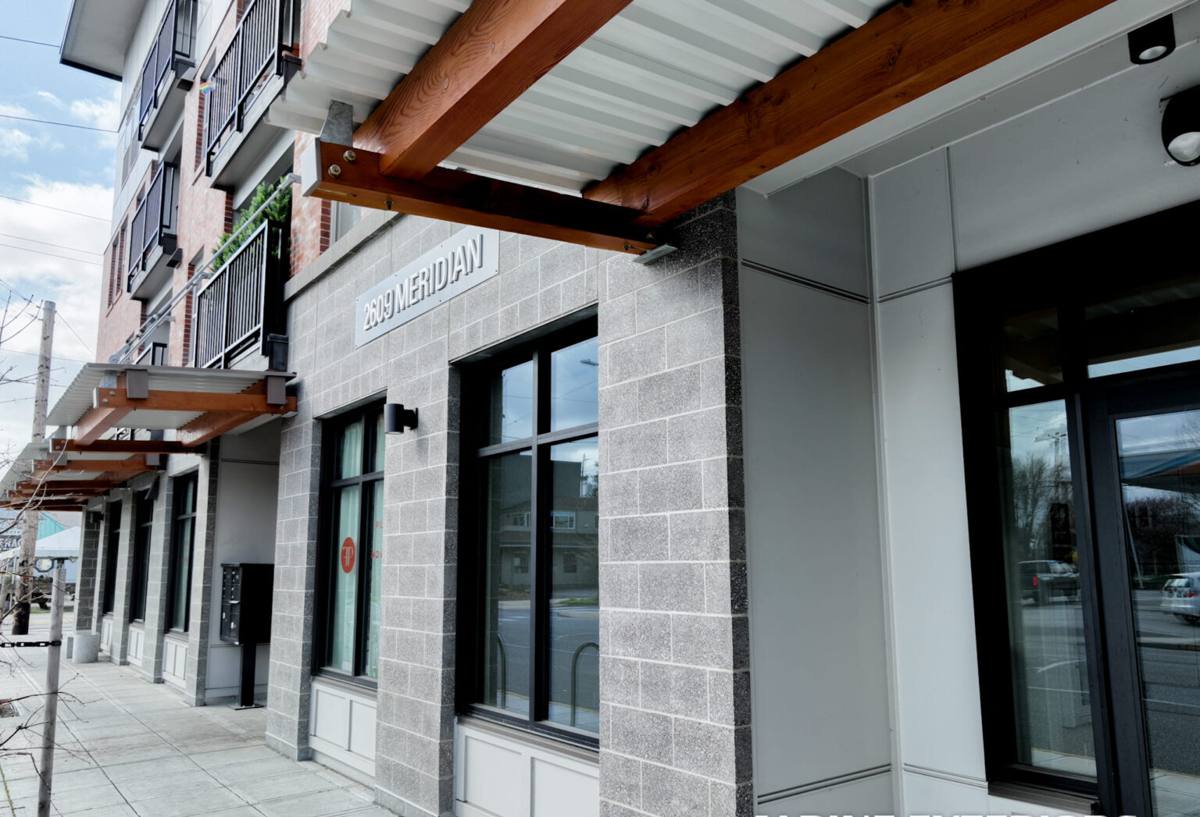
What Nooksack's Climate Actually Does to Siding
A few things are working against exterior siding in this area at the same time:
- Driving rain and wind-driven moisture: Storms coming through the Fraser Valley corridor push rain sideways into wall assemblies, not just straight down. Siding with weak seams, poor flashing details, or a substrate that swells when wet will eventually let water behind it.
- Extended damp periods: It's not the occasional downpour that causes the most damage — it's the weeks at a time where humidity stays high and surfaces never fully dry out. Wood-based products absorb and hold moisture during those stretches.
- Moss and algae growth: Whatcom County's long wet season gives moss, lichen, and algae plenty of time to establish on north-facing walls, under eaves, and anywhere airflow is limited. Porous or textured surfaces give it something to grip.
- Salt and regional marine air influence: The broader Puget Sound and Salish Sea air mass that moves through this part of Washington carries moisture and mineral content that accelerates corrosion on fasteners and wear on unprotected finishes over time.
- Temperature swings between seasons: Materials that expand and contract with moisture and temperature put ongoing stress on paint film, caulk joints, and panel seams.
None of this is unusual for western Washington — it's just cumulative. A siding product that's marginal in a drier climate becomes a real maintenance problem here, and a product that's genuinely built for wet climates earns its keep fast.
Why We Install James Hardie and Nothing Else
James Hardie fiber cement is cement, sand, and cellulose fiber — not wood, not vinyl, not a wood composite. That distinction matters directly for a house in Nooksack:
- It doesn't rot. There's no organic wood fiber for moisture to break down over time, which removes the single biggest long-term failure mode we see on older wood and composite siding in this area.
- It holds its shape when wet. Fiber cement doesn't swell, cup, or warp the way engineered wood products can when they take on repeated moisture from driving rain.
- It's non-combustible. Not a climate factor specific to Nooksack, but a real advantage over wood-based sidings regardless.
- The ColorPlus factory finish resists the moss-and-algae cycle better. A baked-on factory finish is more uniform and less porous than field-applied paint, which gives organic growth less to hold onto and makes maintenance washing more effective when it's needed.
- It's engineered for this specific region. Hardie's HZ5 product line is formulated for climates with freeze-thaw cycling and heavy moisture exposure — which describes Whatcom County's winters well.
We used to get asked why we don't offer LP SmartSide, vinyl, or cedar as lower-cost alternatives. The honest answer is that we've seen how each of those performs on homes in this specific climate over a decade or more, and we'd rather turn down a job than install something we don't believe will hold up here. Vinyl can warp and fade under UV and temperature cycling and doesn't stop moisture behind it. Wood-based composites are more moisture-resistant than raw wood but still rely on an organic core and field-sealed edges. Cedar is genuinely beautiful but needs consistent refinishing to survive a wet climate — skip a maintenance cycle here and it shows fast. Hardie removes the organic-material risk entirely, which is the trade-off that matters most in Nooksack.
A Straightforward Comparison
| Factor | James Hardie Fiber Cement | Wood/Composite Siding | Vinyl Siding |
|---|---|---|---|
| Moisture response | Dimensionally stable, does not swell or rot | Can swell, delaminate, or rot at exposed edges | Doesn't absorb water, but seams and gaps let it behind the panel |
| Finish life in this climate | Factory ColorPlus finish, resists moss/algae buildup | Field-applied paint needs recoating on a maintenance cycle | Color is baked in but fades with UV over years; can't be repainted easily |
| Fire performance | Non-combustible | Combustible | Combustible, can deform under heat |
| Cold/wind resistance | Engineered HZ5 line for freeze-thaw regions | Varies by product, edge sealing critical | Can crack or blow off in high wind if under-fastened |
| Typical warranty structure | Long-term limited transferable warranty | Varies, often shorter and more conditional | Varies widely by manufacturer and grade |
What a Correct Hardie Install Looks Like
Fiber cement siding's real-world performance depends almost entirely on installation quality. A product this good can still fail early if it's hung wrong. On every job in Nooksack, that means:
Water Management Comes First
Before a single piece of siding goes up, the wall needs a properly lapped weather-resistive barrier, correctly integrated window and door flashing, and drainage capability behind the cladding. Given how much wind-driven rain this area sees, a wall that can't shed incidental moisture from behind the siding will have problems no matter what's on the outside.
Clearances and Gaps Matter
Hardie specifies clearances from grade, roof lines, decks, and other siding terminations for a reason — those gaps let water drain and air circulate instead of wicking up into the panel edge. Skipping them is one of the most common shortcuts we see on poorly done installs, and it's exactly the kind of detail that causes problems during Nooksack's long damp stretches rather than in a single storm.
Fastening to Spec
Correct fastener type, spacing, and depth keep panels secure through wind events and prevent the kind of movement that eventually cracks caulk joints and opens gaps for water intrusion.
Joint and Seam Treatment
Butt joints, corners, and penetrations (vents, light fixtures, hose bibs) need to be sealed and detailed correctly. These are the spots where most siding leaks actually start, regardless of the product.
Painting and Touch-Up
Field-cut edges on ColorPlus siding need factory-matched touch-up product applied correctly to maintain the finish's protection at cut points — an easy step to rush, and one that affects how well the finish resists moss and staining over time.
Our Process on a Nooksack Job
- On-site assessment: We look at the existing siding, wall assembly condition, trim, flashing details, and any moisture damage before quoting anything.
- Written estimate: Scope, product line, color, and price laid out clearly — no vague allowances.
- Tear-off and inspection: Once old siding comes off, we check the sheathing and framing underneath for hidden rot or moisture damage before closing anything back up.
- Weather barrier and flashing correction: Any deficient water management details get fixed as part of the job, not left in place under new siding.
- Hardie installation to manufacturer spec: Proper clearances, fastening, and joint treatment throughout.
- Final detailing and walkthrough: Trim, caulking, touch-up, and a walkthrough so you know exactly what was done.
Why Local Experience in This Specific Area Matters
Nooksack and Sumas share the same wind patterns, rainfall, and moss pressure, but every lot is a little different — tree cover, sun exposure, proximity to open fields, elevation change. A crew that's worked houses throughout this part of Whatcom County has already seen how those small differences change where moisture collects and where a house tends to hold onto dampness longer than its neighbors. That's the kind of judgment that doesn't show up in a spec sheet — it shows up in where extra flashing gets added, where clearances get double-checked, and where a wall assembly gets a harder look before new siding goes over it.
It also means fewer surprises on your job. We're not learning this climate on your house.
Signs Your Siding Is Already Behind
- Visible warping, cupping, or soft spots when pressed
- Paint that's peeling or bubbling rather than just fading
- Persistent moss or dark staining that returns quickly after cleaning
- Gaps opening up at seams, corners, or trim
- Interior signs near exterior walls — musty smell, discoloration, or soft drywall
- Siding that's original to a home built more than 20-25 years ago with no major exterior work since
Any one of these on its own isn't necessarily an emergency, but they're worth having looked at before the next wet season rather than after.
What This Typically Involves Cost-Wise
Every home is different, and we won't throw out a number without seeing the house, but a few honest factors that move the price:
| Factor | Why It Matters |
|---|---|
| Tear-off complexity | Multiple layers of old siding or extensive trim work adds labor |
| Substrate repair | Rot or moisture damage found underneath adds scope, but it's cheaper to fix now than to cover it up |
| Siding profile and texture | Lap width, shingle-style panels, and board-and-batten all price differently |
| Color and finish | Factory ColorPlus finish vs. primed-for-paint changes both cost and long-term maintenance |
| Home size and complexity | Roofline, dormers, and wall articulation affect labor time more than square footage alone |
A home with straightforward walls and sound sheathing underneath is a very different job than one with hidden moisture damage from years of underperforming siding — which is exactly why the tear-off inspection step matters.
Ready for an Estimate?
If your Nooksack home's siding is showing its age, or you're planning ahead for a project next season, we're glad to come take a look and give you a straight, no-pressure estimate. Fill out the form below and we'll get in touch.