 Sumas Roofing
 Why Nooksack Roofs Wear Differently Than You'd Expect
The Nooksack area sits in a stretch of Whatcom County where the weather doesn't do anything extreme — no hurricanes, no hailstorms most years — but it also never really stops. Damp marine air moves through for months at a time, rain falls in long low-intensity spells rather than short downpours, and shaded, tree-lined lots stay wet longer than open ground. That combination is quietly harder on a roof than a single big storm. It's the slow stuff — moss establishing itself in shaded valleys, granule loss from repeated wet-dry cycling, fasteners working loose under seasonal wood movement — that tends to catch homeowners off guard, because none of it looks urgent until a stain shows up on a ceiling.
We work on roofs throughout this stretch of Whatcom County regularly, and the repair calls we get in and around Nooksack follow a pretty consistent pattern tied to that climate. Understanding the pattern is most of what makes a repair actually hold instead of needing a repeat visit next season.
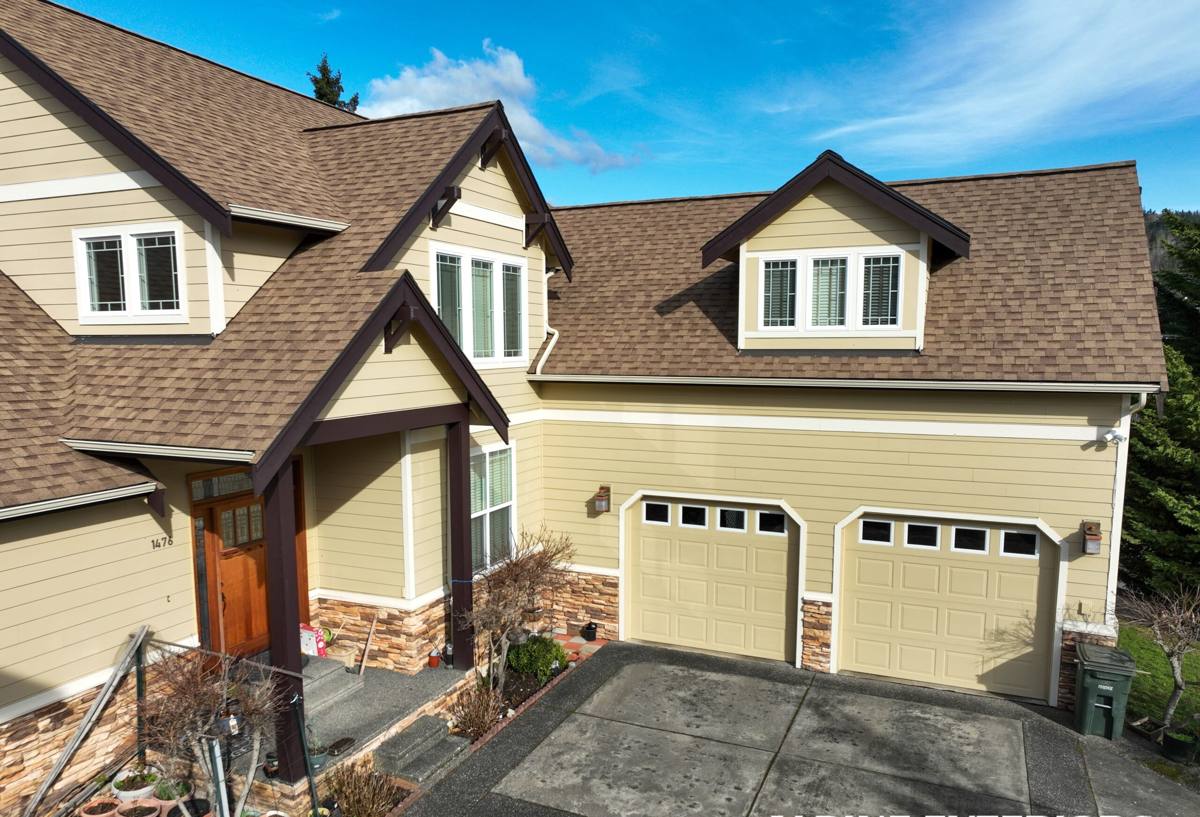
What Roof Repair Needs to Address Here
A roof repair in this region isn't just "find the hole and patch it." Most leaks we trace back start somewhere other than where the water shows up inside the house, and the underlying cause is almost always moisture that's had time to sit and work its way in — not a single dramatic failure. A repair that's done right accounts for a few local realities:
- Moss and moisture-loving growth hold water against the roof surface far longer than open sun-exposed roofs elsewhere, accelerating granule loss and shingle curling.
- Long stretches of steady rain mean small gaps at flashing, valleys, and penetrations get tested far more often than they would in a drier climate — a marginal seal fails faster here.
- Salt-tinged, moisture-heavy air off the Sound corrodes exposed metal fasteners and flashing over time, which is a slower failure mode homeowners rarely think to check.
- Tree cover common to Nooksack properties means more debris in valleys and gutters, which backs up water against the roof deck if it isn't cleared.
A repair that only addresses the visible symptom — say, a stain on the ceiling — without tracing it back to the actual entry point tends to come back within a year or two. That's the single biggest thing we watch for.
Common Repair Calls We See in This Area
Moss and Organic Growth Damage
Moss doesn't just sit on top of shingles — its root structure lifts shingle edges and holds water against the surface underneath, which is where the real damage happens. By the time moss is visible from the ground, it's often been doing quiet damage for a season or two already. Repair here usually means safe removal, treatment, and replacing any shingles that have already been compromised underneath, not just a rinse.
Flashing and Valley Leaks
Valleys and flashing around chimneys, skylights, and roof-to-wall transitions are where the majority of real leaks originate in this climate. Metal flashing that's corroded, sealant that's dried and cracked, or valleys where debris has forced water sideways under the shingle edge are all common findings once we get up on the roof.
Wind-Lifted or Loose Shingles
Steady wind combined with saturated shingles can lift tabs or loosen fasteners over time, even without a single big storm event. Once a shingle edge is lifted, wind-driven rain gets underneath it repeatedly, and the damage compounds every time it rains.
Gutter and Edge Backups
Debris-clogged gutters or undersized drip edge detailing let water pool at the roof's lowest edge, which is exactly where wood rot and fascia damage tend to start. This is one of the most preventable repair categories we see, and it's almost always tied to seasonal debris that wasn't cleared.
What a Correct Repair Actually Involves
A repair that's built to last through another Whatcom County winter generally includes the following steps, in this order:
- A full roof-surface inspection, not just a look at the reported leak area — because the visible symptom and the actual source are often several feet apart.
- Identification of the entry point by tracing water paths under the shingle layer and underlayment, not guessing from the attic side alone.
- Removal of any compromised shingles, rotted decking, or corroded flashing rather than sealing over damaged material.
- Proper flashing and underlayment work at the repair zone, matched to how water actually moves across that section of roof.
- Shingle replacement using material that matches the existing roof as closely as possible in both profile and color.
- A check of adjacent areas — valleys, penetrations, gutter lines — that are exposed to the same conditions and may be close behind in failing.
Skipping the diagnosis step and going straight to a patch is the most common shortcut that leads to a callback. It's also, frankly, the fastest way to do a repair — which is why it's tempting for a crew that isn't planning on being back in the area.
Our Process for a Nooksack Repair Call
| Step | What Happens | Why It Matters Here |
|---|---|---|
| Initial inspection | Walk the full roof, check attic side if accessible, photograph problem areas | Leaks in this climate often originate away from the visible damage |
| Diagnosis and options | Explain what's actually failing and what a repair versus a broader fix would involve | You should understand the "why," not just get a quote |
| Written estimate | Clear scope and price before any work starts | No surprise add-ons once the roof is opened up |
| Repair work | Remove and replace only what's actually compromised | Efficient without cutting corners on hidden damage |
| Final check | Verify the fix and flag any nearby areas worth watching | Catch the next issue before it becomes a leak |
Repair or Replace? How We Help You Decide
Not every roof problem in Nooksack calls for a full replacement, but not every leak should be treated as a minor patch either. We give homeowners a straight answer based on the roof's overall condition, not just the one spot that's currently leaking.
| Factor | Leans Toward Repair | Leans Toward Replacement |
|---|---|---|
| Roof age | Under roughly 12–15 years | Approaching or past manufacturer lifespan |
| Extent of damage | Isolated to one area (valley, flashing, one slope) | Widespread granule loss, curling, or moss across most slopes |
| Decking condition | Solid, no rot found during inspection | Soft spots or rot found in multiple areas |
| Repair history | First or second repair call | Repeated repairs to the same or adjacent areas |
| Cost relative to replacement | Repair cost is a small fraction of full replacement | Repair cost starts approaching what a partial replacement would run |
If a repair is the honest answer, that's what we'll recommend and price. We're not in the business of upselling a replacement a roof doesn't need yet.
Materials We Use and Why
For repairs in this climate, we prioritize materials chosen for moisture performance over anything that just looks good on day one. That generally means quality architectural shingles matched to your existing roof, self-adhering membrane at flashing and valley details rather than sealant alone, and corrosion-resistant metal flashing given the salt-tinged marine air common to this part of Whatcom County. We're selective about lower-cost materials that trade long-term moisture resistance for a lower upfront price — not because those products are inherently bad, but because our standard is durability in a climate that tests a roof year-round, not just during a storm. That's a judgment call we make on every job, and we'll walk you through why we're recommending what we're recommending.
Why a Crew That Already Works Nooksack Matters
A roof repair is only as good as the diagnosis behind it, and diagnosis gets faster and more accurate the more a crew has actually seen roofs like yours fail. We work properties throughout Sumas and the surrounding Nooksack area regularly enough to recognize the patterns specific to this pocket of Whatcom County — which slopes hold moss longest, which flashing details tend to corrode first, which tree-heavy lots need extra attention to valleys and gutters. That familiarity means less time spent guessing and more time spent fixing the actual problem.
It also means we're not disappearing after the invoice. If a repair needs a follow-up check after the next heavy rain, or if a related issue shows up down the line, we're a local call, not a drive from out of the area.
Signs You Likely Need a Repair Call
- A ceiling or wall stain that appears or grows after rain, even if it's small
- Visible moss or dark streaking concentrated in one area of the roof
- Shingles that look curled, cracked, or missing granules in patches
- Daylight visible through the roof deck from inside the attic
- Granules collecting in gutters or at downspout outlets
- Soft or spongy spots when walking near a roof edge or valley (do not walk your own roof to check this — call for an inspection instead)
Catching any of these early is almost always cheaper and simpler than waiting until water has reached the interior of the house.
If something on this list sounds familiar, or you'd just like an honest read on where your roof stands, we're happy to come take a look. The estimate is free, there's no pressure to book anything on the spot, and you'll get a straight answer about whether you need a repair, a bit more time, or nothing at all right now.