 Sumas Roofing
 Roof Repair Built for Lynden's Climate
Lynden sits in the wettest, windiest corner of Whatcom County, and its roofs take a beating that homes further inland never see. Between the driving rain off the Nooksack valley, the damp air carried in from the Salish Sea, and a moss season that can run eight months or longer, a roof here ages differently than the same roof would in a drier climate. Repairing it correctly means understanding those forces, not just patching whatever is leaking today.
Sumas Roofing Co repairs roofs across this stretch of Whatcom County, and Lynden is one of the neighborhoods we're on regularly. That familiarity matters — a repair that looks fine on paper can fail within a season if it doesn't account for how water actually moves across a Lynden roof in a January storm.
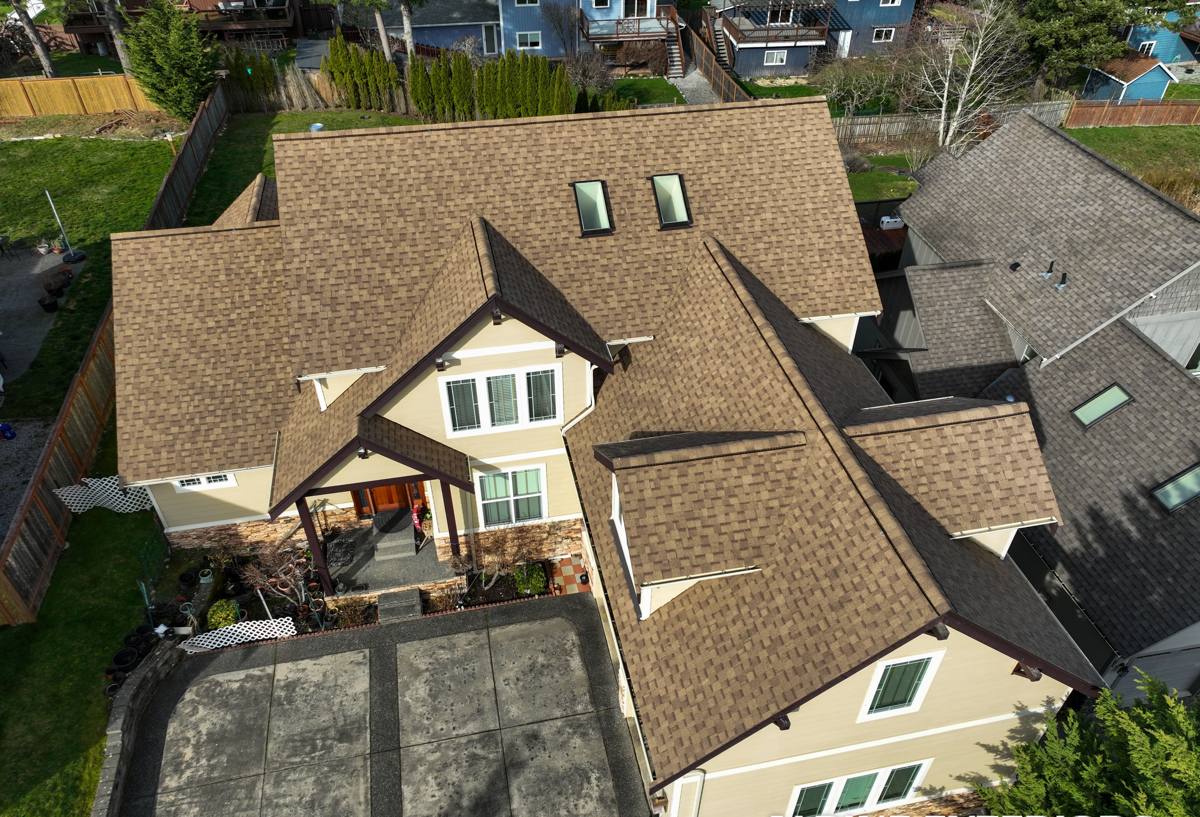
What Whatcom County Weather Does to Lynden Roofs
Driving Rain and Wind-Driven Water
Most roof leaks aren't caused by rain falling straight down — they're caused by rain pushed sideways and upward by wind, forced under shingles, around flashing, and into valleys that weren't sealed to handle it. Lynden gets enough wind-driven rain each winter that even a small gap in flashing or a slightly lifted shingle tab can let water travel several feet before it shows up as a stain on a ceiling. Chasing that stain back to its actual source is often the hardest part of a repair.
A Long Moss Season
Northwest Washington's mild, wet winters give moss and algae a long window to establish themselves on north-facing slopes and shaded sections of roof. Moss isn't just cosmetic — it holds moisture against the roofing material, works its way under shingle edges, and can lift tabs enough to let water in. A repair on a mossy roof that doesn't address the moss itself is a repair that will need to happen again.
Salt Air and Metal Components
Lynden's proximity to the Salish Sea means the air carries a mild salt content that accelerates corrosion on unprotected metal — flashing, fasteners, gutter hangers, and vent boots in particular. Over years, corroded fasteners back out or fail entirely, and corroded flashing thins to the point where it no longer sheds water reliably. It's a slow process, but it's a real factor in why some repairs that would last decades elsewhere need attention sooner here.
Common Roof Repair Needs We See in Lynden
Every roof is different, but certain repair calls come up again and again on homes in this area:
- Lifted, cracked, or missing shingles after a windstorm
- Flashing failures around chimneys, skylights, and roof-to-wall transitions
- Valley leaks where two roof planes meet and water volume is highest
- Moss and algae growth that's lifted shingle edges or clogged the roof's natural drainage path
- Gutter and downspout issues that back water up under the roof edge
- Nail pops and fastener failure from age, wind stress, or corrosion
- Soft or spongy decking discovered under damaged shingles, usually from a leak that's been active longer than the homeowner realized
What a Correct Repair Actually Involves
A roof repair that's done right isn't just about covering the spot where water is getting in. It's about finding where the water actually entered — which is often several feet from where it shows up inside — and fixing that point so it holds up under the next storm, not just the next dry week.
That means pulling back surrounding shingles to inspect the underlayment and decking, checking that flashing laps correctly with the roofing material above and below it, and confirming that any wood the leak has touched is still sound before anything gets covered back up. Skipping that inspection step is the single most common reason a "repaired" roof leaks again within a year.
It also means matching materials appropriately. A patch that doesn't match the surrounding shingle in type, weight, or even age can create a new weak point — different materials expand, contract, and shed water at different rates, and a mismatched patch can actually trap moisture rather than release it.
Our Repair Process
1. Inspection and Diagnosis
We start on the roof, not on a clipboard. We trace the leak or damage to its actual source, check the surrounding area for related wear, and look at flashing, valleys, and vents that are common failure points in this climate.
2. A Clear, Honest Estimate
We explain what we found, what it will take to fix it correctly, and what it will cost — including telling you plainly if a section of roof is a poor candidate for repair and replacement would serve you better long-term. We'd rather lose a repair job than sell you one that won't hold.
3. The Repair Itself
We remove and replace only what needs it, re-flash where flashing has failed, replace any damaged decking, and tie new material into the existing roof so it sheds water the way the rest of the roof does — not as an obvious patch.
4. Cleanup and Walkthrough
We clear debris and fasteners from the yard and gutters, and walk you through what was done and why, including any maintenance that will help the repair last.
Repair vs. Replacement: What Drives the Decision
Not every damaged roof needs to be replaced, and not every leak can be permanently solved with a repair. These are the factors that actually determine which makes sense:
| Factor | Favors Repair | Favors Replacement |
|---|---|---|
| Roof age | Under roughly two-thirds of expected lifespan | Near or past expected lifespan |
| Damage extent | Isolated to one section or slope | Spread across multiple slopes |
| Decking condition | Solid, no soft spots | Widespread rot or soft decking |
| Moss/algae coverage | Light, treatable | Heavy, long-established growth |
| Prior repair history | First or second repair | Repeated repairs to the same area |
| Cost trend | Repair cost is a small fraction of replacement | Repair cost approaches a significant share of replacement |
When a roof lands in a gray area, we'll say so and lay out both paths honestly rather than defaulting to whichever is more profitable for us.
Materials and Standards We Hold Repairs To
We use materials rated for the wind and moisture exposure Lynden actually sees, and we install flashing and underlayment to the same standard we'd use on a full replacement — a repair is only as good as the materials and technique underneath it. For metal components, we favor corrosion-resistant flashing and fasteners given the area's salt-air exposure; standard-grade metal that isn't rated for it tends to show corrosion within a few years here, which just creates a future repair call. On moss-affected roofs, we address the growth as part of the repair, not as an afterthought, since leaving it untreated undermines the work we just did.
Why a Crew That Already Works in Lynden Matters
A contractor who's worked roofs across Whatcom County knows how Lynden's weather patterns actually behave on a roof — which slopes hold moss longest, which valley designs are prone to wind-driven leaks, and which flashing details tend to fail first in this area. That's knowledge you only get from doing the work here repeatedly, not from a general repair checklist.
It also means faster response when a storm causes damage. Local crews aren't driving in from another region to reach you, which matters when a leak is active and every day of delay means more potential damage to decking, insulation, and interior finishes.
Maintenance Checklist to Extend Your Roof's Life
Between repairs, a few habits go a long way toward keeping a Lynden roof in good shape given the local climate:
- Have gutters and downspouts cleared at least twice a year, more often near mature trees
- Watch north-facing and shaded slopes for early moss growth and address it before it spreads
- After major windstorms, do a visual check from the ground for lifted or missing shingles
- Keep an eye on interior ceilings and attic spaces for early staining, which often shows up long before a leak becomes obvious from outside
- Have flashing around chimneys, skylights, and vents inspected every few years, since these are the most common failure points
- Trim back overhanging branches that keep sections of roof shaded and damp longer than the rest
If you're dealing with a leak, storm damage, or just want an honest read on where your roof stands, we're glad to take a look. Request a free, no-pressure estimate using the form below and we'll get back to you with a straight answer.