 Sumas Roofing
 Roofing in Custer Has Its Own Set of Problems
Custer sits close enough to the water that salt air is part of daily life, and it's far enough north that the rain doesn't let up for long stretches of the year. Add in the shade from mature trees on a lot of these properties and you get a climate that's genuinely rough on a roof — not in a dramatic, one-storm-and-it's-gone way, but in a slow, grinding way that shows up as granule loss, soft decking, and moss creeping up from the eaves. A roof replacement out here isn't just about swapping old shingles for new ones. It's about building a roof system that's suited to what this specific stretch of Whatcom County throws at it, year after year.
We work Custer and the surrounding Sumas-area communities regularly, which matters more than people expect. A roofing crew that mostly works drier inland areas tends to under-build for moisture. A crew that works this coastline knows where the problems actually start — usually at the north-facing slopes, the valleys, and anywhere moss has a foothold.
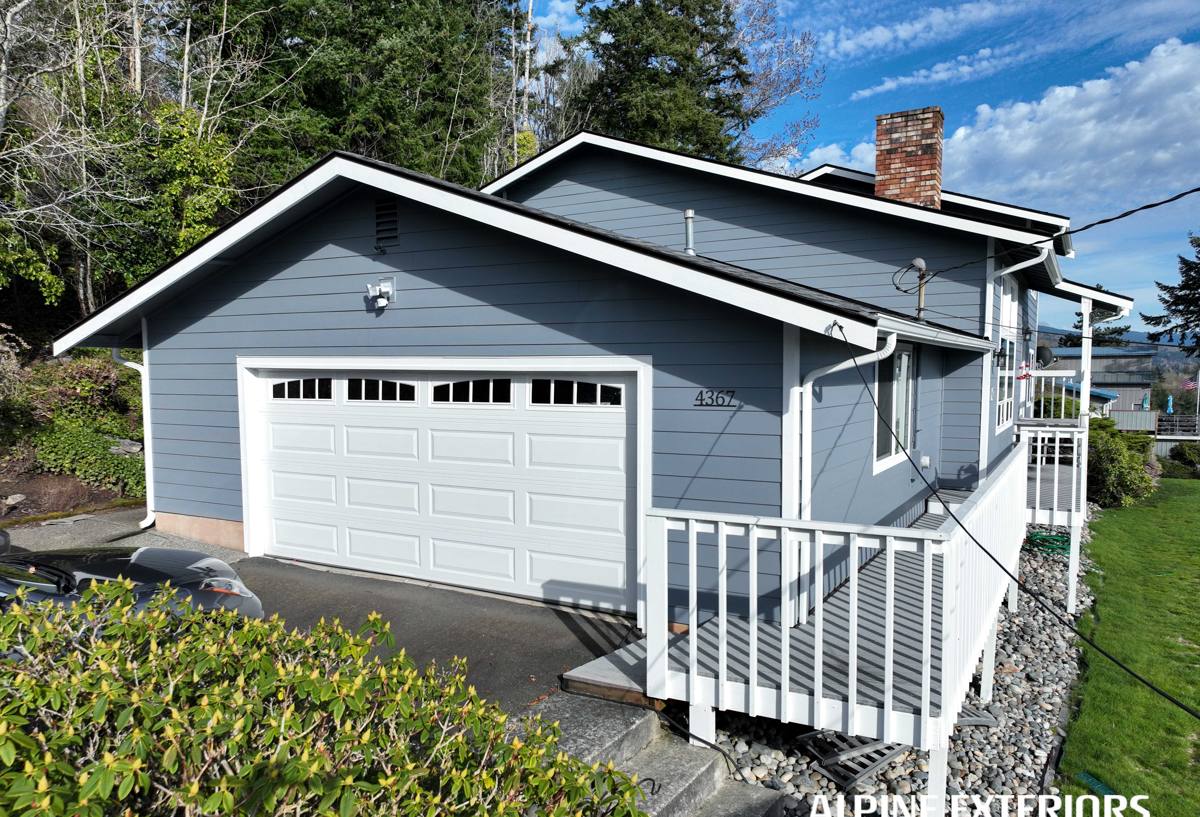
What Salt Air, Rain, and Moss Actually Do to a Roof
Salt Air
Salt-laden air accelerates corrosion on any exposed metal — flashing, fasteners, vent caps, gutter hardware. Cheaper galvanized fasteners and unprotected metal flashing can start showing rust streaks and pitting years before they would further inland. It's not usually dramatic, but it's steady, and it's one of the reasons material choice and fastener choice matter more here than in a lot of other parts of the state.
Driving Rain
Rain that comes in sideways, not just straight down, finds its way under shingles, around flashing, and into any gap in the underlayment that a calmer climate could get away with. Wind-driven rain also pushes water uphill under shingle tabs in a way vertical rain doesn't, which is why sealant strips, nail placement, and underlayment overlap all carry more weight in a job done right here.
Moss Season
Shaded, north-facing roof sections in Custer can stay damp for weeks at a stretch through fall, winter, and spring. That's exactly the environment moss needs. Moss holds moisture against the roof surface, lifts shingle edges as it grows, and works its way into seams over time. A roof that isn't detailed to shed water fast and dry out between rain events will grow moss faster than one that is — this is largely a design and material problem, not just a maintenance problem.
Signs You're Looking at Replacement, Not Repair
- Granules collecting in gutters or downspouts, or shingles that look bald in patches
- Shingles that are cupping, curling at the edges, or cracking when you look closely
- Moss or dark algae streaking across a large portion of the roof, not just isolated spots
- Soft or spongy spots when walked on, which usually means the decking underneath has taken on moisture
- Daylight visible through the roof deck from inside the attic, or water stains on attic sheathing
- The roof is nearing or past the manufacturer's expected service life for its material and installation conditions
- Multiple past repairs in different areas — a sign the roof is failing broadly rather than in one spot
One or two of these on their own might point to a targeted repair. Several together, especially combined with a roof that's already older, usually means repair costs start adding up faster than a full replacement would.
Material Choices for This Climate
There's no single "right" material for every house — it depends on budget, roof pitch, how much shade the roof gets, and how long you plan to stay in the home. Here's how the common options actually perform under Custer's conditions specifically.
| Material | Moss Resistance | Salt Air / Corrosion | Wind-Driven Rain Performance | Typical Lifespan Here |
|---|---|---|---|---|
| Standard asphalt composition shingle | Moderate — needs clean valleys and good airflow to resist moss buildup | Good, but fastener and flashing quality matters | Good when properly sealed and nailed | 18–25 years |
| Algae-resistant (AR) composition shingle | Better — copper-infused granules slow algae and moss growth | Good | Good | 20–28 years |
| Standing seam metal | Very good — smooth, steep-shedding surface gives moss little to grip | Depends on coating; quality coated steel or aluminum holds up well | Excellent when properly fastened | 40–50+ years |
| Synthetic composite (shake-look) | Good, varies by product line | Good | Good | 30–40 years |
For most Custer homes we recommend at minimum an algae-resistant composition shingle, especially on shaded or north-facing roof planes. Metal is worth serious consideration on lower-slope sections or homes with heavy tree cover, since it sheds water fastest and gives moss the least to hold onto — the tradeoff is a higher upfront cost that some homeowners recoup through fewer maintenance calls and a much longer service life.
Why We're Selective About Certain Products
Some lower-cost shingle lines and thin metal profiles look fine on paper but are more sensitive to installation error and don't hold up as well once wind-driven rain and years of damp shade get involved. It's less that any particular product is bad and more that in this climate, thinner materials and tighter installation tolerances leave less room for the small mistakes that eventually turn into leaks. We'd rather spec something that forgives the occasional imperfect valley or transition than chase the lowest material cost and end up back on the roof in five years.
What a Correct Roof Replacement Actually Involves
A roof replacement is a system, not a single product. Skipping or shortcutting any layer below is where most premature failures in this climate come from.
- Full tear-off. Old material removed down to the deck — layering new shingles over old traps moisture and voids most manufacturer warranties.
- Deck inspection and repair. Any soft, delaminated, or water-stained sheathing gets identified and replaced before anything new goes down.
- Ice-and-water shield at vulnerable areas. Eaves, valleys, and roof-to-wall transitions get a self-adhering waterproof membrane — these are the spots wind-driven rain and moss-related moisture find first.
- Synthetic underlayment across the field. A continuous, properly lapped underlayment is the roof's backup layer if wind ever drives water past the shingles themselves.
- New flashing at every penetration. Chimneys, vents, skylights, and wall transitions all get new flashing — reusing old flashing is a common shortcut that leads to leaks in exactly these spots.
- Balanced attic ventilation. Intake at the eaves and exhaust at the ridge keep the attic dry and roof temperature even, which reduces the damp conditions moss and mildew need to take hold.
- Correct nailing pattern and sealant activation. Wind-driven rain resistance depends heavily on shingles being nailed in the manufacturer's specified pattern and location — this is one of the most common places corners get cut on rushed jobs.
- Ridge cap and final detailing. Proper ridge caps, closed valleys or open metal valleys depending on the roof, and clean transitions at every edge.
How We Run a Roof Replacement Project
1. On-Site Inspection and Honest Assessment
We walk the roof, check the attic where accessible, and tell you plainly whether you're looking at a repair or a full replacement — and why. No pressure toward the bigger job if it isn't warranted.
2. Written Estimate and Material Options
You get a clear, itemized quote with material options explained in plain terms, including the tradeoffs above. No vague allowances or surprise add-ons later.
3. Scheduling Around Weather
Given how much of the year sees rain here, we plan tear-off and dry-in around forecast windows so your home isn't left exposed longer than necessary.
4. Tear-Off, Deck Repair, and Installation
Full removal, deck assessment, and system installation as outlined above — with daily cleanup so the property isn't left with debris or exposed nails overnight.
5. Final Walkthrough
We walk the finished roof and the yard with you, confirm everything meets the scope we quoted, and go over warranty coverage and any maintenance recommendations specific to your roof's shade and exposure.
Why a Crew That Already Works This Area Matters
A roofing crew that regularly works Custer and the broader Sumas area already knows which roof orientations tend to hold moisture longest, how the local permitting and inspection process runs, and what wind-driven rain actually does to a poorly detailed valley versus one that's done right. That's not something you get from a crew that occasionally drives up from elsewhere for a job. It also means faster response if something needs a look after a bad storm, and a crew that's building a reputation in the same community it lives and works in — not just passing through.
Simple Maintenance That Extends a New Roof's Life
- Keep gutters and downspouts clear so water isn't backing up under the eaves
- Trim back tree limbs that overhang the roof to cut down on shade, debris, and moss-friendly moisture
- Have moss treated or gently removed before it spreads, rather than after it's established
- Schedule a roof check after any unusually severe windstorm, even if nothing looks obviously wrong from the ground
- Confirm attic ventilation stays unobstructed by insulation or stored items
None of this replaces a properly built roof system, but it does help any roof — including a new one — get its full expected lifespan in this climate.
If you're weighing repair versus replacement, or just want an honest read on where your roof currently stands, we're glad to come take a look. The estimate is free, there's no pressure to sign anything on the spot, and you'll get a straight answer about what your roof actually needs — just fill out the form below to get started.