 Sumas Roofing
 Why Siding Wears Differently on Laurel-Area Homes
Laurel sits in the stretch of Whatcom County where marine-influenced weather off the Pacific meets the open farmland and river valleys around Sumas. That combination means homes here take on moisture from more than one direction: driving rain that comes in sideways during winter storms, damp salt-tinged air that rolls through the lowlands, and long stretches of the year when shade, humidity, and cool temperatures let moss and algae take hold on anything that stays wet too long. Siding in this area isn't just a weather barrier — it's fighting a slow, year-round battle against water intrusion and organic growth.
Most siding failures we see on Laurel homes aren't dramatic. They're gradual: paint that won't hold past a few years, panels that swell or delaminate at the seams, trim boards that go soft, and a greenish cast that creeps up from the ground and down from the eaves. By the time it's visible from the driveway, the damage underneath the siding — at the sheathing and framing — is often further along than the surface suggests.
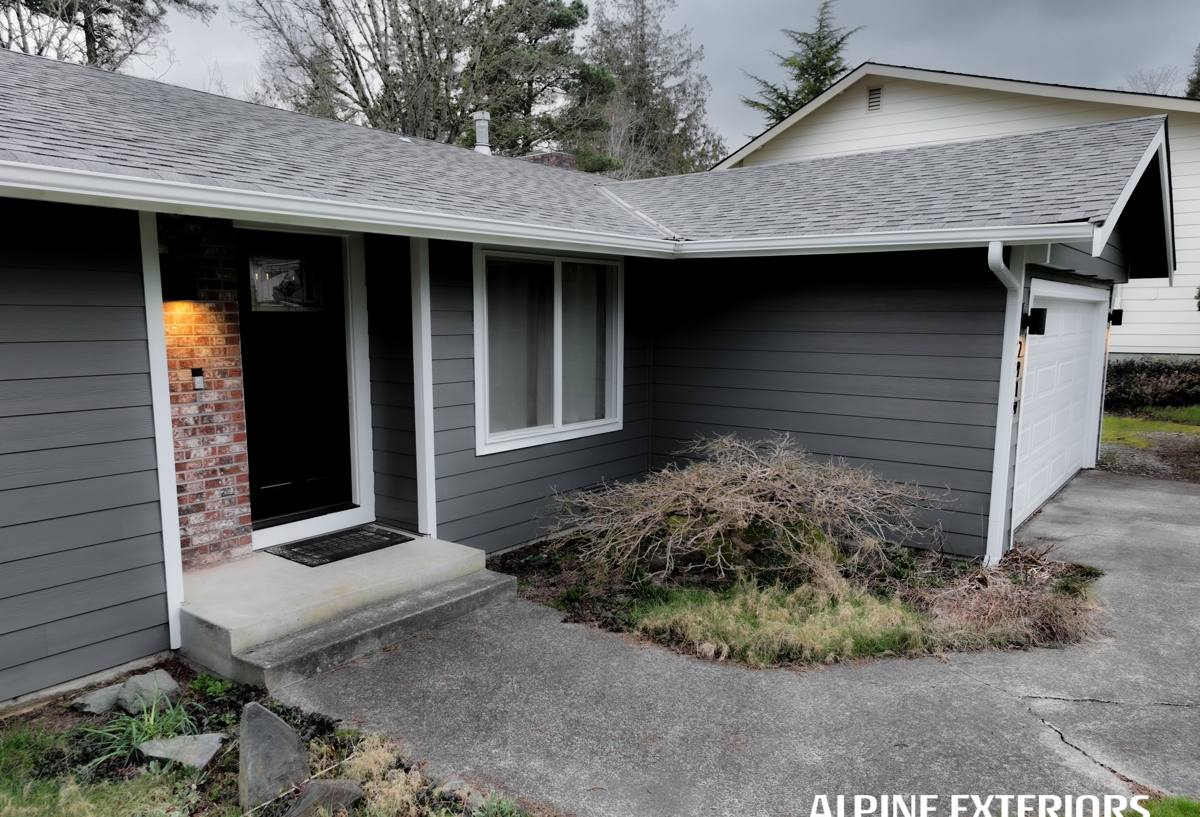
What a Correct Siding Replacement Actually Involves
Replacing siding is not a cosmetic swap. Done right, it's a full rebuild of the wall's water-management system, and it's the one chance to fix problems that are otherwise buried behind the exterior for another 20-plus years.
Tear-Off and Sheathing Inspection
Every old panel, piece of trim, and fastener comes off so the sheathing underneath can actually be inspected — not guessed at. Soft spots, staining, or rot around windows, at corners, and near the foundation line get flagged and repaired before anything new goes on. Skipping this step is the single most common reason a siding job fails early, regardless of the material used.
Weather-Resistive Barrier and Flashing
A new weather-resistive barrier goes over the repaired sheathing, and flashing is installed or replaced at every penetration — windows, doors, hose bibs, light fixtures, dryer vents — so water is directed out and down instead of behind the cladding. In a climate that sees prolonged, wind-driven rain, this layer matters more than the siding material itself.
Fastening, Clearances, and Drainage
Correct nailing patterns, proper clearance from grade and roof lines, and a drainage gap where the assembly calls for one all affect how long the siding lasts. This is also where a lot of budget-driven installs cut corners — the difference doesn't show up for a few years, but it shows up.
Why We Standardized on James Hardie Fiber Cement
Sumas Roofing Co installs one siding system: James Hardie fiber cement. We don't offer vinyl, LP SmartSide, Cemplank, Allura, or raw wood siding, and that's a deliberate call, not a lack of options.
Vinyl is inexpensive and low-maintenance in mild climates, but it expands and contracts with temperature swings, can crack in cold snaps, and doesn't hold up structurally the way a rigid material does — it's also not the product to reach for where wind-driven rain and moisture cycling are constant. Engineered wood products like LP SmartSide perform well when detailing is perfect, but they rely on wood-based cores that are more sensitive to sustained moisture exposure than fiber cement, which matters in an area with a long wet season. Cedar and primed spruce look excellent on day one, but both demand an ongoing maintenance schedule — refinishing, caulking, and moisture monitoring — that most homeowners underestimate until they're several years in.
Fiber cement doesn't have those weaknesses. It's non-combustible, dimensionally stable across temperature and moisture swings, and doesn't feed the moss and mildew growth that wood-based products can. That's why it's the only product we put our name behind.
ColorPlus Finish and the HZ5 Line
James Hardie's ColorPlus finish is baked on at the factory under controlled conditions, which gives it more consistent color and better fade resistance than field-applied paint — and it comes with its own finish warranty. For this climate specifically, Hardie's HZ5 product line is engineered for regions with significant moisture exposure and freeze-thaw cycling, which describes a typical Whatcom County winter well. It's also backed by a strong, transferable product warranty, which matters if you sell the home before the siding's functional life is up.
Our Siding Replacement Process for Laurel Homes
- On-site assessment — we walk the exterior, check for moisture intrusion at trim, corners, and penetrations, and look at the current siding's actual condition, not just its appearance from the road.
- Scope and product selection — we walk through the right Hardie profile and HZ line for your home's exposure, and give you a clear, written scope before any work starts.
- Tear-off and sheathing repair — old materials come off, damaged sheathing is replaced, and framing issues are addressed rather than covered over.
- Weather barrier and flashing install — a new drainage plane and flashing details go in at every window, door, and penetration.
- Hardie installation — panels, trim, and fascia are installed to manufacturer fastening and clearance specs, not shortcuts that save an afternoon.
- Final walkthrough — we go over the finished work with you before we consider the job done, including warranty paperwork.
Signs a Laurel Home Needs Siding Replacement Soon
- Paint that's peeling, bubbling, or needing repainting more often than every 7-8 years
- Soft or spongy spots when you press on siding, especially near the bottom courses
- Visible warping, buckling, or gaps opening up between panels or at seams
- Persistent moss, algae, or dark streaking that comes back shortly after cleaning
- Rising energy bills with no other explanation, which can point to a failing weather barrier
- Visible rot or staining at trim boards, corner boards, or window and door casings
Comparing Siding Materials for This Climate
Homeowners often ask why we don't just offer a lower-cost alternative alongside Hardie. The honest answer is in how each material actually behaves once it's on a wall in this climate for a decade or more.
| Material | Moisture Behavior | Maintenance | Typical Lifespan Here |
|---|---|---|---|
| James Hardie fiber cement | Dimensionally stable, resists moisture-driven warping | Occasional wash; factory finish holds color | 30+ years with correct install |
| Vinyl | Can warp/crack with temperature swings; not rigid | Low, but limited repair options if damaged | 15-25 years |
| LP SmartSide / engineered wood | Wood-based core sensitive to sustained moisture | Requires careful caulking and monitoring | Varies widely with detailing quality |
| Cedar / primed spruce | Natural material, absorbs and releases moisture | Regular refinishing and sealing needed | Depends heavily on upkeep |
Cost Factors in a Laurel Siding Replacement
Every home is priced individually after an on-site look, but the same handful of factors move the number up or down on almost every job:
| Factor | Why It Matters |
|---|---|
| Sheathing condition | Hidden rot found during tear-off adds repair scope |
| Home size and wall complexity | More corners, dormers, and trim detail add labor time |
| Siding profile chosen | Lap, shingle, and panel Hardie products vary in material cost |
| Trim and accessory scope | Fascia, soffit, and trim replacement alongside siding |
| Access and site conditions | Multi-story sections or tight lot lines affect labor and equipment needs |
We give a written, itemized estimate before work begins so there's no guessing which of these applies to your home.
Why a Crew That Already Works in Laurel Matters
A siding job done by a crew that regularly works Whatcom County's rural and small-community areas around Sumas understands the practical realities of this region — permitting expectations, how local weather patterns actually load up on a wall through the wet season, and what moisture problems typically look like on homes of a similar age and construction to what's common in Laurel. That familiarity shows up in fewer surprises mid-project and a scope that's realistic from the first estimate, not revised twice after the tear-off starts.
It also means accountability doesn't disappear once the crew leaves. A local contractor is around for warranty service, follow-up questions, and the occasional adjustment years down the road — not just for the install itself.
Protecting Your Investment After Installation
Fiber cement siding is low-maintenance, not no-maintenance. A simple annual rinse to keep moss and organic buildup from taking hold, prompt attention to any caulking gaps at trim, and periodic visual checks around windows and penetrations will keep a correctly installed Hardie exterior performing at its best for decades in this climate.
If your Laurel-area home is showing any of the wear signs above, or you're simply planning ahead, we're happy to take a look and walk you through what we'd actually recommend for your home — no pressure, no obligation. Reach out for a free estimate using the form below.