 Sumas Roofing
 Why Lynden Homes Wear Out Their Siding Faster Than the Brochure Promises
Whatcom County sits in a weather pattern that's rough on the outside of a house in ways a lot of siding products simply weren't built to handle. Homes around Lynden deal with a long wet season, wind-driven rain that gets pushed sideways into wall assemblies, salt-laden marine air moving in off the Sound, and a moss and algae season that can stretch for most of the year on shaded north- and west-facing walls. None of that is exotic weather — it's just relentless, and relentless is what wears siding out. The siding on a Lynden home isn't fighting one bad storm; it's fighting damp, low-sun conditions for months at a stretch, year after year.
That combination is exactly why siding choice matters more here than it does in a dry climate. A product that looks fine in a showroom in a drier region can behave very differently after a decade of Whatcom County winters. When we replace siding in Lynden, we're not just matching a color or a plank profile — we're solving for moisture cycling, for algae and mold growth in shaded areas, and for a wind exposure that pushes water into seams and laps that a drier-climate installer might not think twice about.
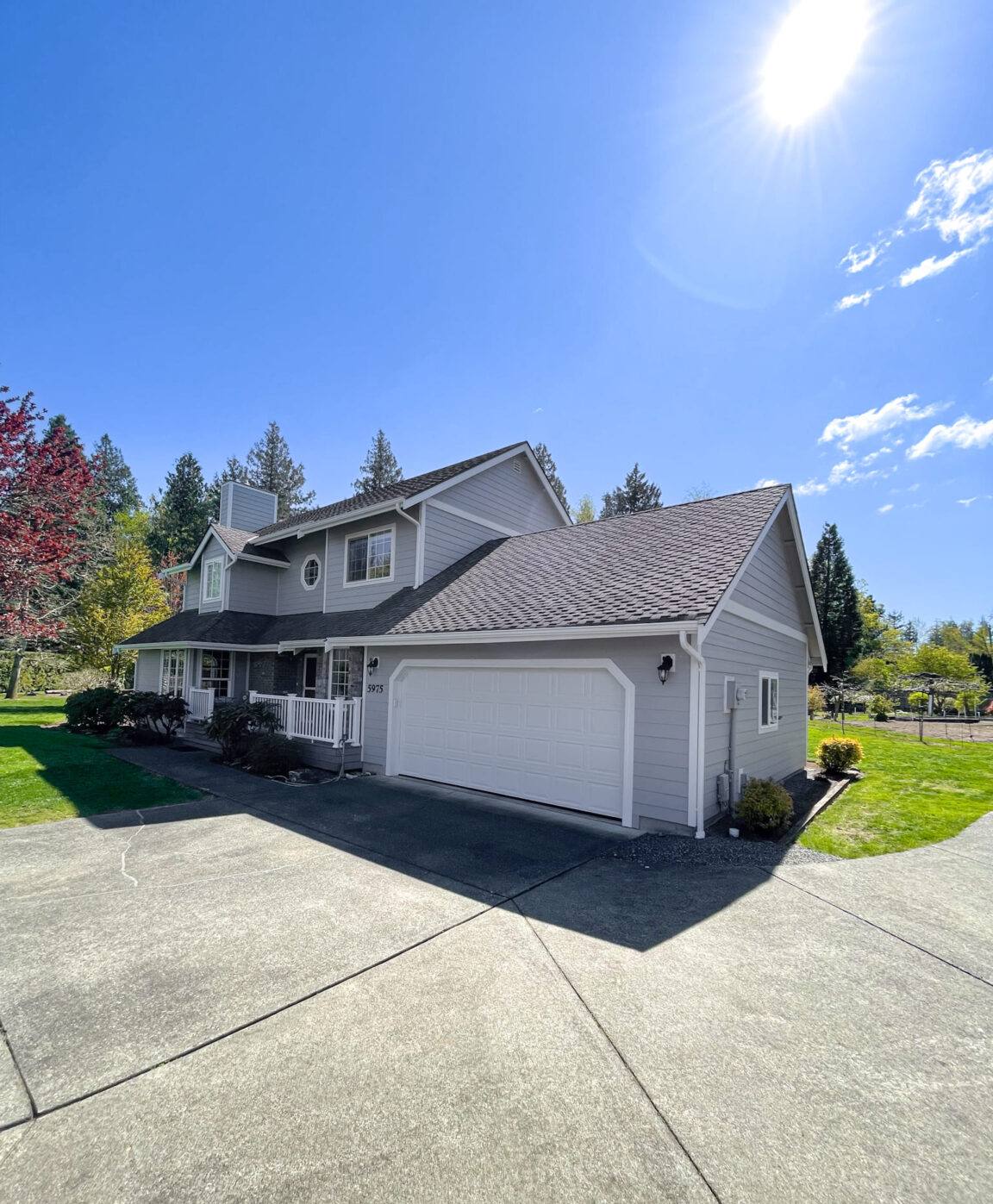
Signs Your Lynden Home's Siding Has Reached the End of Its Useful Life
Siding failure in this climate rarely shows up as one dramatic problem. It's usually a slow accumulation of small signs that, together, mean the water-shedding system behind the surface is compromised. Here's what we look for on a Lynden siding inspection:
- Soft or spongy spots when you press on the siding, especially near the bottom courses and around window and door trim
- Persistent green or black staining that comes back within weeks of being cleaned or pressure-washed
- Visible cupping, warping, or buckling of individual boards or panels
- Paint that's peeling, bubbling, or chalking heavily rather than just fading evenly
- Gaps opening up at butt joints, corners, or where siding meets trim, window flanges, or the foundation
- Any sign of rot in the sheathing or framing when a section of siding is pulled back for inspection
- Rising heating bills or noticeably drafty rooms, which can point to a compromised water-resistive barrier behind failing siding
Any one of these on its own might be a repair. Several of them together, especially combined with the age of the home, usually means it's time to talk about full replacement rather than another round of patching.
Why Patch Repairs Often Fall Short Here
In a drier climate, spot-repairing a few damaged boards can buy real time. In Lynden's climate, patch repairs are fighting an uphill battle — if moisture got into the wall assembly in one spot, the surrounding material has usually been absorbing that same humidity and rain exposure for just as long. We'll always tell a homeowner honestly when a repair makes sense versus when it's just delaying a bigger job at a worse price.
What Correct Siding Replacement Actually Involves
A siding replacement is only as good as what's underneath it. The visible boards get all the attention, but the parts nobody sees — the water-resistive barrier, the flashing details, the fastening pattern — are what determine whether the job lasts fifteen years or fifty. Here's what a correct job includes, start to finish:
| Step | What It Involves | Why It Matters in This Climate |
|---|---|---|
| Tear-off and inspection | Full removal of old siding, inspection of sheathing and framing | Catches hidden rot or moisture damage before it's sealed behind new siding |
| Sheathing repair | Replace any compromised sheathing or framing found during tear-off | New siding over damaged sheathing just hides a problem, doesn't fix it |
| Weather-resistive barrier | Install or replace the house wrap, lapped and taped correctly | This is the layer that actually stops driving rain from reaching the wall |
| Flashing details | Proper flashing at windows, doors, and all penetrations | Most siding failures start at a flashing detail, not the field of the wall |
| Fastening | Correct nailing pattern and fastener type per manufacturer spec | Under- or over-driven fasteners are a leading cause of premature failure |
| Trim and caulking | Properly sized trim with appropriate sealant at joints, not gaps | Poor joint detailing lets wind-driven rain in even when the field is fine |
| Final finish | Factory-finished panels installed clean, with touch-up as needed | Reduces field painting, which is often where quality control breaks down |
Skipping or rushing any one of these steps is how a siding job that looks good on installation day starts failing within a few years. This is the same reason we're picky about which product goes on the wall in the first place — the best installation in the world can't compensate for a product that isn't built for sustained moisture exposure.
Why We Only Install James Hardie Fiber Cement
We made a decision as a company to install James Hardie fiber cement siding exclusively, and it's not a marketing preference — it's a response to what we've seen this climate do to other products over time. We don't install vinyl, LP SmartSide, primed wood, or other fiber cement brands, and we're upfront about why.
Non-Combustible and Dimensionally Stable
Fiber cement doesn't expand and contract the way vinyl or wood-based products do with the temperature and humidity swings common here. It holds its shape, its fastening stays tight, and it doesn't develop the wavy, buckled look that vinyl siding can get after years of thermal cycling. It's also non-combustible, which matters to insurers and to homeowners thinking about long-term risk, not just curb appeal.
Engineered for the Climate Zone
James Hardie builds its HZ product line specifically for regional climate demands — moisture exposure, humidity, and freeze-thaw cycling are all factored into the formulation for the zone a home sits in. That's a meaningfully different approach than a one-size-fits-all siding product, and it's part of why we trust it to hold up through Whatcom County's wet season after wet season.
ColorPlus Factory Finish
Rather than field-painting siding after installation — which introduces a lot of variables in weather-dependent, high-humidity conditions — Hardie's ColorPlus finish is baked on at the factory under controlled conditions. That finish is formulated to resist the fading, chalking, and moisture-driven paint failure that we see on field-painted siding in this climate, and it comes with its own finish warranty separate from the product warranty.
A Warranty Structure That Backs the Product
James Hardie backs its siding with a long, transferable warranty, which matters both for the current homeowner and for resale value down the line. A strong warranty is only meaningful if the product it's backing actually performs, and that's the combination we're looking for — a product engineered for this kind of weather, installed correctly, and backed by a manufacturer willing to stand behind it.
Our Process for a Lynden Siding Replacement
We keep the process straightforward because a siding job is disruptive enough without added confusion. Here's how it typically runs:
- On-site assessment: We walk the exterior with you, note problem areas, and check for signs of moisture damage before giving you a real scope of work.
- Written estimate: You get a clear breakdown of materials, labor, and any sheathing or structural repair we anticipate — no vague allowances.
- Material selection: We walk through Hardie's plank profiles and color options so you're choosing what actually fits the home, not guessing from a swatch.
- Tear-off and inspection: Old siding comes off, and we inspect the sheathing before anything new goes up — this is where hidden damage gets found and addressed.
- Weather barrier and flashing: The water-management layer goes in correctly before a single piece of visible siding is installed.
- Siding installation: Panels and trim go up to manufacturer spec, with attention to fastening, joints, and clearances.
- Final walkthrough: We go over the finished job with you and address anything that needs adjustment before calling it complete.
What Drives the Cost of a Siding Replacement
Every home is different, so we won't put a number on a job before seeing it, but these are the factors that typically move the price up or down:
| Factor | How It Affects Cost |
|---|---|
| Home size and wall area | More square footage means more material and labor, the largest single driver of cost |
| Number of stories | Second-story and higher work requires more scaffolding, staging, and time |
| Existing damage | Rotted sheathing or framing discovered during tear-off adds repair scope |
| Trim and architectural detail | Homes with more corners, windows, and trim detail take more time to finish cleanly |
| Siding profile chosen | Lap width, panel style, and accent details all vary in material cost |
| Site access | Tight lots, landscaping, or limited staging area can add labor time |
We'll walk through all of this with you during the estimate so there aren't surprises once the crew shows up.
Why a Crew That Already Works in Lynden Matters
Siding installation isn't just a set of instructions from a manufacturer — a lot of the judgment calls that determine long-term performance come from knowing how a specific climate behaves. A crew that regularly works Lynden and the surrounding Whatcom County area already knows which wall exposures see the worst wind-driven rain, which sides of a house are going to stay damp longest and need extra attention to moss and algae resistance, and how to sequence a tear-off around the wet season instead of leaving sheathing exposed during a stretch of bad weather. That's not something you get from a crew that mostly works in a different climate and happens to take a job out this way.
Local familiarity also matters for the practical side of the job — knowing realistic timelines around the rainy months, understanding typical construction in older versus newer Lynden-area homes, and having a track record other homeowners in the area can vouch for. It's part of why we've stayed focused on this region rather than spreading thin across a wide service area.
Caring for Your New Siding After Installation
Fiber cement is low-maintenance compared to wood or vinyl, but "low-maintenance" isn't "no-maintenance" in this climate. A simple annual routine keeps it performing the way it should:
- Rinse the exterior once or twice a year to keep moss, algae, and organic buildup from taking hold, especially on shaded walls
- Keep gutters clear so overflow isn't running down the siding face during heavy rain
- Trim back vegetation and tree limbs that keep siding shaded and damp longer than it needs to be
- Check caulking at trim joints and penetrations every couple of years and refresh it if it's cracked or pulling away
- Address any impact damage or chips promptly so moisture doesn't get behind the panel
If you're weighing whether your current siding needs to be replaced or you're ready to plan a project for your Lynden home, we're happy to take a look and give you an honest read on where things stand. Reach out for a free, no-pressure estimate using the form below.