 Sumas Roofing
 Storm Damage in Ferndale Isn't Just a Coastal Problem
Ferndale sits close enough to the water that homes here take on a mix of weather that inland roofs never see: salt-laden air off the bay, wind that funnels down the Nooksack valley, and long stretches of driving rain that push moisture sideways under shingle tabs instead of straight down. Add in Whatcom County's extended wet season, and a roof here is working harder, more often, than a roof thirty miles inland. When a windstorm or a hard rain event comes through, the damage isn't always a dramatic hole in the roof — more often it's a lifted shingle edge, a cracked flashing seal, or granules stripped off a slope that faces the prevailing wind. Left alone, that kind of damage turns into a leak within a season or two, not right away, which is exactly why storm damage repair gets put off until it's a bigger job than it needed to be.
We work storm damage calls in Ferndale regularly, and the patterns repeat: certain roof ages, certain slopes, certain details (valleys, chimney flashing, low-slope porch roofs) fail first. Knowing those patterns before we're on your roof means a faster, more accurate repair.
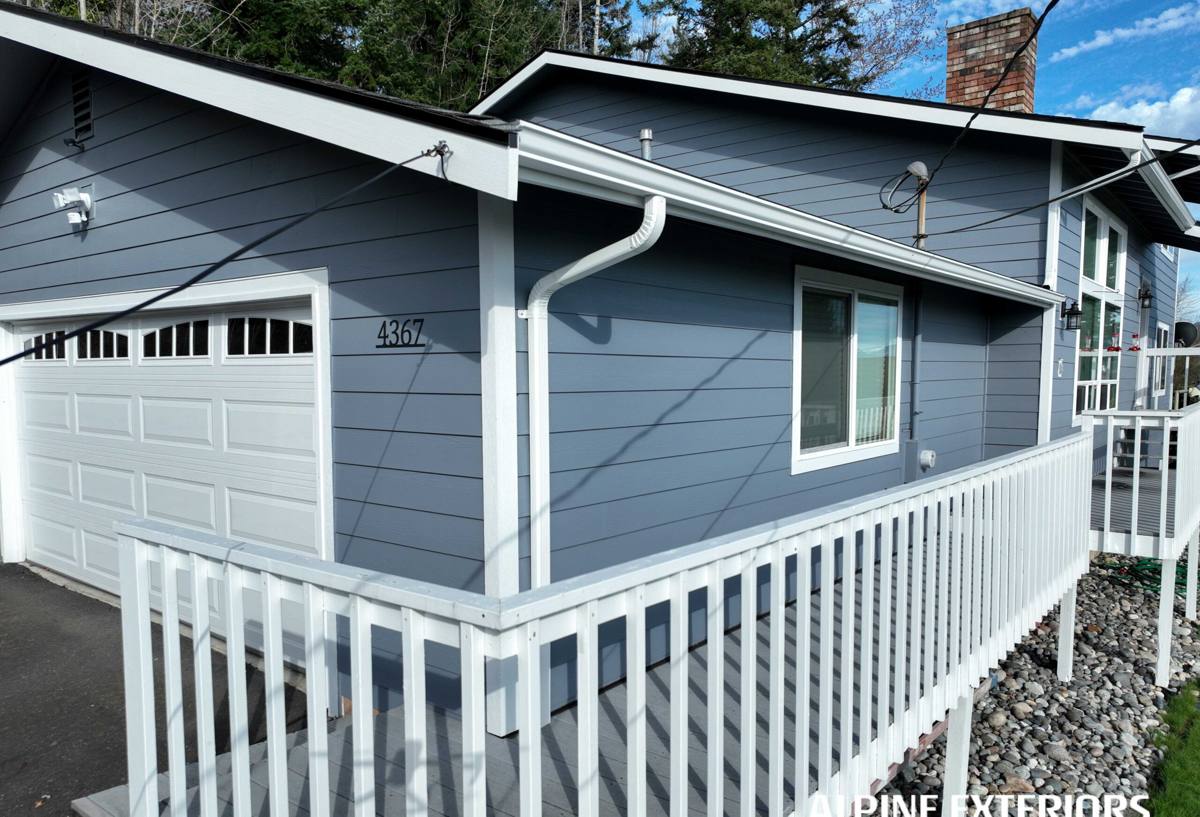
What Storm Damage Actually Looks Like on a Ferndale Roof
Wind Damage
Sustained wind and gusts lift shingle tabs at the edges — especially on older roofs where the factory sealant strip has already lost some of its bond from years of sun and moisture cycling. Once a tab lifts even a little, the next storm gets underneath it and can tear it loose entirely, or fold it back so it never seals flat again.
Driving Rain and Wind-Driven Water
This is the one homeowners underestimate most. Rain that comes in nearly horizontal off the water can be pushed up and under shingle laps, around flashing edges, and into any gap that would be a non-issue in a straight-down rain. Roofs with marginal flashing or worn sealant handle vertical rain fine for years, then suddenly leak the first time a real windstorm rolls through — the roof didn't fail, the flashing detail did.
Moss and Storm Damage Together
Whatcom County's moss season runs long — shade, moisture, and mild temperatures are exactly what moss wants, and north-facing slopes or roofs under tree cover barely dry out between rain events. Moss itself doesn't cause storm damage, but it sets the roof up for it: moss mats hold water against the shingle surface, lift shingle edges as it grows, and add weight that stresses fasteners. A storm that would be a non-event on a clean roof can tear loose shingles that moss has already been prying up for months.
Salt Air's Slow Contribution
Proximity to the water means metal roof components — flashing, fasteners, gutter hardware — corrode faster here than they would further inland. Corroded fasteners back out or lose their grip, and corroded flashing develops pinholes. A storm finds those weak points immediately.
Why "It's Just a Few Missing Shingles" Underestimates the Job
The visible damage after a storm is rarely the whole story. A missing shingle tells you where water has been getting in — possibly for longer than the storm that finally tore it loose. Once we pull back the surrounding shingles, we're checking for:
- Soft or discolored decking under the damaged area, which signals water has already been getting through
- Nail pattern and sealant condition on adjacent shingles that look fine but are one storm from failing the same way
- Flashing at valleys, chimneys, and roof-to-wall transitions near the damage
- Underlayment condition where it's exposed
- Signs of prior moss growth or trapped moisture contributing to the failure
A repair that only replaces the shingle you can see, without checking what's underneath, is a repair that gets called back out after the next storm.
What a Correct Storm Damage Repair Involves
- On-roof inspection — not just the damaged spot, but the surrounding field and the roof's other vulnerable details (valleys, penetrations, edges).
- Decking check — any soft or water-damaged sheathing gets replaced, not covered over. Shingles over rotten decking will not hold in the next storm.
- Matching materials — shingle color, profile, and weight matched as closely as possible so the repair doesn't stand out and so the shingles perform the same in wind.
- Flashing repair or replacement — if the failure traces back to a flashing detail, patching the shingle without fixing the flashing just delays the next leak.
- Proper fastening and sealing — correct nail placement and count matters more in a wind-exposed area like this than it does on a calmer inland roof.
- Cleanup and debris removal — old shingle fragments and granules cleared from gutters and the ground.
Repair or Replace? What We Weigh
Not every storm-damaged roof needs a full replacement, and not every damaged roof should be patched. The honest answer depends on the roof's age, how widespread the damage is, and what we find once we're up there.
| Factor | Leans Toward Repair | Leans Toward Replacement |
|---|---|---|
| Roof age | Under 12-15 years, shingles still flexible | Near or past the shingle's rated life |
| Extent of damage | Isolated area, one or two slopes | Damage spread across multiple slopes |
| Decking condition | Solid, dry sheathing found under damage | Widespread soft or rotted decking |
| Moss/moisture history | Light, recently treated | Long-term moss damage across large areas |
| Flashing condition | Isolated failure, otherwise sound | Corroded or failing throughout |
We'll tell you plainly which side of that table your roof falls on, and why — including if the honest answer is that a repair will hold you for several more years.
Our Process for Storm Damage Calls
Storm damage repair moves differently than a routine roof job, because water is often already getting in by the time we're called. Our process is built around stopping that first, then doing the repair right:
- Prompt inspection, prioritized for active leaks
- Photo documentation of the damage — useful for your own records and for insurance if you're filing a claim
- Straightforward explanation of what caused the failure, not just what broke
- Temporary weatherproofing if rain is in the forecast before the repair can be completed
- Scheduled repair using matched materials
- Final walk-through so you know exactly what was done
Insurance Claims: What We Can and Can't Do
Many storm damage repairs in this area are wind or rain events that homeowners insurance covers, depending on your policy. We're glad to document the damage thoroughly with photos and a written scope of work you can submit with a claim. What we won't do is inflate a scope or write up damage that wasn't storm-caused as if it were — that's a disservice to you and it's the kind of thing that gets claims denied on review. If the damage is a mix of storm-related and ongoing wear (like long-term moss damage), we'll be clear about which is which.
Why a Crew That Already Works Ferndale Matters
Storm damage repair rewards local knowledge in ways a lot of roofing work doesn't. A crew that works this stretch of Whatcom County regularly already knows which shingle lines and flashing details hold up against the driving rain and wind pattern here, and which ones tend to fail early. We're not learning the area's weather behavior on your roof — we've already seen how it plays out on roofs like yours nearby. That matters for both the diagnosis (knowing where wind-driven water tends to find its way in on this type of roof) and the fix (using materials and installation details that are proven to hold up to it, not just the textbook-standard approach that assumes calmer weather).
It also matters for response time. Storm damage that's actively leaking doesn't wait for a convenient schedule slot, and a crew based nearby can get eyes on the roof faster than one traveling in from further away.
Signs You Likely Have Storm Damage Worth Checking
- Shingle pieces or granules in the gutters or on the ground after a windstorm
- A new water stain on a ceiling or in the attic following a storm
- Visibly lifted, curled, or missing shingles from the ground
- Flashing that looks bent, separated, or visibly rusted around a chimney or vent
- Gutters pulling away from the fascia or sagging after heavy wind
- Daylight visible through the roof deck from inside the attic
Any one of these is worth a look before the next storm finds the same weak spot.
Getting a Straight Answer on Your Roof
If a recent storm has you wondering whether your roof took real damage or just came through fine, we'll give you a straightforward, no-pressure look and tell you what we actually see — not an upsell. Reach out for a free estimate using the form below, and we'll get you scheduled.