 Sumas Roofing
 Windows Take a Beating in Van Zandt
Van Zandt homes sit in a part of Whatcom County that doesn't get a break from the weather. Salt-laden air moves through, driving rain hits window walls sideways for months at a stretch, and the moss season runs long enough to work its way into places it shouldn't. Windows are one of the first components on a house to show that wear — and one of the first places moisture finds its way into the wall assembly when the installation underneath the trim isn't done right.
A window is only as good as its installation. You can put a well-built window into a wall and still end up with rot, fogged glass, or a drafty room if the flashing, sealing, and insulation details aren't handled correctly. That's the part homeowners don't see once the trim goes back on, and it's the part that matters most over the next fifteen or twenty years.
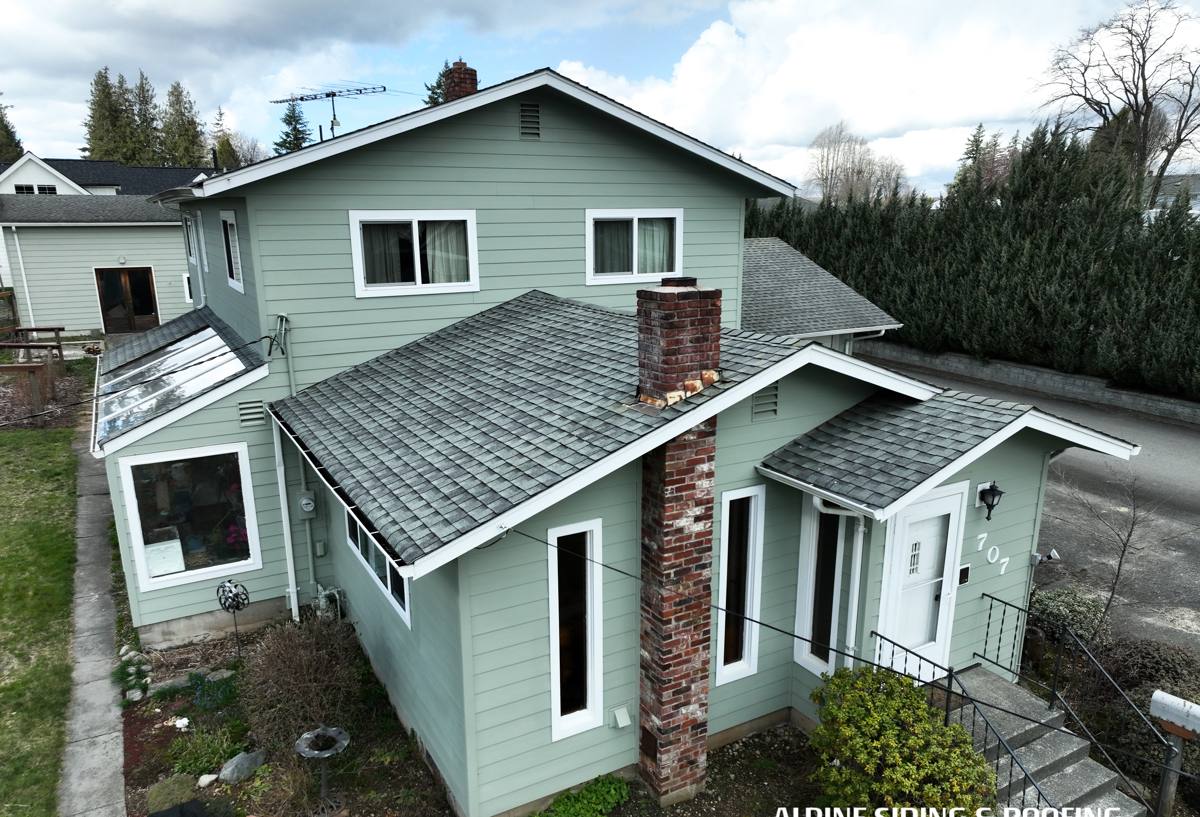
Signs Your Current Windows Are Losing the Fight
Most window failures in this climate don't show up overnight. They show up as a slow list of small annoyances that eventually add up to a real problem.
- Condensation or fogging between the panes — the seal has failed and the insulating gas is gone
- Visible moss or dark staining on the sill or trim, even after cleaning
- Drafts you can feel with a hand near the frame on a windy day
- Wood trim or sill that feels soft, spongy, or discolored
- Windows that are hard to open, close, or lock — often a sign the frame has shifted
- A noticeable jump in heating costs with no other explanation
Any one of these on its own might just mean a repair. Two or three together, especially on the same wall, usually points to a bigger moisture or installation problem behind the trim.
What a Correct Window Installation Actually Involves
Swapping a window is mechanically simple. Installing one correctly, in a climate that sees this much wind-driven rain, is a sequencing problem — every layer has to shed water down and out, never in.
Flashing and Water Management
The flashing around a window opening is what keeps water out of the wall cavity, not the caulk bead on the outside trim. That means flashing tape or pan flashing at the sill, properly lapped house wrap at the sides and head, and a drainage path that lets any water that does get behind the siding find its way back out. Skipping or rushing this step is the single most common cause of hidden rot behind window trim in this region.
Insulation and Air Sealing
The gap between the window frame and the rough opening needs to be filled with a material that stays flexible and doesn't compress the frame out of square — not stuffed with scrap material or left partially open. A window that's air-sealed correctly around its full perimeter is what actually stops the drafts homeowners complain about, more than the window unit itself.
Level, Plumb, and Square
A window that's out of square will bind, won't lock properly, and puts uneven stress on the seals long-term. Shimming and checking at every corner before final fastening isn't optional — it's the difference between a window that operates smoothly for twenty years and one that starts sticking within two.
Choosing a Window Frame for This Climate
Frame material matters more here than in drier parts of the state, because whatever you install is going to sit in damp air and repeated wet-dry cycles for most of the year.
| Frame Type | Moisture Behavior | Maintenance | Typical Use Case |
|---|---|---|---|
| Vinyl | Won't rot; handles moisture well | Low — occasional cleaning | Most standard replacements, budget-conscious jobs |
| Fiberglass | Very stable in wet/dry cycling, minimal expansion | Low | Larger openings, higher-exposure walls |
| Wood, clad exterior | Good if the cladding and seals hold; interior wood needs protection from condensation | Moderate — watch for seal failure at joints | Homes prioritizing an interior wood look |
| Aluminum | Prone to condensation without a thermal break | Low, but performs poorly in cold, damp conditions | Rarely our first recommendation for this area |
We steer most Van Zandt homeowners toward vinyl or fiberglass, not because other materials are bad products, but because they hold up with the least amount of ongoing maintenance in a climate that gives wood and bare metal no rest. Solid wood interior with clad exterior is still a fine choice for homeowners who want that look — it just means being consistent about checking the exterior seals every year or two.
Our Window Installation Process
- On-site assessment — we look at the existing opening, check for hidden rot or moisture damage before quoting anything, and measure for an accurate fit.
- Removal — the old window and any damaged framing or sheathing come out, and we inspect the opening again once it's exposed.
- Repair as needed — any soft framing, sheathing, or house wrap gets replaced before a new window goes in. Installing a new window over a damaged opening just hides the problem for a few more years.
- Flashing and sealing — sill pan, tape, and house wrap integration done in the correct order so water sheds outward.
- Set, shim, and fasten — the window is leveled, plumbed, squared, and fastened per the manufacturer's instructions.
- Insulate the perimeter gap — low-expansion foam or backer rod and sealant, never packed tight enough to bow the frame.
- Exterior and interior trim — trim is reinstalled or replaced, caulked, and finished to match the home.
- Walkthrough — we test every window for smooth operation and a tight seal before we consider the job done.
What Window Installation Typically Costs
Every job is different, but the main cost drivers are consistent from house to house. We give a firm number after seeing the openings in person — not before.
| Factor | Why It Matters |
|---|---|
| Number of windows | More units per visit generally lowers the per-window labor cost |
| Frame material | Vinyl, fiberglass, and clad-wood carry different unit costs |
| Opening condition | Rot or moisture damage found behind old trim adds repair time |
| Window size and type | Large, custom, or specialty shapes (bay, picture, egress) cost more than standard sizes |
| Trim and siding work | Matching existing trim or siding profiles adds finish labor |
| Access | Second-story or hard-to-reach openings take more time and equipment |
Homeowners should be wary of a quote given without anyone actually looking at the openings — hidden rot behind old trim is common enough here that an accurate number depends on seeing the wall, not just the window count.
Why It Matters That We Already Work in Van Zandt
A crew that's worked windows and siding throughout Sumas and the surrounding Whatcom County area already knows what these houses tend to be hiding. We know which vintages of construction are more likely to have inadequate flashing, what a moss-related sill problem looks like before it becomes structural, and how to schedule installation days around the stretches of driving rain that are just part of living here. That's not something a crew passing through for a one-off job picks up — it comes from doing this work in this specific area, on this specific weather, repeatedly.
Local familiarity also means faster turnaround. We're not driving in from a couple hours away to start a job or to come back for a warranty check. If something needs a second look after the first hard rain of the season, we're close enough for that to be a normal, low-friction visit.
Keeping New Windows Performing After Install
A correctly installed window still benefits from basic upkeep in a climate like this one.
- Clear moss and debris from sills and tracks a couple of times a year, especially going into fall
- Check exterior caulk lines annually for cracking or separation and have gaps resealed promptly
- Keep gutters and downspouts clear so water isn't sheeting down across window heads
- Operate each window a few times a season so weatherstripping and hardware don't seize up
- Watch for condensation between panes — it's the earliest sign of a failing seal and worth addressing before it spreads
None of this is heavy maintenance. It's the kind of five-minute-per-window check that keeps a good installation performing the way it's supposed to for its full lifespan.
Get a Straight Answer on Your Windows
If you're dealing with drafty rooms, foggy glass, or trim that's starting to look rough around your windows, it's worth having someone look at the openings before you decide what to do. We'll give you an honest read on whether you're looking at a repair or a replacement, and what it would take to do it right for a Van Zandt home. Reach out for a free, no-pressure estimate using the form below.