 Sumas Roofing
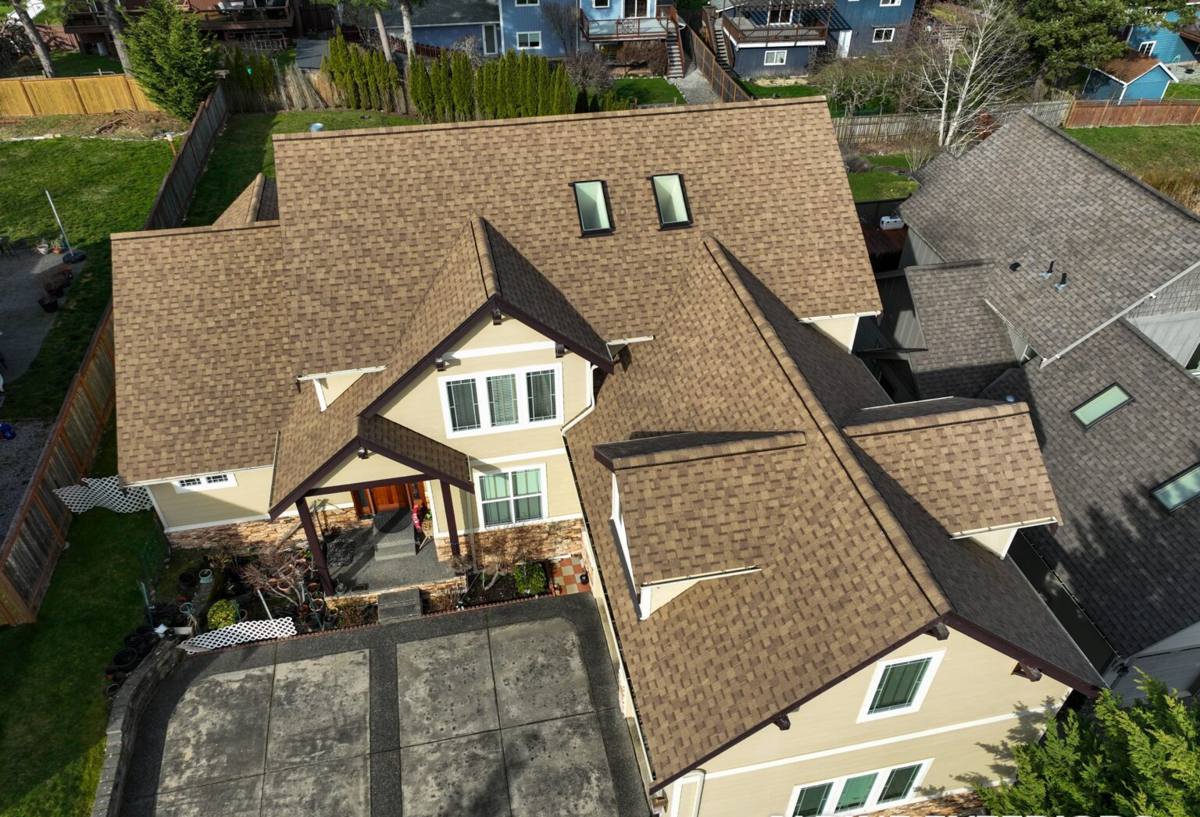
 Asphalt Shingle Roofing for Abbotsford, BC Homes
Abbotsford sits right across the line from our home base in Sumas, and the two communities share the same weather system — the same low grey winters, the same soaking spring rains, the same damp shoulder seasons that never quite dry out. A roof that's built for a drier climate somewhere inland doesn't hold up the same way here. Asphalt shingle roofing is still the right call for most homes in this area — it's affordable, it's proven, and it looks good on the mix of ranch, split-level, and traditional homes common through this part of the valley. But "asphalt shingles" covers a wide range of products and installation quality, and in a climate like ours, the details matter more than the brand name on the wrapper.
What This Climate Does to a Shingle Roof
We don't guess at this — it's the same weather pattern we deal with on our own jobs in Sumas, just a few miles up the road. Three things wear on asphalt shingle roofs here more than almost anywhere else in the country:
Driving Rain
Storms coming off the coast tend to arrive sideways, not straight down. That pushes water up under shingle tabs and into any gap in the flashing or underlayment that wouldn't be a problem in a calmer climate. Roofs here need underlayment and flashing detail that assumes water will find its way past the shingle surface at some point — because eventually it will.
Salt-Tinged Coastal Air
Air moving in off the coast carries fine salt content that accelerates corrosion on exposed metal — nail heads, flashing edges, gutter fasteners, and vent stacks. Over years, that corrosion is one of the more common causes of small leaks that start at a flashing seam rather than in the shingle field itself.
A Long Moss Season
Shaded, north-facing slopes and roofs under overhanging trees stay damp for months at a stretch. That's ideal growing conditions for moss and algae, both of which hold moisture against the shingle surface, lift tabs over time, and shorten the life of the roof if they're left unmanaged.
None of this means asphalt shingles are the wrong choice — it means the installation has to account for all three, from the underlayment up through the fasteners.
Choosing the Right Shingle for This Area
Not every asphalt shingle product is built the same way, and the differences matter more in a wet climate than in a dry one. Here's how the common options compare for a home in the Abbotsford/Sumas area:
| Shingle Type | Typical Lifespan Here | Best For | Trade-Offs |
|---|---|---|---|
| 3-Tab | 15–20 years | Budget-focused re-roofs, rental properties | Thinner profile, less wind resistance, shows moss growth faster |
| Architectural / Laminate | 25–30 years | Most homes — best balance of cost, durability, and appearance | Higher upfront cost than 3-tab |
| Impact-Rated (Class 4) | 25–30+ years | Homes wanting extra durability against hail and debris | Higher material cost; benefit is more about impact resistance than moisture |
| Algae-Resistant (AR) Cap | Adds years of clean appearance | Shaded lots, north-facing roofs, tree cover | Slightly higher cost; doesn't eliminate moss, reduces algae staining |
For most homes in Abbotsford, we recommend a laminate architectural shingle with an algae-resistant cap as the baseline — it's the product that best matches the moisture and shade conditions typical here, without overpaying for impact resistance most homes don't need.
What a Correct Installation Actually Involves
The shingle itself is only part of the system. In this climate, the layers underneath it are what actually keep water out over the long run.
- Ice and water shield at eaves, valleys, and around every penetration — the areas most exposed to driving rain and backed-up water
- Synthetic underlayment across the full deck, not just felt paper, for a more reliable secondary water barrier
- Balanced ventilation — intake at the soffits and exhaust at the ridge, sized to the attic, so trapped moisture doesn't condense under the deck and rot it from below
- Corrosion-resistant flashing at chimneys, walls, and valleys, properly stepped and lapped rather than just caulked over
- Correct nailing pattern — enough fasteners, placed in the manufacturer's nailing zone, driven flush rather than overdriven or underdriven
- Starter strip and hip/ridge cap matched to the field shingle, not a mismatched or undersized substitute
Skipping or shortcutting any one of these is usually invisible on installation day and shows up two or five years later as a leak, a lifted shingle, or premature granule loss.
Our Process
We keep the process straightforward, because a roof replacement shouldn't be a mystery to the homeowner living under it:
- On-site inspection — we walk the roof (not just look at it from the ground) and check the attic for ventilation and moisture issues before quoting anything
- Written estimate — a clear scope covering shingle type, underlayment, flashing, and ventilation work, so you know exactly what's included
- Deck check during tear-off — any soft or damaged decking gets flagged and replaced before new material goes down, not covered over
- Installation — underlayment, flashing, shingles, and ventilation installed to manufacturer spec, weather permitting
- Cleanup and magnetic sweep — job site and surrounding yard cleared of debris and stray nails
- Final walkthrough — we go over the finished roof with you before calling the job done
Moss, Algae, and Keeping the Roof Clean Long-Term
Given how long the damp season runs here, moss prevention has to be part of the plan rather than an afterthought. A few things make a real difference:
- Zinc or copper strips installed near the ridge, which release trace metal ions that inhibit moss and algae growth as rain washes over the roof
- Keeping overhanging branches trimmed back so shaded sections of roof get more sun and airflow
- Clearing gutters and valleys at least twice a year so trapped debris doesn't hold moisture against the shingle edge
- Gentle, low-pressure cleaning rather than pressure washing, which can strip granules and shorten shingle life
None of this replaces a properly installed roof, but it extends the life of a good one — and on the flip side, it can't rescue a roof where the underlayment or ventilation was cut short to begin with.
Cost Factors to Expect
Every roof is priced on its own specifics, but these are the main factors that move the number up or down:
| Factor | Effect on Cost |
|---|---|
| Roof pitch and access | Steeper or harder-to-access roofs take longer and require more safety setup |
| Number of layers being removed | Tear-off of multiple existing layers adds labor and disposal cost |
| Deck condition | Rotted or soft decking found during tear-off adds material and labor to replace it |
| Shingle grade chosen | 3-tab, standard architectural, and impact-rated products carry different material costs |
| Ventilation upgrades | Adding or correcting soffit/ridge ventilation adds a modest cost but pays off in shingle lifespan |
| Flashing complexity | Roofs with multiple valleys, chimneys, or wall intersections need more flashing work |
We give a firm number in writing after the on-site inspection — not a phone estimate — because roof condition and access vary too much to price accurately any other way.
Why a Local Crew That Knows Abbotsford Matters
We're based in Sumas, which puts us right at this shared climate zone rather than commuting in from somewhere drier or further inland. We know what a roof looks like after a real Fraser Valley winter — where moss tends to build up first, which slopes take the worst of the driving rain, and how much ventilation a typical attic here actually needs. That local familiarity shows up in how we scope a job: we're not guessing at what this climate does to a roof, we're accounting for it because we deal with it on every job we do in this area.
Questions to Ask Before You Hire a Roofer
Whatcom County and the surrounding region have plenty of roofing outfits, and not all of them are built the same. Before signing a contract, it's worth asking:
- Is the estimate based on an actual roof and attic inspection, or just a rough guess from the ground?
- Does the written scope specify underlayment type, ventilation work, and flashing detail — or just "shingles"?
- Is the crew properly insured, and will they show proof without you having to chase it down?
- What's the plan if the deck turns out to be damaged once tear-off starts?
- Does the estimate include cleanup and a magnetic nail sweep of the yard?
If a roofer can't answer these clearly and in writing, that's worth noticing before work starts, not after.
If you're weighing options for a roof in the Abbotsford area, we're happy to take a look and give you a straight answer — no pressure, no inflated scare tactics. Fill out the form below for a free estimate and we'll walk the roof with you.