 Sumas Roofing
 Deck Building in Bellingham: Built for the Climate, Not Just the Design
Bellingham sits close enough to Bellingham Bay that salt-laden air is a real factor in how exterior structures age, and it sits far enough north and west that rain isn't an occasional inconvenience — it's a season that runs most of the year. Add in a long stretch of overcast, damp weeks where surfaces rarely get a full dry-out, and you have a climate that is genuinely hard on outdoor wood and hardware. A deck built with generic, one-size-fits-all methods might look fine the first summer. By year three or four, homeowners in this area often start seeing soft spots near the house, dark streaking, moss creeping across the boards, and fasteners that have started to bleed rust. None of that is inevitable. It's the result of decks that weren't detailed for this specific climate.
This page covers what a deck actually needs to hold up in Bellingham, what correct construction looks like from the ground up, and how we approach the build so it's still solid a decade or two from now — not just at the final walkthrough.
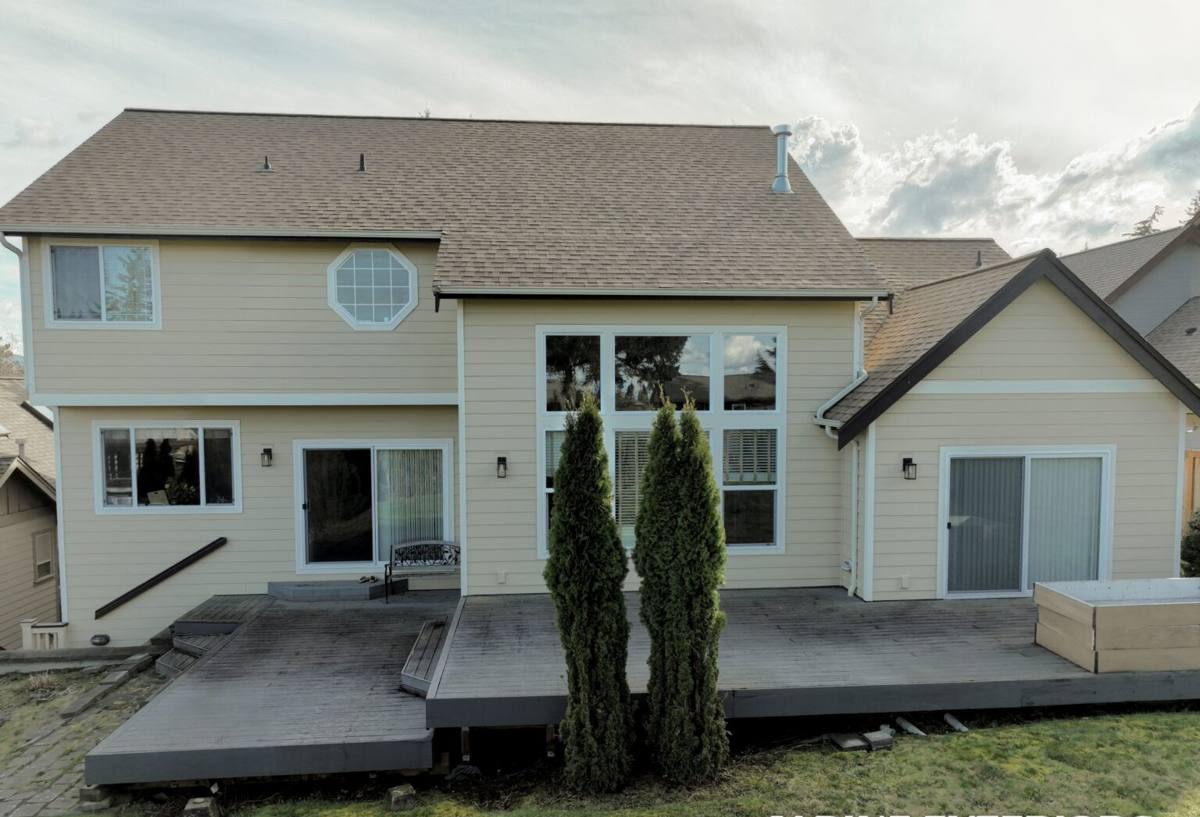
What Bellingham's Climate Actually Does to a Deck
Moss and Algae Season
Whatcom County's combination of shade, moisture, and mild temperatures gives moss and algae almost ideal growing conditions for a large part of the year. On a deck, that's more than cosmetic. Moss holds moisture against the wood surface long after the air around it has dried, which slows the wood's natural dry-out cycle and accelerates rot in exactly the areas where boards meet joists, around fasteners, and in shaded corners near the house. A deck that never gets a chance to fully dry between rain events is a deck that's decaying faster than it looks.
Driving, Wind-Driven Rain
Rain here doesn't always fall straight down. Wind off the bay pushes rain sideways into ledger connections, stair stringers, and the gap where the deck meets siding — the exact spots where water intrusion causes the most expensive damage. A deck that isn't flashed and detailed for wind-driven rain will leak at the house connection long before the decking itself shows any wear.
Salt Air and Metal Hardware
Proximity to salt water accelerates corrosion on anything metal — nails, screws, joist hangers, post bases. Standard hardware not rated for coastal or high-moisture exposure will visibly rust within a few seasons, and rusted structural hardware is a hidden liability long before it's an obvious one.
Freeze-Thaw at the Margins
Whatcom County doesn't get deep, sustained freezes most winters, but it gets enough freeze-thaw cycling at the margins — a cold snap here, a hard frost there — that trapped moisture in end grain or in poorly sealed joints can crack wood fibers over a few seasons. It's a slower failure mode than rot, but it compounds the same underlying problem: water that has nowhere to go.
Choosing Decking Material for This Climate
There's no universally "best" decking material — the right choice depends on budget, how much maintenance a homeowner actually wants to do, and how exposed the deck is to sun, shade, and wind. Here's how the common options actually perform in a Bellingham-type climate:
| Material | Moisture Resistance | Maintenance Needed | Typical Lifespan Here |
|---|---|---|---|
| Pressure-treated pine/fir | Good if sealed regularly; end grain is the weak point | Annual cleaning, re-sealing every 1-2 years | 10-15 years with upkeep |
| Western red cedar | Naturally rot- and insect-resistant, but still needs sealing | Cleaning plus sealant/stain every 2-3 years | 15-20 years with upkeep |
| Composite decking | Excellent — doesn't absorb water the way wood does | Periodic washing, no sealing or staining | 25+ years, backed by manufacturer warranty |
| PVC decking | Excellent — fully synthetic, no wood fiber to rot | Occasional washing | 25-30+ years |
We install all of these depending on what a homeowner wants, but we're upfront about trade-offs. Composite and PVC cost more up front and cut long-term maintenance dramatically, which in a climate with this much moss and rain often pencils out over the life of the deck. Wood costs less initially and has a warmer, more traditional look, but it only performs as well as the maintenance schedule behind it — skip a couple of seasons of sealing in this climate and a wood deck's clock starts running faster.
What a Correctly Built Deck Involves
The decking material homeowners see is the smallest part of what determines whether a deck lasts. Most of the failures we get called out to fix trace back to the parts nobody sees during the build:
Ledger Board Flashing
Where a deck attaches to the house is the single most common source of water damage on decks in this region. Correct practice is a metal flashing that directs water away from the house band joist, combined with a waterproof membrane behind it — not just lag bolts driven through siding into framing. Skipping or shortcutting ledger flashing is the single most common cause of hidden rot we find behind existing decks.
Joist Protection
Joist tape or a comparable waterproof barrier over the top of each joist keeps rainwater from sitting in deck screw holes and wicking into the joist itself. In a climate that stays damp this much of the year, this detail alone adds years to the structural frame's life.
Board Spacing and Drainage
Decking boards need consistent gapping so water sheds through rather than pooling on the surface — too tight and the deck holds water and grows moss faster; too wide and it's uncomfortable and can trap debris. Getting this right also depends on the material: composite and wood move differently with moisture and temperature, so the correct gap isn't the same for every product.
Footings and Post Bases
Footings need to be sized and set below frost depth per code, and post bases should hold the post above the deck surface — never buried in concrete or sitting directly on wet ground — so the most vulnerable part of a wood post isn't the part that's constantly wet.
Fasteners and Hardware
Hot-dip galvanized or stainless structural hardware is worth the modest upcharge in this climate. Standard electroplated hardware corrodes noticeably faster with salt air in the mix, and corroded joist hangers are a structural problem, not a cosmetic one.
Our Deck Building Process
Site Assessment and Design
We start on-site, not from a template. Sun exposure, drainage slope, proximity to mature trees (a major factor in how much moss and debris a deck will deal with), and how the deck ties into the house all shape the design and material recommendation before we talk numbers.
Permitting
Most deck projects in Whatcom County require a permit, particularly for anything attached to the house or built above a certain height. We handle the permitting process as part of the job so homeowners aren't left navigating it alone, and so the finished structure is inspected and documented correctly.
Construction
Framing goes in first with attention to the ledger flashing, joist protection, and hardware detailed above — the parts that determine how the deck ages, not just how it looks on day one. Decking, railing, and stairs go in last, built to the spacing and fastening approach appropriate to the chosen material.
Final Walkthrough
We walk the finished deck with the homeowner, cover how the specific material should be cleaned and maintained, and flag anything that needs periodic attention — this is also where we set expectations for a realistic maintenance schedule rather than letting a homeowner find out the hard way three years in.
Signs an Existing Deck Needs Attention
Whether we're building new or repairing what's there, these are the warning signs worth acting on before they become structural:
- Soft, spongy, or discolored boards, especially near the house connection
- Moss or dark algae staining that keeps returning within weeks of cleaning
- Rust streaking around screws, nails, or joist hangers
- Gaps or separation where the deck meets the siding or ledger board
- Wobble in railings or posts, or visible movement when the deck is loaded
- Standing water on the deck surface after rain instead of it draining off
- Cracked or splitting boards concentrated on the sun-and-rain-exposed side
Any one of these on its own might be minor. Two or three together, especially near the ledger board, usually means water has been getting into the structure for a while.
Maintenance That Actually Matters in This Climate
Regardless of who builds it, every deck in a climate like this needs some level of upkeep. What changes is how much:
- Sweep debris and standing leaves off the deck regularly, especially in fall and under trees
- Wash off moss and algae buildup at least once a year, more often in shaded areas
- Check and re-seal wood decking on the manufacturer's recommended schedule — don't wait until it looks dry and gray
- Inspect the ledger board connection annually for gaps, staining, or soft wood
- Trim back overhanging branches to reduce shade and debris load, which cuts down on moss regrowth
- Check fasteners and hardware periodically for rust or loosening
Composite and PVC decks cut most of this list down to washing and debris removal, which is part of why they've become a popular choice for homeowners who want a lower-maintenance option in a climate that's hard on wood.
Why Hire a Crew That Already Works Bellingham
Deck-building fundamentals — framing, spans, footing depth — don't change much from one town to the next. What does change is how much margin you need to build in for climate. A crew that mostly builds in drier inland regions may not default to coastal-rated hardware, extra ledger flashing, or drainage-first board spacing, because they haven't had to fix the callbacks that come from skipping those details here. We work Whatcom County regularly, which means we're not guessing at what this climate does to a deck over time — we're building around the failure patterns we've actually seen and repaired on decks that weren't detailed for salt air, driving rain, and a moss season that runs most of the year.
If you're planning a new deck in Bellingham or want an honest look at whether an existing one needs repair, replacement, or just a better maintenance routine, we're happy to come take a look. Reach out for a free, no-pressure estimate using the form below.