 Sumas Roofing
 Metal Roofing Built for Abbotsford's Weather
Abbotsford sits in the Fraser Valley, close enough to the Salish Sea and the Sumas border crossing that its weather behaves like the rest of the Pacific Northwest: long wet stretches from fall through spring, humid air that never fully dries out, and enough moss pressure to shorten the life of the wrong roofing material. A roof here isn't just shedding rain a few times a year — it's living under near-constant moisture for months at a stretch. Metal roofing has become a popular answer for Abbotsford homeowners who are tired of replacing asphalt shingles every 15-20 years and dealing with moss scraping in between.
This page covers what metal roofing actually needs to hold up in this specific climate, what a correct installation looks like, and what it means to hire a crew that regularly crosses the border to work in Abbotsford rather than a contractor who only occasionally takes a Canadian job.
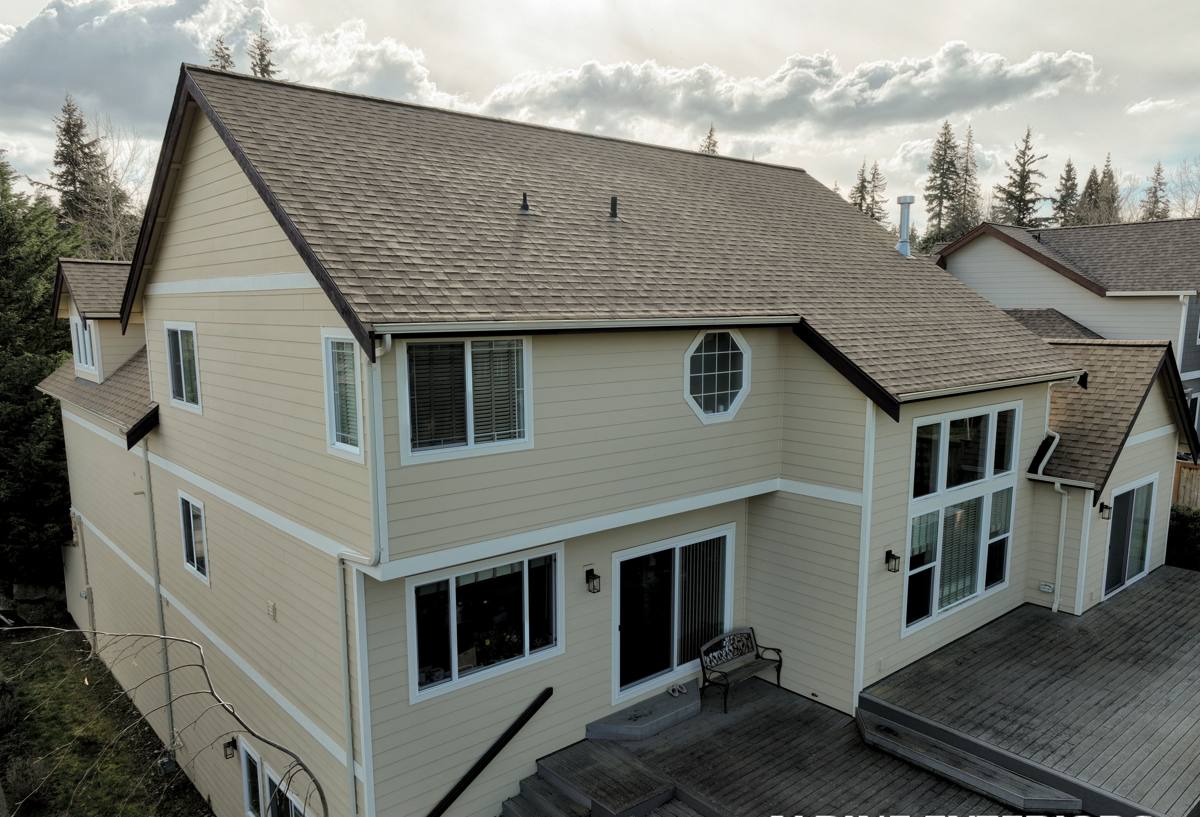
What the Fraser Valley Climate Does to a Roof
Three things drive most of the roofing problems we see in and around Abbotsford:
- Driving rain. Wind off the valley pushes rain sideways during storms, which finds every weak seam, nail pop, and poorly lapped flashing. A roof that only handles straight-down rain well isn't enough here.
- Long moss season. Shaded roof sections, north-facing slopes, and anything under tree cover stay damp for weeks at a time. Moss and algae take hold in that dampness and work into shingle granules, fastener heads, and any porous surface. Metal doesn't give moss the same foothold that asphalt does, but a metal roof still needs airflow and proper drainage to stay ahead of it.
- Salt-tinged, humid air. Air moving inland off the coast carries enough moisture and salt content to accelerate corrosion on unprotected metal — which is exactly why fastener choice and panel coating matter more here than they would in a dry inland climate.
None of this means metal roofing is a luxury upgrade — it means the installation details (coatings, fasteners, underlayment, ventilation) have to be right for the climate, not just for the panel style a homeowner likes the look of.
Standing Seam vs. Exposed Fastener: What Fits Abbotsford Homes
Both systems are legitimate choices for this climate, but they behave differently over time, and the right one depends on the roof's slope, budget, and how long the homeowner plans to own the house.
| Factor | Standing Seam | Exposed Fastener |
|---|---|---|
| How it's attached | Hidden clips under the panel seams — no exposed screws | Screws through the panel face into the deck or purlins |
| Moisture performance | Excellent — no penetrations for driving rain to work into | Good, but fastener washers age and need periodic checking |
| Long-term maintenance | Very low — expands and contracts freely under the clips | Moderate — washers and screws should be inspected over the roof's life |
| Upfront cost | Higher | Lower |
| Best fit | Homes staying put long-term, steeper or more exposed roofs | Budget-conscious projects, outbuildings, lower-slope sections |
Both are far more moss- and rain-resistant than asphalt shingles when installed correctly. The honest trade-off is that exposed-fastener panels ask for a bit more attention over the decades since every screw penetration is a potential future leak point if a washer degrades — that's a maintenance conversation we have with homeowners up front, not a reason to avoid the product.
Coating and Material Notes
In a humid, salt-influenced climate, the panel's coating matters as much as the metal underneath it. Galvalume and painted steel with a quality PVDF (fluoropolymer) finish hold their color and resist corrosion far better over 20-30 years than lower-grade painted finishes. We'll walk homeowners through the coating and gauge options for their specific roof rather than defaulting to whatever is cheapest — a slightly heavier gauge or better coating up front avoids paying for it twice later.
What a Correct Metal Roof Installation Involves
Metal roofing fails early almost exclusively because of installation shortcuts, not because the material itself is weak. The details that matter most in this climate:
- Underlayment. A synthetic, high-temp-rated underlayment (not felt) as the water barrier beneath the panels, with extra protection at valleys and eaves where driving rain concentrates.
- Ventilation. Proper intake and exhaust airflow so moisture doesn't get trapped against the deck — trapped moisture is what feeds moss and rot, regardless of how good the metal on top is.
- Flashing at every penetration. Chimneys, vents, skylights, and valleys need flashing detailed for wind-driven rain, not just standard lap coverage.
- Fastener spacing and type. Matched to the panel manufacturer's spec and to corrosion-resistant hardware appropriate for a humid coastal-influenced climate.
- Expansion allowance. Metal panels move with temperature swings; clips and fastener patterns have to allow for that movement or the panels will oil-can or work fasteners loose over time.
Cross-Border Service: What It Actually Means Here
Sumas sits directly on the Washington–BC border, and Abbotsford is the first community across it. That proximity is an advantage, but it also means the job isn't quite the same as a roof a few miles down the road in Washington. A few things we account for on every Abbotsford project:
- Building code differences. BC follows its own building code, which isn't identical to Washington State's — permit requirements, inspection triggers, and some material standards differ.
- Border logistics for crew and materials. Moving a crew and roofing materials across the Sumas crossing takes planning — proper documentation, realistic scheduling around crossing times, and not treating it as an afterthought.
- Measurement and supplier differences. Canadian suppliers and specs often run metric; we account for that when ordering panels and trim so measurements match on-site rather than getting reconciled after delivery.
- Local permitting. Roofing permit rules vary by municipality; Abbotsford's requirements are handled as part of quoting the job, not discovered mid-project.
A contractor who only crosses the border occasionally has to relearn these details on your job. That's expensive time, and it shows up in scheduling slips and change orders. This is one of the real, practical reasons to hire a crew that already works Abbotsford regularly rather than one that's making a one-off trip across the line.
Our Process for an Abbotsford Metal Roof
- On-site assessment. We inspect the existing roof, deck condition, ventilation, and any moss or moisture damage before quoting anything.
- Honest scope and quote. We walk through panel style, coating, and fastener options with real trade-offs — not just the most expensive package.
- Permitting. We handle the applicable permit requirements for the job before work starts.
- Tear-off and deck prep. Old roofing removed, deck inspected and repaired where needed — a metal roof is only as good as what it's fastened to.
- Underlayment and flashing. Installed to handle driving rain at every seam, valley, and penetration.
- Panel installation. Installed to manufacturer spec with proper fastener spacing and expansion allowance.
- Final walkthrough. We review the finished roof and maintenance expectations with the homeowner before we consider the job done.
What Drives the Cost of a Metal Roof
| Factor | Why It Matters |
|---|---|
| Panel system (standing seam vs. exposed fastener) | Standing seam runs higher due to labor and hidden-clip hardware |
| Roof complexity | Valleys, dormers, and multiple penetrations add flashing labor |
| Deck condition | Rot or moisture damage found during tear-off adds repair cost |
| Coating and gauge | Heavier gauge and better coatings cost more upfront, less over the roof's life |
| Access and border logistics | Steep or hard-to-access roofs, and cross-border scheduling, factor into labor time |
We give real, itemized numbers during the on-site assessment rather than a ballpark over the phone — every one of these factors changes the total enough that a phone estimate isn't useful to either of us.
Maintaining a Metal Roof in This Climate
Metal roofing needs far less upkeep than asphalt, but "low maintenance" doesn't mean "no maintenance" in a climate this wet. A simple annual check covers most of it:
- Clear debris and organic buildup from valleys and around penetrations before it holds moisture against the panel
- Check exposed fasteners (if applicable) for loose screws or worn washers
- Confirm gutters and downspouts are clear so water isn't backing up against eave flashing
- Look for any scratches in the coating near ladders, satellite mounts, or foot traffic areas — bare metal spots should get touched up before rust starts
- Check attic or roof-deck ventilation isn't blocked by insulation or debris
None of this is heavy work, and most homeowners can do the visual check themselves — we're happy to point out what to look for during the final walkthrough.
Get an Honest Look at Your Roof
If you're weighing metal roofing for a home in Abbotsford, we're glad to come take a real look at the roof, walk through panel and coating options that fit the budget, and give a straight answer on what it'll take — no pressure, no inflated scope. Fill out the form below for a free estimate.